
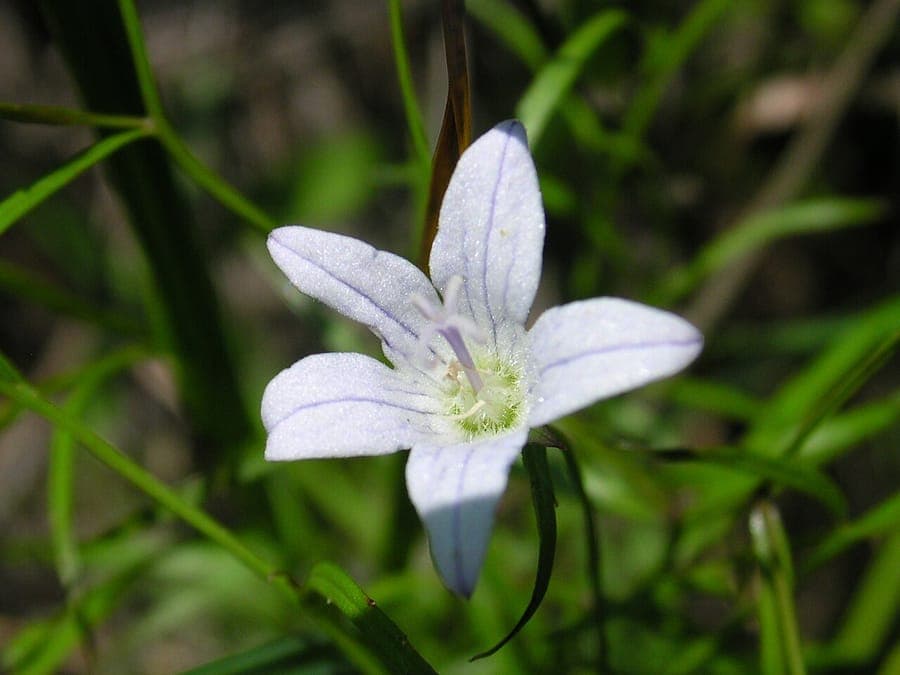
Superior National Forest / CC BY 2.0, via Wikimedia Commons
Bedstraw bellflower: complete guide
Campanula aparinoides
¿Quieres ver Bedstraw bellflower: complete guide en tu jardín?
1 minuto, sin tarjeta de crédito
Overview
Bedstraw bellflower (Campanula aparinoides) is a charming, wetland-dwelling plant from the Campanulaceae family. This North American native thrives in moist, nutrient-rich environments and produces delicate white flowers with fine stamens. It is a frost-hardy perennial perfect for bog gardens and water-feature designs. This plant adds subtle elegance to challenging wet areas in the landscape.
Appearance & Bloom
Bedstraw bellflower grows modestly to 30-60 cm height with a rhizomatous habit. Its thin, delicate foliage resembles bedstraw (Galium), which inspired its common name. Flowers are small to medium-sized, star-shaped, and pure white, appearing July through August. While not showy, their delicacy creates natural garden effects. The plant spreads via underground runners, making it useful for erosion control on slopes.
Ideal Location
This plant thrives in part-shade to full-shade settings with moist soil conditions. It excels along woodland edges, pond margins, and wetland areas. In home gardens, choose locations with consistent moisture but without waterlogging. Natural forest borders and water edges are ideal. It works well as a border plant in moist garden schemes.
Soil
The plant thrives in slightly acidic to neutral soils (pH 6-7.5) rich in organic matter. A fertile, moisture-retaining soil structure is essential. Amend generously with composted plant material to improve water-holding capacity. Soft, clay-based soils are ideal. The plant cannot tolerate dry conditions. Drainage should not be excessive; brief waterlogging is acceptable.
Diseño gratis
¿Quieres ver Bedstraw bellflower: complete guide en tu jardín? Crea un diseño gratis ahora.
Watering
Maintain consistently moist conditions; Bedstraw bellflower loves wetland environments. During the growing season (spring and summer) water regularly, especially in dry spells. In autumn and winter, water requirements decrease but soil should never fully dry. Soaker irrigation is preferred to prevent root rot. Ideally the plant inhabits naturally frequent-wet environments.
Pruning
Minimal maintenance required. After flowering, dead flower stems can be removed for tidiness. In spring, prune dead material. Since the plant spreads via runners, occasional division may be needed to prevent excessive spread. No aggressive pruning needed; the plant regrows from underground systems.
Maintenance Calendar
Spring: Clear dead material, begin regular watering. Summer: Water regularly, check for disease/pests. Autumn: Reduce watering as season progresses, remove spent flowers. Winter: Minimal care; plant rests. Annually add compost for nutrient replenishment.
Winter Hardiness
Bedstraw bellflower is extremely frost-hardy in temperate climates. Plant roots survive winter under snow cover. Hardiness zones 3-9 (USDA). The plant enters dormancy in winter and re-emerges in spring. In very severe winters, extra mulch may be beneficial, though usually not necessary.
Companion Plants
Combine with other wetland plants such as water violet, marsh marigold, and bog arum. Larger wetland structures (grasses, sedges) provide nice contrast. In border applications pair with Carex species for textural interest. Other moisture-loving flowering plants reinforce the natural effect.
Closing
Bedstraw bellflower is ideal for gardeners wanting to transform wet spaces into plant-rich havens. As a native species, it supports local insects and aquatic fauna. For more advice on moisture gardens, visit gardenworld.app/en or contact local garden centers and landscapers.
¿Quieres ver Bedstraw bellflower: complete guide en tu jardín? Crea un diseño gratis ahora.
Sube una foto, elige un estilo y obtén un diseño fotorrealista con lista de plantas en menos de un minuto.
Más de 10.000 jardines diseñados
Sin tarjeta de crédito


Plantas similares
Campanula alaskana: complete guide
Campanula alaskana
Discover Campanula alaskana, the delicate alpine bellflower from Alaska. Growing tips, hardy requirements, and design ideas for rock gardens and alpine troughs.
Campanula scouleri: complete guide
Campanula scouleri
Discover Campanula scouleri, the refined Pacific bellflower. Growing tips, care requirements, and design ideas for woodland and mountain gardens.
Doublehorn calicoflower: complete guide
Downingia bicornuta
All about Downingia bicornuta - the doublehorn calicoflower: sowing, location, bloom and care for this rare annual in your garden.