
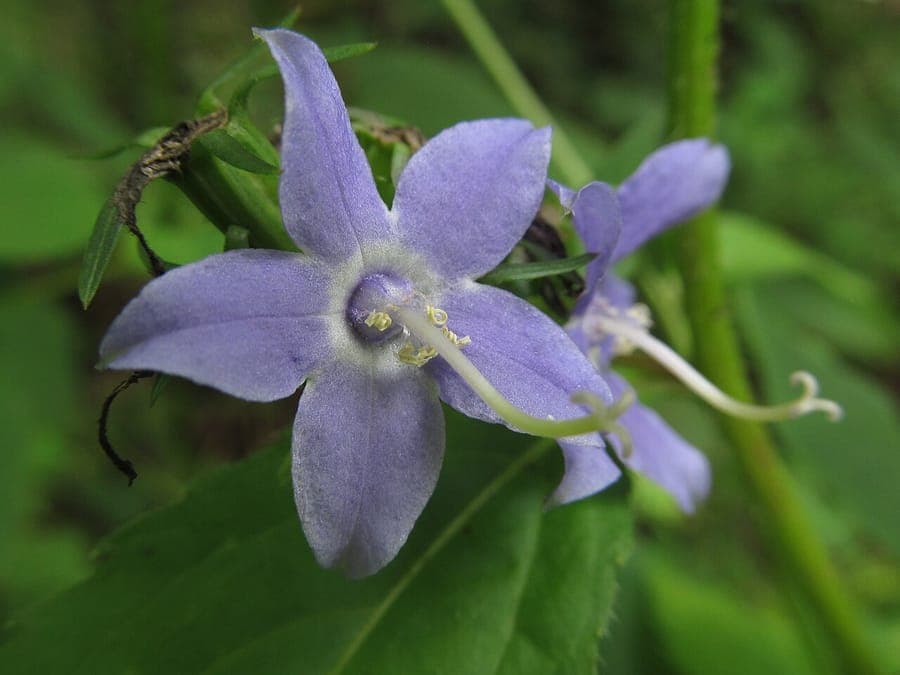
Cbaile19 / CC0, via Wikimedia Commons
Campanula americana: complete guide
Campanula americana
¿Quieres ver Campanula americana: complete guide en tu jardín?
1 minuto, sin tarjeta de crédito
Overview
Campanula americana, known as the American bellflower or tall bellflower, is an impressive biennial to short-lived perennial from North America. With slender upright stems reaching up to 1.5 meters tall, this plant makes a striking vertical accent in garden borders.
This plant belongs to the Campanulaceae family, the same family as popular bellflowers. It is celebrated for its abundant blue flowers that appear from June to September in large quantities.
Appearance and Bloom
Campanula americana grows as a slender, upright plant with narrow leaves and abundant stem foliage. The plant easily reaches 1.2 to 1.5 meters in height. The flowers are sky-blue to violet and appear in great numbers along the upper half of the stem.
The flowers have a flattened form and measure about 1 to 1.5 centimeters in diameter. They appear in two sexual forms with distinct reproductive organs in the center. The blooming period runs from June to September, with peak in July and August.
After blooming, the plant forms seed capsules filled with tiny seeds, ideal for self-seeding and natural spread.
Ideal Location
Plant Campanula americana in full sun to light partial shade. The plant blooms abundantly with at least 5 to 6 hours of direct sunlight daily. In warm regions, some afternoon shade can be beneficial.
Choose a sheltered location where the plant is not too exposed to strong wind, given the slender stems. A spot against a wall or between other plants for support is ideal.
Soil
The plant thrives in virtually any soil, provided it drains well. A slightly acidic to neutral soil with pH 6.0 to 7.0 is optimal. Add organic material to poor soils.
Keep the soil evenly moist but not waterlogged. Well-draining soil is essential to prevent rot. In heavy clay, improve drainage by working in sand and compost.
Diseño gratis
¿Quieres ver Campanula americana: complete guide en tu jardín? Crea un diseño gratis ahora.
Watering
Water regularly, especially during the growing period. The plant has moderate water needs and tolerates short dry spells moderately well. In hot, dry summers, provide more water.
Maintain even soil moisture without excess water. Mulching around the plant helps with moisture retention. In rainy periods, supplemental water may not be needed.
Pruning
Pruning is not strictly necessary, but removing spent flowers extends the blooming period. Pinch the growing tips when the plant is approximately 30 centimeters tall to encourage branching and denser growth.
At season's end, allow the plant to set seed for natural regeneration. If desired, remove spent plants after frost.
Maintenance Calendar
May: Check plant spacing. Place support stakes for young plantings.
June-September: Water regularly during dry periods. Remove spent flowers. Watch for pests.
July-August: Peak blooming period. Provide support as needed.
September-October: Allow seeds to ripen. Harvest seed if desired for next season.
November: Clear spent plants or leave for bird food.
Winter Hardiness
Campanula americana is not winter hardy and dies with frost. In temperate climates, however, it can grow as a biennial, with foliage overwintering and blooming in the second season.
To encourage biennial growth, sow seed in August-September. Young plants will form foliage and bloom next year.
Companion Plants
Combines well with other tall bloomers such as Delphinium, Lupinus, and Gladiolus. Underplantings with low growth habits like Alyssum maritimum and Dianthus create contrasting layers.
The American bellflower adds a classical reference to cutting gardens. It also provides beautiful cut flowers for dried flower arrangements.
Closing Thoughts
Campanula americana offers stateliness and color to any garden. With simple care, it grows rapidly and blooms abundantly. This classic American plant adds elegance to borders and is perfect for cut flowers. Grouped plantings create dramatic vertical accents.
Available at major garden centers. Seed can be sown directly in soil or in seed trays. Discover more ideas on gardenworld.app for optimal garden design.
¿Quieres ver Campanula americana: complete guide en tu jardín? Crea un diseño gratis ahora.
Sube una foto, elige un estilo y obtén un diseño fotorrealista con lista de plantas en menos de un minuto.
Más de 10.000 jardines diseñados
Sin tarjeta de crédito


Plantas similares
Campanula alaskana: complete guide
Campanula alaskana
Discover Campanula alaskana, the delicate alpine bellflower from Alaska. Growing tips, hardy requirements, and design ideas for rock gardens and alpine troughs.
Campanula scouleri: complete guide
Campanula scouleri
Discover Campanula scouleri, the refined Pacific bellflower. Growing tips, care requirements, and design ideas for woodland and mountain gardens.
Doublehorn calicoflower: complete guide
Downingia bicornuta
All about Downingia bicornuta - the doublehorn calicoflower: sowing, location, bloom and care for this rare annual in your garden.