
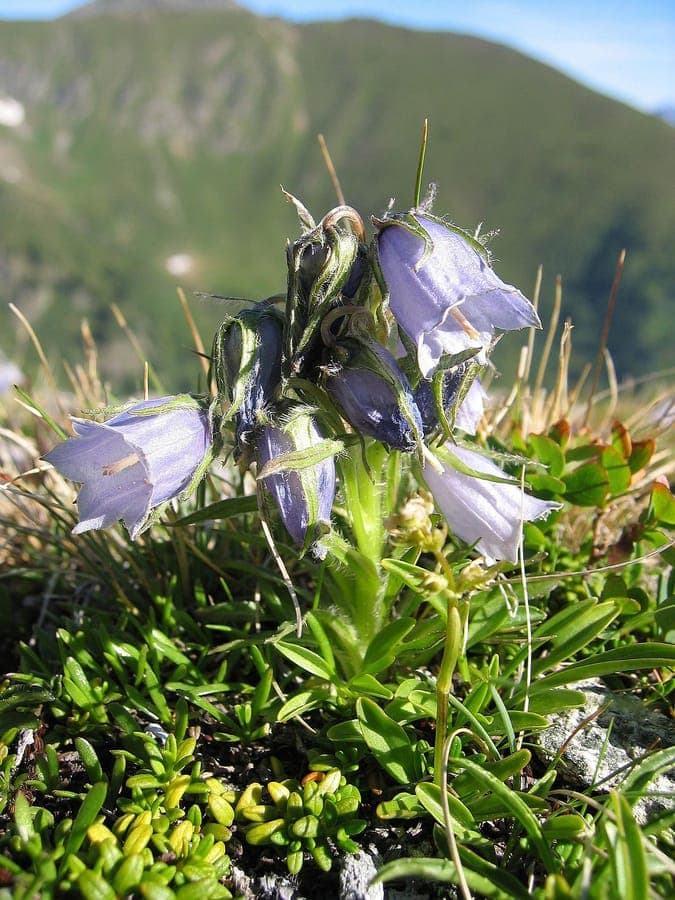
Wikimedia Commons / CC BY-SA 3.0, via Wikimedia Commons
Campanula alpina: complete guide
Campanula alpina
¿Quieres ver Campanula alpina: complete guide en tu jardín?
1 minuto, sin tarjeta de crédito
Overview
Campanula alpina, the alpine bellflower, is a charming miniature that perfectly adorns rock gardens and shady corners. This hardy alpine originates from the Alps and Carpathians, creating year-round attractive groundcover with its compact growth habit.
Appearance and Bloom
The alpine bellflower is a true miniaturist. The plant reaches only 15-20 cm in height and forms dense cushions of narrow, dark green foliage. In spring and early summer, numerous small blue-purple bell-shaped flowers appear, lasting until August. Blooms grow from slender stems, giving the plant an elegant, delicate appearance.
Ideal Location
Campanula alpina thrives in semi-shade to full shade. A spot beneath trees or against a north-facing wall is ideal. It also accepts full sun if soil remains adequately moist. Plant this alpine on rocks, in walls, or in raised beds where drainage is assured.
Soil
The alpine bellflower requires well-draining soil. A mixture of garden soil with gravel or perlite works well. pH should be neutral to slightly acidic (pH 6.0-7.0). Ensure good drainage especially in winter to prevent root rot.
Watering
Water regularly during the growing season, especially in dry weather. Ensure soil never dries completely but avoids waterlogging. Water less in winter. Mulching around the plant helps retain moisture.
Diseño gratis
¿Quieres ver Campanula alpina: complete guide en tu jardín? Crea un diseño gratis ahora.
Pruning
Minimal pruning needed. Remove spent flowers after blooming to encourage regrowth. In spring, trim yellowed or dead foliage. For bushy form, lightly cut back after flowering.
Maintenance Calendar
February: Prepare soil and plant. March: First feeding with slow-release fertilizer. May-August: Regular watering and deadheading. October: Disease inspection. November-December: Minimal care, add mulch.
Winter Hardiness
Campanula alpina is completely winter hardy to -25 C and tolerates snow and frost without issues. In very wet winters, drainage becomes essential. Perfect for Northern European gardens.
Companion Plants
Pair alpine bellflower with other alpine plants like sedum, saxifraga, or alpine phlox. In shade, it looks lovely with Helleborus or Epimedium. On rock gardens, it pairs beautifully with low-growing thyme.
Closing
Campanula alpina is a precious addition for those with space for a rock garden or raised bed. With its tiny size, winter hardiness, and long blooming period, this alpine offers years of beauty. Find this plant at specialty nurseries and on gardenworld.app/en for design inspiration.
¿Quieres ver Campanula alpina: complete guide en tu jardín? Crea un diseño gratis ahora.
Sube una foto, elige un estilo y obtén un diseño fotorrealista con lista de plantas en menos de un minuto.
Más de 10.000 jardines diseñados
Sin tarjeta de crédito


Plantas similares
Campanula alaskana: complete guide
Campanula alaskana
Discover Campanula alaskana, the delicate alpine bellflower from Alaska. Growing tips, hardy requirements, and design ideas for rock gardens and alpine troughs.
Campanula scouleri: complete guide
Campanula scouleri
Discover Campanula scouleri, the refined Pacific bellflower. Growing tips, care requirements, and design ideas for woodland and mountain gardens.
Doublehorn calicoflower: complete guide
Downingia bicornuta
All about Downingia bicornuta - the doublehorn calicoflower: sowing, location, bloom and care for this rare annual in your garden.