
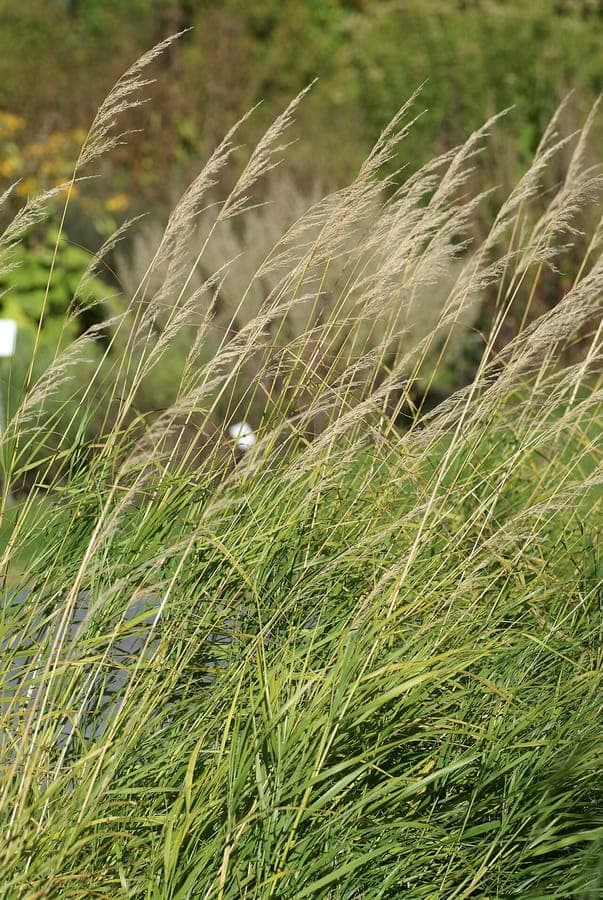
Rolf Engstrand / CC BY-SA 3.0, via Wikimedia Commons
Calamagrostis purpurea: complete guide
Calamagrostis purpurea
¿Quieres ver Calamagrostis purpurea: complete guide en tu jardín?
1 minuto, sin tarjeta de crédito
Overview
Calamagrostis purpurea, commonly known as Scandinavian small-reed, is an elegant ornamental grass native to subarctic and subalpine regions. Belonging to the Poaceae family, this grass is prized for its refined growth habit, pleasant texture, and striking purple plumes that add seasonal interest to the landscape.
Originating from Northern Europe and parts of Asia, this grass has adapted to cold and temperate climates. In modern gardens, it is increasingly used for its structural value, wind movement, and bird-feeding properties. This grass transforms any border into a dynamic, naturally appearing garden.
Appearance and Bloom
Calamagrostis purpurea forms dense tufts reaching 80-120 cm in height. The narrow, elongated foliage is bright green in summer, transforming in autumn and winter to golden-brown to reddish-brown tones. The plant produces characteristic plumes appearing in July-August, initially purplish-brown in color.
These plumes lighten in color as the season progresses, acquiring a silvery-white gloss. The plumes persist well into winter, providing valuable winter movement and structure. The plant attracts birds seeking seeds.
Ideal Location
Calamagrostis purpurea thrives in full sun to light shade conditions. A location receiving at least 6 hours of direct sunlight daily produces the best plume development and autumn coloration. In shadier spots, the grass still grows well but becomes somewhat less compact and produces less dramatic plumes.
The plant tolerates windy locations well and actually performs best in such positions. Wind movement of the grass creates beautiful decorative effect. Ensure the grass is not in complete shade, as it becomes too loose and airy.
Soil
Calamagrostis purpurea has modest soil requirements. The grass grows in virtually all soil types, from sandy to clay, provided drainage is moderate to good. It tolerates acidic to neutral soil readily. For optimal growth, additional organic matter is not necessary, though the grass benefits from a compost layer on poor soils.
This grass tolerates heavy clay soils less well than other Calamagrostis species but grows without problems on well-draining soil. A pH between 5.5 and 7.5 is ideal. Avoid very wet winter sites.
Watering
After planting, young grasses require regular watering until well-established (6-8 weeks). Once established, Calamagrostis purpurea is reasonably drought-tolerant and requires minimal supplemental watering. During very dry summer periods, provide occasional water, though mature plants endure long dry spells.
Ensure the grass does not grow in stagnant water. It tolerates short dry periods much better than persistent wet conditions. Minimal summer watering typically suffices for established plants.
Diseño gratis
¿Quieres ver Calamagrostis purpurea: complete guide en tu jardín? Crea un diseño gratis ahora.
Pruning
Calamagrostis purpurea requires minimal pruning. In late spring (March-April), cut dead foliage from the previous year to just above ground level. This stimulates new growth and keeps the plant compact and tidy.
Regularly remove withering plumes as they begin deteriorating. Avoid cutting the plant in autumn and winter, as dead foliage and plumes provide winter structure and frost protection.
Maintenance Calendar
January-February: No action needed. Plant is dormant. March-April: Cut dead material to ground level. Essential for plant health. May-June: New foliage grows rapidly. Check moisture supply. July-August: Plumes appear. Peak season. September-October: Autumn coloration. No pruning needed. November-December: Winter period. Leave plant undisturbed except for heavy snow support.
Winter Hardiness
Calamagrostis purpurea is excellent winter hardy, tolerating temperatures to -25 to -30 degrees Celsius. This grass is very suitable for harsh winter conditions throughout Europe.
The winter appearance of the grass with golden-brown to silvery-white plumes provides valuable structure in the winter garden. Young plants need no special winter protection; in many regions, even first-year plants overwinter without protection. Once established, winter protection is completely unnecessary.
Companion Plants
Calamagrostis purpurea works beautifully in combination with other seasonal elements. Good planting combinations include:
Sedums (stonecrops) - both winter hardy with contrasting form. Lavandula (Lavender) - for fragrance and color contrast. Deschampsia (Hair-grass) - for texture contrast. Achillea (Yarrow) - for flower and texture contrast. Japanese Maples - for added height and seasonal color.
Use the grass in groups of 3-5 for maximum visual effect.
Closing
Calamagrostis purpurea is an excellent choice for gardens seeking texture and movement. This elegant grass offers seasonal beauty from spring deep into winter and requires minimal maintenance. The striking purple plumes in summer and silvery-white effect in autumn and winter make this grass essential for modern, natural gardens.
Available at major garden centers, this northern grass will transform your garden with elegant movement and structure. If you seek a grass offering four-season interest without much effort, Calamagrostis purpurea is an optimal choice.
Visit gardenworld.app for more plant tips and designs. When you want to transform your garden with professional designs of ornamental grasses and plant combinations, gardenworld.app offers expert guidance.
¿Quieres ver Calamagrostis purpurea: complete guide en tu jardín? Crea un diseño gratis ahora.
Sube una foto, elige un estilo y obtén un diseño fotorrealista con lista de plantas en menos de un minuto.
Más de 10.000 jardines diseñados
Sin tarjeta de crédito


Plantas similares
Sporobolus pungens: complete guide
Sporobolus pungens
Sporobolus pungens is a stoloniferous Mediterranean coastal grass with outstanding salt and drought tolerance, perfect for seaside and dry gardens.
Mediterranean aegilops: complete guide
Aegilops biuncialis
Everything about Aegilops biuncialis, a Mediterranean annual grass with ornamental spikes and outstanding drought tolerance for dry gardens.
Silver bluestem: complete guide
Bothriochloa saccharoides
Full guide to Bothriochloa saccharoides (silver bluestem): site, soil, watering, winter hardiness, pruning, and garden companions.