
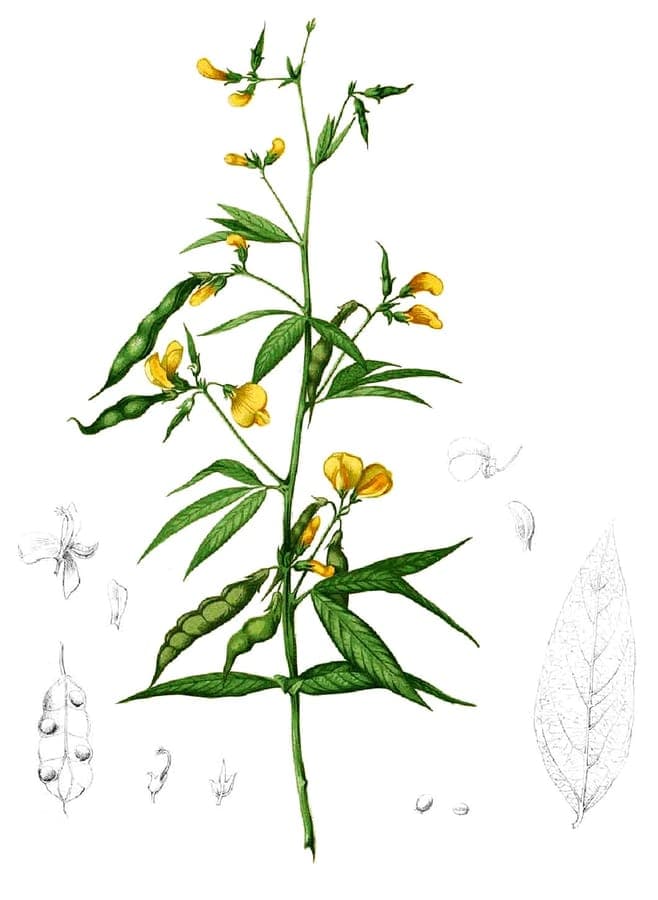
Francisco Manuel Blanco (O.S.A.) / Public domain, via Wikimedia Commons
Pigeonpea: complete guide
Cajanus cajan
¿Quieres ver Pigeonpea: complete guide en tu jardín?
1 minuto, sin tarjeta de crédito
Overview
Cajanus cajan, commonly known as pigeonpea or arhar dal, is an important food crop from the Fabaceae or legume family. This crop naturally occurs in the Indian subcontinent and is now cultivated worldwide. Pigeonpea is renowned for its high protein content, its ability to grow in dry conditions, and its significance in traditional cuisines around the world.
The plant is relatively easy to grow and can be used in both garden borders and food production. With its yellow flowers and green to red seed pods, pigeonpea adds visual interest and nutritional value to any garden design.
Appearance and bloom
Cajanus cajan grows in an upright, bushy plant with many branches. The plant can reach 1.5 to 3 meters in height, depending on variety and growing conditions. The compound leaves are light green and give the plant a fine texture.
The blooming period shows small yellow or yellow-red flowers opening along the branches. These flowers typically appear in mid to late summer (July to September). After blooming, the plant develops green to red pods, each containing 2-3 seeds.
Ideal location
Cajanus cajan grows best in fully sunny locations receiving at least 6-8 hours of direct sunlight daily. The plant can also grow in partial shade, though yield may decline. Provide shelter from strong winds that could damage or blow over the plant.
The plant fits well in vegetable gardens, mixed borders, and food production arrangements. It can also be used as a bird food plant. In container cultivation, the plant can also be grown indoors, though outdoor growth usually provides better yield.
Soil
Cajanus cajan is quite undemanding and grows well in normal to moderately fertile soils. The plant can function on various soil types, preferring well-draining, slightly acidic to neutral soils. For container cultivation, a mixture of garden soil and compost is ideal.
The plant prefers soils with a pH between 5.5 and 7.5. Ensure the soil drains well; waterlogging can be harmful.
Watering
Once established, Cajanus cajan is fairly drought-tolerant. During the growing season, water regularly, especially during flowering and fruiting periods. In dry periods, regular watering is essential for good yields.
Once established, the plant can tolerate dry periods well. Water deeply and less frequently rather than frequent shallow watering. For potted plants: ensure water drains well.
Diseño gratis
¿Quieres ver Pigeonpea: complete guide en tu jardín? Crea un diseño gratis ahora.
Pruning
Cajanus cajan requires minimal maintenance regarding pruning. You can remove strong branches in spring to encourage a more compact growth habit. After harvest, dead or damaged parts can be removed.
In warm climates, the plant can grow for multiple years. In temperate climates, it can be treated as an annual crop.
Maintenance calendar
Spring (March-May): Sow seeds or plant seedlings. Water regularly. Begin feeding.
Summer (June-August): Water regularly, especially during dry periods. Monthly feeding.
Autumn (September-October): Harvest ripe pods. Reduce feeding.
Winter (November-February): In temperate climates finish the crop. In warm climates: continue maintenance.
Winter hardiness
Cajanus cajan is not frost-hardy and can only grow outdoors in warm climates. The plant can tolerate brief frost periods down to about -2 degrees Celsius, but prolonged frost will be fatal. In the Netherlands and Belgium, it should be grown as an annual crop, or young plants sown from seed in spring.
In very warm parts of Europe (Spain, Greece) it may be possible to overwinter outdoors, but this is unreliable.
Harvest and use
The pods can be harvested green if you want green pigeonpeas, or left until fully ripe (yellow to red). The ripe seeds can be dried and stored for later use. When cooked, pigeonpeas taste soft and nutritious.
Pigeonpeas can be used in curries, soups, salads, and many other dishes. They're an important source of plant-based protein.
Companion plants
If you enjoy pigeonpea, you might also appreciate:
- Phaseolus vulgaris (common bean)
- Vicia faba (broad bean)
- Lathyrus sativus (grass pea)
These plants have similar growing and harvesting requirements and add nutritional value to garden designs.
Closing
Cajanus cajan is a versatile food crop that's easy to grow and provides significant nutritional value. With minimal care, you can supply yourself with nutritious pigeonpeas. Whether creating a food production garden or a decorative vegetable garden, pigeonpea is certainly worth trying.
Perfectly suited for gardenworld.app garden plans!
For more information and seeds, see garden centers and seed suppliers.
¿Quieres ver Pigeonpea: complete guide en tu jardín? Crea un diseño gratis ahora.
Sube una foto, elige un estilo y obtén un diseño fotorrealista con lista de plantas en menos de un minuto.
Más de 10.000 jardines diseñados
Sin tarjeta de crédito


Plantas similares
Tall Silky Lupine: complete guide
Lupinus elatus
Tall silky lupine is a fast-growing Californian perennial with silvery foliage and blue-purple flower spikes, ideal for a prairie-style garden.
Garfield Lupine: complete guide
Lupinus garfieldensis
The Garfield lupine is a rare, fast-growing American perennial for alkaline, dry grassland gardens, with striking blue flower spikes.
Lupinus elegans: complete guide
Lupinus elegans
Lupinus elegans, the elegant lupine, is a spectacular blooming plant from Mexico with blue flower spikes. Care, cultivation and garden use.