
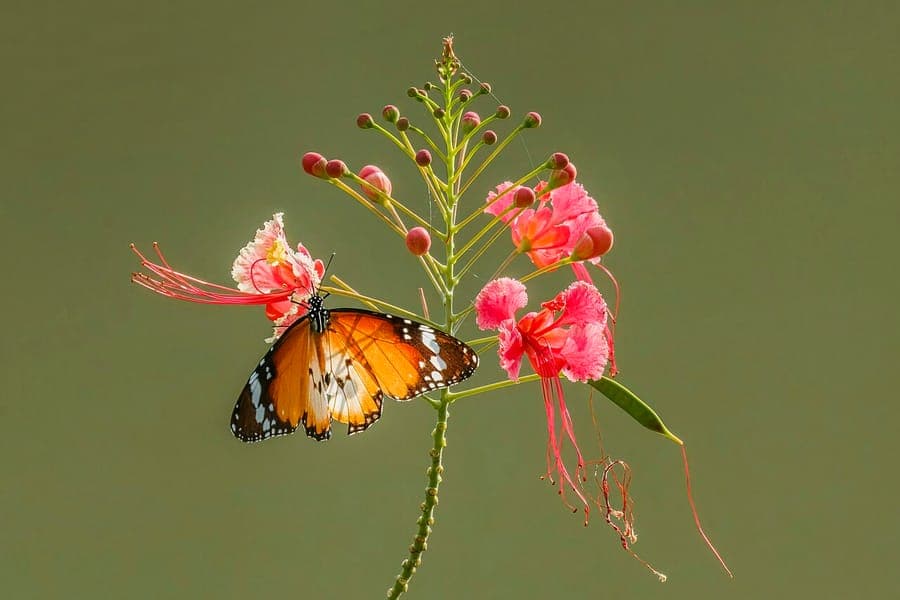
Charles J. Sharp / CC BY-SA 4.0, via Wikimedia Commons
Caesalpinia pulcherrima: complete guide
Caesalpinia pulcherrima
¿Quieres ver Caesalpinia pulcherrima: complete guide en tu jardín?
1 minuto, sin tarjeta de crédito
Overview
Caesalpinia pulcherrima, commonly called paradise flower, dwarf poinciana, or peacock flower, is a tropical ornamental shrub in the Fabaceae (legume) family. Originally from southeastern Mexico to Central America, this plant is now widespread in tropical and subtropical regions.
The shrub is valued for its spectacular flowers: bright red and yellow blooms with striking red appendages (stamens) filled with red anthers. The flowers bloom over an extended period, attracting birds and insects. The shrub is ideal for ornamental gardens and as cut flowers.
Appearance & bloom
Caesalpinia pulcherrima grows as a shrub or small tree reaching 3-5 meters height. The plant has an open, spreading growth pattern with glossy green, doubly compound foliage.
The flowers are the striking feature: large, approximately 4-5cm, with four red and yellow petals (usually red-topped, yellow-based with red spotting). The flowers have five long, red stamens extending from the center, dramatically enhancing the flower's character.
The flowers appear in hanging clusters and bloom continuously from summer through first frost. Each flower is short-lived (several hours) but constantly replaced. The fruits are flat, brown pods reaching 10-15cm length.
Ideal location
Caesalpinia pulcherrima grows best in warm, sunny locations requiring at least 6-8 hours direct daily sunlight. Full sun ensures best flowering.
The plant is moisture-tolerant and wind-resistant. In cooler climates, greenhouse cultivation or very sheltered warm-season microclimates are necessary. The plant can tolerate light drought once established. Sheltered placement in stormy seasons helps protect flowers.
Soil
Caesalpinia pulcherrima grows well in various soil types. The plant requires well-draining soil preventing waterlogging. Heavy clay soils require amendment with sand and organic matter.
The plant prefers moderately fertile soil. Incorporate organic material before planting. The plant is moderately drought-tolerant once established. Light mulching around the plant helps retain moisture.
Diseño gratis
¿Quieres ver Caesalpinia pulcherrima: complete guide en tu jardín? Crea un diseño gratis ahora.
Watering
Caesalpinia pulcherrima requires consistent moisture in young years until root systems establish well. Once established, the plant is reasonably drought-tolerant.
During growth and blooming periods (summer-autumn), water regularly keeping soil consistently moist. During winter reduce watering. Avoid standing water damaging roots. Good drainage is essential.
Pruning
Caesalpinia pulcherrima can be pruned to control form and height. Prune in early spring or after blooming. This stimulates bushier growth and more flowers.
Remove dead, weak, or damaged branches as needed. Moderate pruning (30% of growth size) encourages more vigorous blooming. Excessive pruning weakens the plant.
Maintenance calendar
Early Season: Plant during warm months (spring to early summer). Ensure good drainage.
Summer: Water regularly. Begin monthly feeding with bloom-encouraging fertilizer. Enjoy flowering display. Monitor for insect pests.
Autumn: Flowers continuous. Harvest cut flowers carefully. Reduce feeding as season ends.
Late Season: In non-tropical regions bring indoors or maintain in greenhouse. In tropical zones minimal maintenance; protect from extreme drought.
Winter hardiness
Caesalpinia pulcherrima is very frost-sensitive and suffers damage at temperatures below 10°C. This is a warmth-loving plant unsuitable for outdoor cultivation in temperate climates without protection. Young plants are particularly frost-sensitive. Mature plants in sheltered locations might survive briefly above freezing but suffer severely.
Companion plants
In tropical gardens combines well with other warmth-lovers: Frangipani for exotic fragrance, Bougainvillea for color contrast, Plumeria for alternative flowers, Iochroma for blue blooms, Lantana for varied coloring.
In potted greenhouse cultivation: Azaleas, Camellias, Begonias.
Closing
Caesalpinia pulcherrima brings tropical beauty and delightful blooms to gardens. With extended flowering periods and striking red-yellow flowers, it's spectacular for any garden. Perfect for greenhouse cultivation and warm microclimates. Start seeds early in season or plant nursery specimens for best results. Enjoy the bird visits attracted by the flowers.
¿Quieres ver Caesalpinia pulcherrima: complete guide en tu jardín? Crea un diseño gratis ahora.
Sube una foto, elige un estilo y obtén un diseño fotorrealista con lista de plantas en menos de un minuto.
Más de 10.000 jardines diseñados
Sin tarjeta de crédito


Plantas similares
Tall Silky Lupine: complete guide
Lupinus elatus
Tall silky lupine is a fast-growing Californian perennial with silvery foliage and blue-purple flower spikes, ideal for a prairie-style garden.
Garfield Lupine: complete guide
Lupinus garfieldensis
The Garfield lupine is a rare, fast-growing American perennial for alkaline, dry grassland gardens, with striking blue flower spikes.
Lupinus elegans: complete guide
Lupinus elegans
Lupinus elegans, the elegant lupine, is a spectacular blooming plant from Mexico with blue flower spikes. Care, cultivation and garden use.