
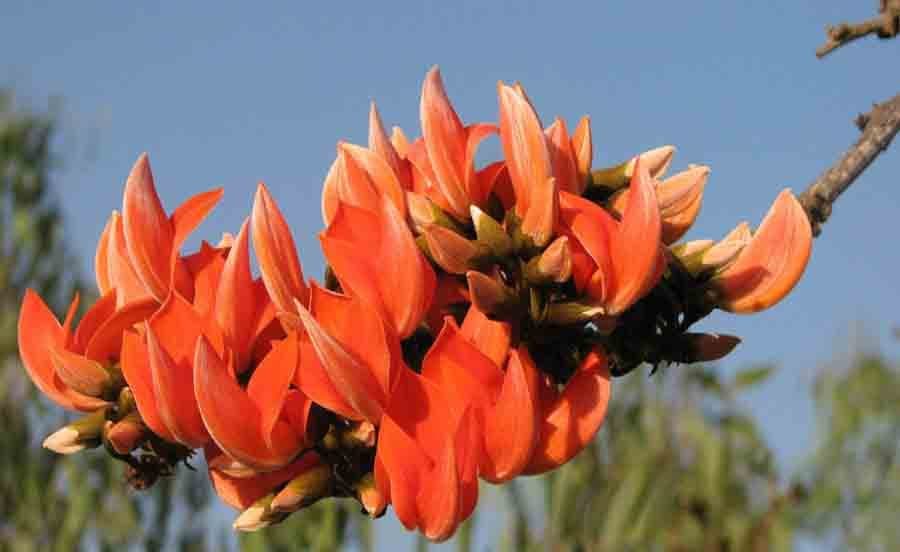
SumaTagadur 05:01, 28 March 2007 (UTC) / CC BY-SA 2.5, via Wikimedia Commons
Bengal kino tree: complete guide
Butea monosperma
¿Quieres ver Bengal kino tree: complete guide en tu jardín?
1 minuto, sin tarjeta de crédito
Overview
Butea monosperma, commonly known as Bengal kino tree, palash tree, dhak tree, or flame of the forest, is a magnificent tropical tree from the Fabaceae or legume family. This tree naturally occurs from the Indian subcontinent to China (southwest Guangxi, Yunnan) and Indo-China. The tree is renowned worldwide for its spectacular orange-red flowers and its traditional uses in traditional medicine and wood products.
In more temperate climates, this tree can be grown as a large container plant indoors. With its stunning flowers and interesting texture, it's a real showstopper in any garden design.
Appearance and bloom
Butea monosperma grows with an upright, rounded crown and leafy canopy. The tree can reach 10-15 meters in ideal conditions, though considerably smaller in container culture. The compound leaves are fine-textured and provide a light, moving quality to the landscape.
The flowering season showcases spectacular orange-red flowers opening in clusters. These flowers typically appear in late winter and spring (February-March in the southern hemisphere, October-December in the north). The flowers attract numerous bees and other pollinators.
Ideal location
Butea monosperma thrives best in locations with abundant direct sunlight. The tree needs a minimum of 6-8 hours of full sun daily for optimal growth and flowering. In temperate climates, the tree may need protection from strong winds.
For container cultivation, placement in the sunniest spot is essential. In winter, the tree can be moved to a warmer, sheltered location. The tree fits well in Mediterranean, tropical, and subtropical garden designs.
Soil
Butea monosperma grows well in normal fertile, well-draining soil. The tree is not particularly demanding and functions well on various soil types as long as drainage is good. For container cultivation, a mixture of garden soil, sand, and compost is ideal (ratio 2:1:1).
The tree prefers soils with a pH between 6.0 and 8.0 and tolerates acidic to alkaline soils well. Ensure good drainage; water stagnation can lead to root rot.
Diseño gratis
¿Quieres ver Bengal kino tree: complete guide en tu jardín? Crea un diseño gratis ahora.
Watering
When Butea monosperma is actively growing, water regularly, especially during the growing season. In summer, keep the soil moist but not waterlogged. In winter, watering can be significantly reduced, particularly if the tree is dormant.
In dry periods, misting the foliage can be beneficial to improve the microclimate. For potted plants: ensure water drains well; don't leave water standing in the pot.
Pruning
Butea monosperma can be pruned regularly to manage shape and size, particularly as a potted plant. Prune after flowering in spring to maintain shape. Remove strong wayward branches for better light penetration.
For larger forms, apply aesthetic pruning to remove damaged or diseased wood. Young trees should be guided to develop good structure.
Maintenance calendar
Spring (March-May): Water heavily as the tree begins to leaf out. Begin monthly feeding.
Summer (June-August): Water regularly. Leaf misting can help. Monthly feeding.
Autumn (September-October): Gradually reduce watering. Reduce feeding.
Winter (November-February): Minimal water. Strong frost protection needed. No feeding.
Winter hardiness
Butea monosperma is not very frost-hardy and can only grow outdoors in warm climates. The tree can tolerate brief frost periods down to about -2 to -3 degrees Celsius, but prolonged frost will be fatal. In the Netherlands and Belgium, the tree must be grown as a potted plant indoors in winter.
If you live in a very warm part of Europe and want to take the risk, you could try growing it outdoors with strong winter protection, but this is not recommended.
Companion plants
If you enjoy Butea monosperma, you might also appreciate:
- Erythrina corallodendron (flame tree)
- Spathodea campanulata (African tulip tree)
- Rhododendron simsii (azalea)
These plants share similar growing and care requirements and add spectacular color to garden designs.
Closing
Butea monosperma is a spectacular, exotic tree that looks stunning in potted form in temperate climates. Despite its tropical nature, it can be cultivated as a beautiful container plant. With careful winter care and appropriate location selection, you'll enjoy many years of pleasure from this magnificent tree.
Perfectly suited for gardenworld.app garden plans!
For more information and plant availability, see specialized garden centers.
¿Quieres ver Bengal kino tree: complete guide en tu jardín? Crea un diseño gratis ahora.
Sube una foto, elige un estilo y obtén un diseño fotorrealista con lista de plantas en menos de un minuto.
Más de 10.000 jardines diseñados
Sin tarjeta de crédito


Plantas similares
Tall Silky Lupine: complete guide
Lupinus elatus
Tall silky lupine is a fast-growing Californian perennial with silvery foliage and blue-purple flower spikes, ideal for a prairie-style garden.
Garfield Lupine: complete guide
Lupinus garfieldensis
The Garfield lupine is a rare, fast-growing American perennial for alkaline, dry grassland gardens, with striking blue flower spikes.
Lupinus elegans: complete guide
Lupinus elegans
Lupinus elegans, the elegant lupine, is a spectacular blooming plant from Mexico with blue flower spikes. Care, cultivation and garden use.