
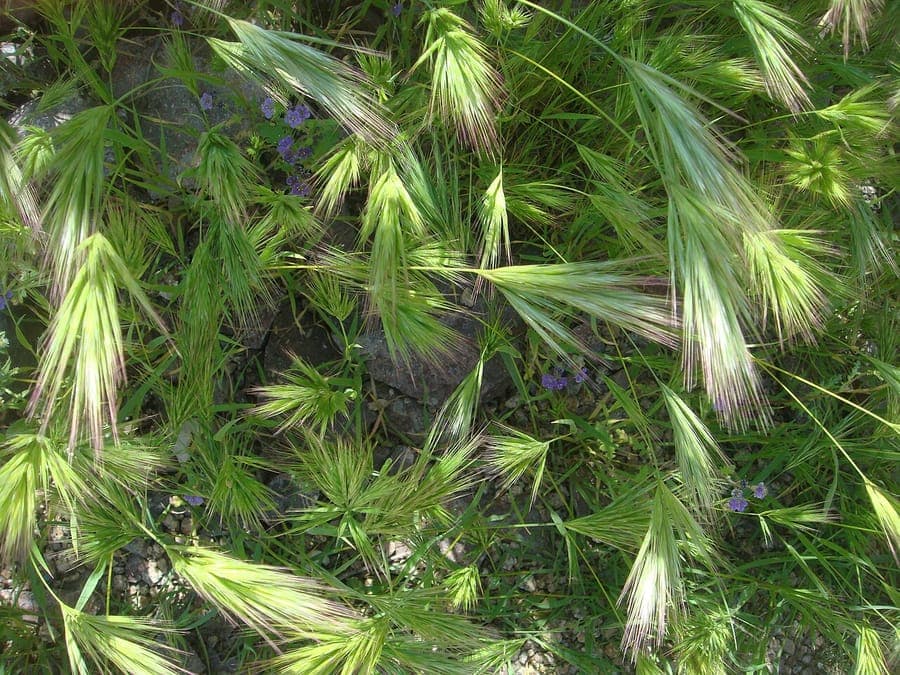
Miwasatoshi / CC BY-SA 4.0, via Wikimedia Commons
Bromus rubens: complete guide
Bromus rubens
¿Quieres ver Bromus rubens: complete guide en tu jardín?
1 minuto, sin tarjeta de crédito
Overview
Bromus rubens, known as red brome or foxtail brome, is a striking ornamental grass featuring reddish panicles. This Mediterranean wild grass grows from North Africa to Afghanistan and provides abundant bird food with strong decorative effect.
The plant is an annual reaching 20 to 60 centimeters tall. The distinctive feature is its reddish to purplish panicles that contrast beautifully against other garden plants in summer.
Appearance and Bloom
Bromus rubens has narrow, green blades that grow linearly along thin, upright stems. The blades are soft to touch and give the plant a delicate appearance.
Panicles appear from May to July and are highly characteristic. They form dense, upright to slightly nodding racemes with individually visible spikelets. The spikelets have long awns that spread widely. Most notably, the panicles are red to deep purple in color, especially toward season's end, giving the grass its name.
Ideal Location
Bromus rubens thrives best in full sunlight with at least 8 hours of direct daily sunshine. The grass is extremely drought-tolerant and performs well on dry slopes, rocky sites, and other difficult locations.
In its native habitat, it grows on sandy, calcareous soils on hills and open slopes. The plant tolerates warm, windy conditions without difficulty.
Soil
Bromus rubens is highly adaptable to various soil types. It grows well in poor, dry, calcareous soils. The plant tolerates both sandy and clayey soils.
No special soil preparation is required. The plant prefers well-drained soils and should not be planted in wet conditions. Waterlogging can cause root rot.
Diseño gratis
¿Quieres ver Bromus rubens: complete guide en tu jardín? Crea un diseño gratis ahora.
Watering
Once established, watering is rarely needed. The plant is extremely drought-tolerant and can survive extended periods without rainfall. During the first growing season, regular water should be provided.
Once established, this grass can endure long dry periods. This makes it ideal for water-conscious gardens and xeriscape designs.
Pruning
This plant requires no pruning. The panicles may be cut after seed maturation if spread is to be prevented. However, many gardeners leave panicles standing for their striking color effect.
Maintenance Calendar
Spring (March-May): Direct sowing outdoors after all frost danger has passed. Summer (June-August): Minimal maintenance, observe blooming and characteristic red color. Autumn (September-October): Seeds ripen, panicles deepen in color. Winter (November-February): Dry remnants remain standing, plant dies back after seed dispersal.
Winter Hardiness
Bromus rubens is an annual that dies after seed maturation. The plant is fairly cold-tolerant and can withstand freezing temperatures. Seeds can overwinter in cold climates.
Companion Plants
Bromus rubens grows well in combination with:
- Other Mediterranean grasses and herbs
- Drought-tolerant plants (sage, oregano, thyme)
- Succulent plants (sedum, sempervivum)
- Wildflowers (daisy, thistle, poppy)
Conclusion
Bromus rubens is a striking decorative grass combining color, elegance, and bird feeding. The plant grows easily from seed and thrives with minimal maintenance. This makes it perfect for warm, dry gardens and outstanding xeriscape designs.
Seeds are available from specialist suppliers including Intratuin and Gamma. Try this red grass in your garden and enjoy its spectacular color effects. Learn more at gardenworld.app/en.
¿Quieres ver Bromus rubens: complete guide en tu jardín? Crea un diseño gratis ahora.
Sube una foto, elige un estilo y obtén un diseño fotorrealista con lista de plantas en menos de un minuto.
Más de 10.000 jardines diseñados
Sin tarjeta de crédito


Plantas similares
Sporobolus pungens: complete guide
Sporobolus pungens
Sporobolus pungens is a stoloniferous Mediterranean coastal grass with outstanding salt and drought tolerance, perfect for seaside and dry gardens.
Mediterranean aegilops: complete guide
Aegilops biuncialis
Everything about Aegilops biuncialis, a Mediterranean annual grass with ornamental spikes and outstanding drought tolerance for dry gardens.
Silver bluestem: complete guide
Bothriochloa saccharoides
Full guide to Bothriochloa saccharoides (silver bluestem): site, soil, watering, winter hardiness, pruning, and garden companions.