
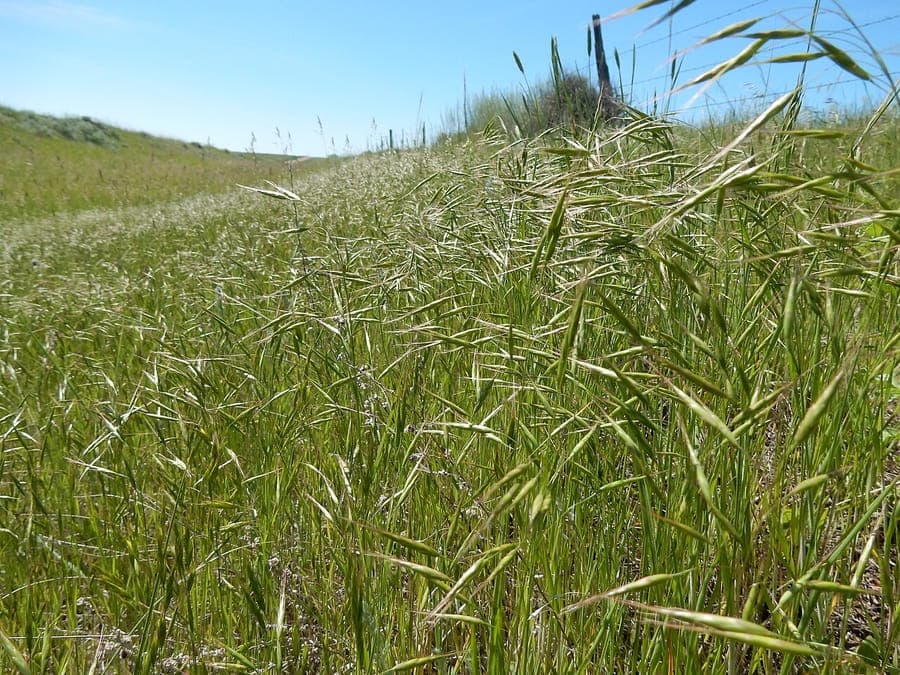
Matt Lavin from Bozeman, Montana, USA / CC BY-SA 2.0, via Wikimedia Commons
Japanese Brome (Bromus japonicus): complete guide
Bromus japonicus
¿Quieres ver Japanese Brome (Bromus japonicus): complete guide en tu jardín?
1 minuto, sin tarjeta de crédito
Overview
Bromus japonicus, known as Japanese Brome or Thunberg's Brome, is an elegant ornamental grass native to temperate regions of Asia. This refined grass panicle grows to approximately 30-60 centimeters tall and forms neat, dense clumps. The plant is prized for its graceful plumes appearing in June that provide soft, airy texture.
Japanese Brome is a perennial grass that is easy to cultivate and requires minimal maintenance. It is particularly popular in Mediterranean and dry gardens, where it adds a natural aesthetic. The plant combines beautifully with flowering plants and other ornamental grasses.
Appearance & bloom
The plant forms compact, grass-like clumps with narrow, drooping leaves creating fine texture throughout the year. The flower plumes appear in June and are extremely refined, with small florets on thin, branching stems that wave gracefully in the breeze. The plumes turn soft yellow to brown-orange when mature.
The flowering period extends from June through August. The dried plumes remain attractive for extended periods and can be used in dried arrangements. The plant creates movement and dynamism in the garden landscape.
Ideal location
Japanese Brome thrives in full sun with at least 6 hours of direct sunlight daily. The plant also grows well in light shade but flowers less abundantly. A location with well-draining soil is essential. Avoid low, wet locations.
The plant works beautifully in borders, as accent plants, or in groups. It combines exquisitely with other ornamental grasses and drought-tolerant flowering plants.
Soil
Japanese Brome requires well-draining soil. The plant grows on poor soils and actually prefers drier conditions. Sandy and gravelly soils are ideal. Avoid clay and wet soils. The plant tolerates slightly acidic to neutral soils.
Recommended soil mix: 50% garden soil, 40% sand, 10% grit. No additional fertilizer needed; the plant actually grows better in less fertile soils.
Diseño gratis
¿Quieres ver Japanese Brome (Bromus japonicus): complete guide en tu jardín? Crea un diseño gratis ahora.
Watering
Japanese Brome is very drought-tolerant once established. Water regularly during the first growing season until the plant is well-rooted. After establishment, water only during prolonged dry spells. The plant tolerates drought exceptionally well and survives extended periods without water.
Avoid waterlogging and ensure good drainage. The plant performs better in drier conditions than in wet conditions.
Pruning
Japanese Brome requires minimal pruning. The best approach is an annual high-cut in early spring before growth resumes. Cut the plant back to about 5-10 centimeters above ground. This stimulates new growth and keeps the plant compact.
Remove dried leaves and plumes as needed for neatness. The plant naturally becomes dormant after ripening.
Maintenance calendar
- March-April: Cut back dead material, optional light fertilizing
- May-June: Growth and flowering begin, enjoy plumes
- July-August: Plant flowers, minimal care needed
- September-October: Drying phase, expect self-seeding
- November-February: Plant dormant, no maintenance
Winter hardiness
Japanese Brome is very winter-hardy, tolerating -20 degrees Celsius. The plant can remain outdoors in most climates. The dried autumn stems can remain through winter for decorative value.
Companion plants
Japanese Brome combines beautifully with other ornamental grasses like Festuca and Stipa. The plant also works well with drought-tolerant flowering plants such as Nepeta, Salvia, and Santolina. Grouping creates interesting texture contrasts.
Finding plants: Intratuin and Gamma occasionally stock young plants. You can order seed online from specialized grass seed suppliers.
Closing
Japanese Brome is an elegant addition to dry, sunny gardens. With its refined plumes and straightforward growing requirements, this plant offers years of beauty. Learn more at gardenworld.app/en and explore ornamental grasses at gardenworld.app/en-grasses.
¿Quieres ver Japanese Brome (Bromus japonicus): complete guide en tu jardín? Crea un diseño gratis ahora.
Sube una foto, elige un estilo y obtén un diseño fotorrealista con lista de plantas en menos de un minuto.
Más de 10.000 jardines diseñados
Sin tarjeta de crédito


Plantas similares
Sporobolus pungens: complete guide
Sporobolus pungens
Sporobolus pungens is a stoloniferous Mediterranean coastal grass with outstanding salt and drought tolerance, perfect for seaside and dry gardens.
Mediterranean aegilops: complete guide
Aegilops biuncialis
Everything about Aegilops biuncialis, a Mediterranean annual grass with ornamental spikes and outstanding drought tolerance for dry gardens.
Silver bluestem: complete guide
Bothriochloa saccharoides
Full guide to Bothriochloa saccharoides (silver bluestem): site, soil, watering, winter hardiness, pruning, and garden companions.