
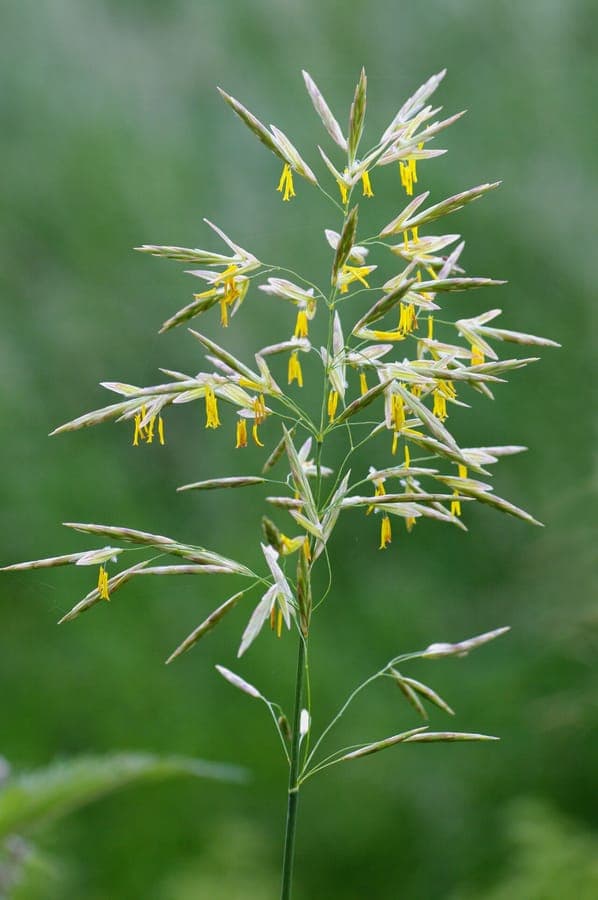
Christian Fischer / CC BY-SA 3.0, via Wikimedia Commons
Hungarian brome: complete guide
Bromus inermis
¿Quieres ver Hungarian brome: complete guide en tu jardín?
1 minuto, sin tarjeta de crédito
Overview
Hungarian brome (Bromus inermis), also called smooth brome, is a vigorous perennial grass native to temperate Eurasia. Widely used for erosion control, pasture improvement and land reclamation, it combines exceptional hardiness with remarkable drought tolerance. This reliable grass succeeds in challenging conditions where other plants struggle.
Appearance and bloom
Hungarian brome forms dense, upright clumps reaching 80-120 cm tall in one growing season once established, with some superior cultivars occasionally exceeding 130 cm. Foliage is mid-green to grey-green, relatively broad and gracefully arching when mature, creating flowing lines in landscape compositions. Individual leaves reach 20-25 cm in length with fine texture contributing to overall aesthetic appeal. Flowering occurs June-July, producing subtle pale-grey panicles 10-15 cm long that add gentle movement and visual interest without dominating or overpowering adjacent plantings. The flower heads mature to buff tones in late summer, persisting attractively into autumn when properly managed. The overall texture remains fine and persistent throughout seasons, providing winter structure when other herbaceous plants have collapsed.
Ideal location
This grass thrives in full sun to partial shade, showing remarkable adaptability to varied lighting. Direct sun promotes denser growth and fuller panicles. Afternoon shade suits warmer regions. Wind tolerance is excellent once plants mature and strengthen their root systems.
Soil
Hungarian brome accepts diverse soil types from sandy to clayey, making it invaluable for poor-soil situations. Moderately fertile soil is optimal but not essential. Once established, the plant tolerates extended drought periods exceptionally well. Good drainage prevents winter losses in wet climates.
Watering
After establishment, Hungarian brome needs minimal supplemental watering in most climates. Regular moisture during first season promotes strong root development. Thereafter, natural precipitation usually suffices. In arid regions, occasional summer watering enhances vigour and appearance.
Pruning
This grass requires minimal pruning. Remove dead foliage in spring using a stiff rake. Many manage grazing livestock lightly, cutting growth to 5-10 cm in late autumn. Never cut excessively close to the grass crown which could weaken plants.
Maintenance calendar
Spring: Clear winter debris, assess plant health. Summer: Minimal intervention; allow natural growth patterns. Autumn: Remove accumulated dead matter. Winter: Highly dormant; virtually no maintenance required.
Diseño gratis
¿Quieres ver Hungarian brome: complete guide en tu jardín? Crea un diseño gratis ahora.
Winter hardiness
Hungarian brome tolerates temperatures to -35 degrees Celsius and below. Native to cold mountain regions and Siberian grasslands, it thrives in intense winters. Winter survival rarely poses challenges in temperate climates where this species evolved.
Companion plants
Mix with complementary grass species like tall fescue and cocksfoot for naturalistic meadow effects. In ornamental settings, pair with purple-leaved berberis, heuchera and sedums for colour contrast. Wispy textures balance bolder perennials perfectly.
Disease and pest resistance
Hungarian brome demonstrates exceptional resistance to most plant pathogens and pests. Rust occasionally develops in excessively wet conditions but rarely threatens plant vigour. Good air circulation prevents fungal establishment. Root rot never develops in well-drained soils regardless of winter moisture levels.
Available cultivars and selections
Multiple improved cultivars exist with variation in growth vigour, height and seed production. 'Lincoln' cultivar proves excellent for ranching applications. 'Mandalou' selection outperforms parent species in drought-limited situations. Cultivar selection depends on specific intended use and climate zone requirements.
Landscape design integration
Hungarian brome provides structural continuity in naturalistic garden settings. Massing with complementary grass species creates authentic prairie-like effects. In formal gardens, this grass contributes texture without overwhelming refined design schemes. Spring bulb underplanting creates early-season colour interest beneath grass canopy.
Long-term ecosystem contributions
This grass stabilises vulnerable slopes and hillsides, reducing erosion significantly. Root systems penetrate deep, improving water infiltration and soil structure. Mature seed heads feed wild birds and small mammals throughout autumn and winter. Annual organic matter decomposition enriches soil fertility naturally over time.
Grass management for maximum effect
Allow seed heads to mature fully for wildlife benefit. Light grazing by livestock maintains dense growth and prevents woody encroachment. In ornamental settings, leave standing for winter interest and creature shelter. Spring burning rejuvenates aged pastures but requires careful timing and expertise.
Conclusion
Hungarian brome delivers reliable, sustainable forage and ornamental value. With minimal care once rooted, this hardy grass thrives across diverse conditions. Seed widely available; see gardenworld.app/en and gardenworld.app/nl for design applications and habitat creation guides.
¿Quieres ver Hungarian brome: complete guide en tu jardín? Crea un diseño gratis ahora.
Sube una foto, elige un estilo y obtén un diseño fotorrealista con lista de plantas en menos de un minuto.
Más de 10.000 jardines diseñados
Sin tarjeta de crédito


Plantas similares
Sporobolus pungens: complete guide
Sporobolus pungens
Sporobolus pungens is a stoloniferous Mediterranean coastal grass with outstanding salt and drought tolerance, perfect for seaside and dry gardens.
Mediterranean aegilops: complete guide
Aegilops biuncialis
Everything about Aegilops biuncialis, a Mediterranean annual grass with ornamental spikes and outstanding drought tolerance for dry gardens.
Silver bluestem: complete guide
Bothriochloa saccharoides
Full guide to Bothriochloa saccharoides (silver bluestem): site, soil, watering, winter hardiness, pruning, and garden companions.