
Wikimedia Commons / Public domain, via Wikimedia Commons
Ardennes Brome: complete guide
Bromus bromoideus
¿Quieres ver Ardennes Brome: complete guide en tu jardín?
1 minuto, sin tarjeta de crédito
Overview
Bromus bromoideus, commonly called Ardennes brome or brome of the Ardennes, is a unique grass species with very limited distribution in Europe. This annual or winter-annual grass from the Poaceae family has long disappeared from many of its natural habitats in the Benelux region, but is now grown in some gardens and botanical collections.
Although this species is ecologically rare, it offers interesting possibilities for botanical collectors and nature lovers who want to preserve heritage plant material. With its fine, elegant flowering panicles, Bromus bromoideus offers structure and movement to gardens.
Appearance and bloom
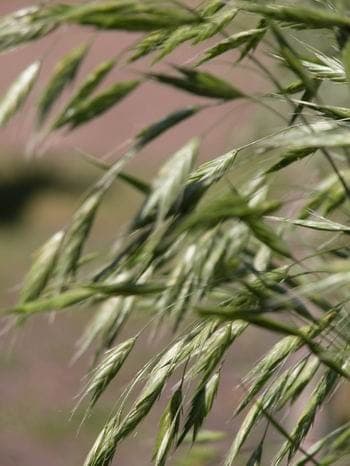
Bromus bromoideus grows as a compact grass species usually 30 to 60 cm tall. The plant forms dense tufts with fine, green leaves. In spring and early summer, its characteristic flowering panicles with greenish awns give gardens elegant movement.
The panicles are graceful and form an airy, fine structure above the foliage. The plant is not spectacular but offers subtle beauty through its texture and form.
The grass dies back in summer, which is typical for many Bromus species, especially in warm climates. This gives it a seasonal character.
Ideal location
Bromus bromoideus prefers well-lit locations with full sun. The plant can also grow in partial shade but blooms less fully in shade. According to Trefle data, the grass prefers high light intensity (8 on a scale of 10).
The plant is very drought-resistant and grows well in open, exposed locations. This makes it suitable for xeriscaped gardens and dry borders. The plant is often found in dry grasslands in its natural habitat.
Soil
Bromus bromoideus prefers well-draining soils with neutral to slightly alkaline pH. According to Trefle data, the grass thrives best at pH 7.5 to 8.0. The grass can grow in rocky, gravelly, or sandy soils.
The plant prefers soils with moderate nutrient value and can grow in poor soils. Over-feeding can lead to denser growth without extra ornamental value. The plant also tolerates alkaline soils well.
Waterlogging is poorly tolerated, so good drainage is essential.
Diseño gratis
¿Quieres ver Ardennes Brome: complete guide en tu jardín? Crea un diseño gratis ahora.
Watering
Bromus bromoideus is very drought-resistant once established. Young plants, however, should be watered regularly until they have good roots. The plant prefers dry conditions over permanent moisture.
After the first year, supplemental water is usually not needed in areas with regular rainfall. In very dry climates, water may be needed during growth.
Waterlogging should be avoided, especially in winter.
Pruning
Bromus bromoideus requires virtually no pruning. After dying back in summer, dead leaves can be removed in fall. The plant naturally gives interesting structure.
In spring, damaged leaves can be removed for a neater appearance.
Maintenance calendar
January-February: Preparation. Plant in early spring. March-April: Growth begins. Monitor moisture. May-June: Bloom appears. Peak growth. July-August: Plant begins to die back. This is normal. September-October: Dead leaves can be removed. November-December: Rest period.
Winter hardiness
Bromus bromoideus is moderately winter-hardy. The grass is winter-annual, meaning it grows in fall and blooms in spring. It can tolerate temperatures down to about -15 degrees Celsius, but dies back after seed set.
In severe winters, protection can be beneficial. The plant usually survives through seed that regrows in the next season.
Companion plants
Bromus bromoideus combines well with:
- Other dry grasses
- Dry flowering plants
- Lavender (Lavandula)
- Rosemary (Rosmarinus)
- Sage (Salvia)
- Santolina
- Dry herbaceous plants
These combinations create dry, texture-rich garden effects.
Closing thoughts
Bromus bromoideus is a fascinating plant for collectors and botanical enthusiasts. Although ecologically rare, it offers interesting possibilities for heritage garden design. With its elegant flowering panicles and drought hardiness, it is a valuable part of naturalistic gardens.
For seed or plants, contact botanical gardens or specialized seed suppliers. gardenworld.app offers inspiration for heritage plant collections.
¿Quieres ver Ardennes Brome: complete guide en tu jardín? Crea un diseño gratis ahora.
Sube una foto, elige un estilo y obtén un diseño fotorrealista con lista de plantas en menos de un minuto.
Más de 10.000 jardines diseñados
Sin tarjeta de crédito


Plantas similares
Sporobolus pungens: complete guide
Sporobolus pungens
Sporobolus pungens is a stoloniferous Mediterranean coastal grass with outstanding salt and drought tolerance, perfect for seaside and dry gardens.
Mediterranean aegilops: complete guide
Aegilops biuncialis
Everything about Aegilops biuncialis, a Mediterranean annual grass with ornamental spikes and outstanding drought tolerance for dry gardens.
Silver bluestem: complete guide
Bothriochloa saccharoides
Full guide to Bothriochloa saccharoides (silver bluestem): site, soil, watering, winter hardiness, pruning, and garden companions.