
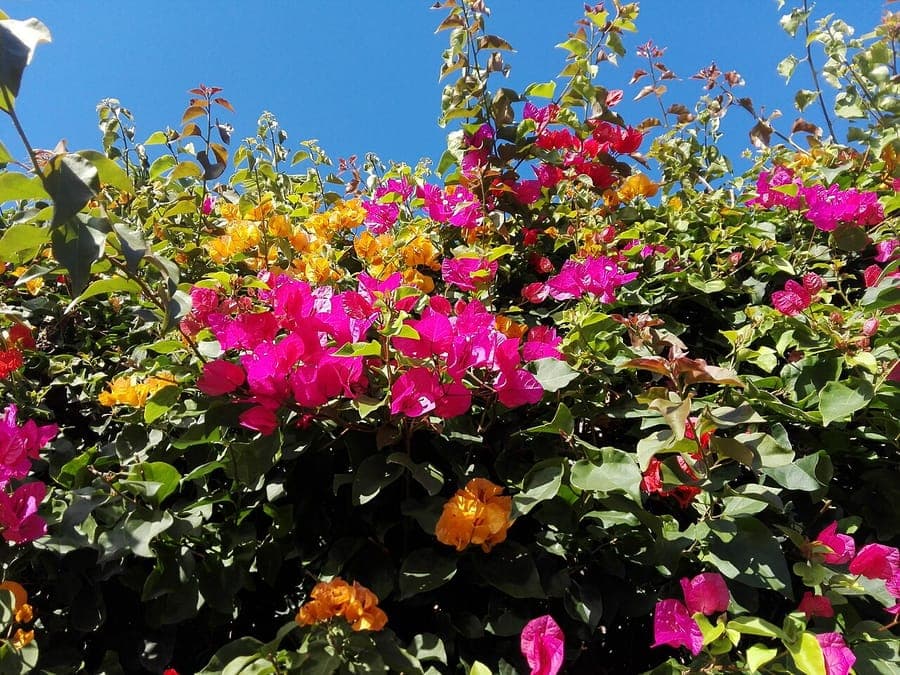
Zbigniew Niepokój / CC BY-SA 4.0, via Wikimedia Commons
Bougainvillea: complete guide
Bougainvillea glabra
¿Quieres ver Bougainvillea: complete guide en tu jardín?
1 minuto, sin tarjeta de crédito
Overview
Bougainvillea is a spectacular climbing shrub native to Brazil that transforms gardens with dramatic color. The showy parts are not true flowers but modified leaves called bracts - papery structures in vivid purples, reds, pinks, oranges and yellows that surround tiny white flowers. This plant is remarkably drought-tolerant once established and rewards gardeners with blooms for nearly eight months. With proper placement and care, bougainvillea becomes a long-lived anchor plant for walls, pergolas and large containers.
Appearance and blooming cycle
Bougainvillea glabra grows as a vigorous vine or shrub with slightly thorny stems and glossy green foliage. The true flowers are small and inconspicuous, but the bracts surrounding them create brilliant color displays from spring through fall. The plant grows quickly in warm climates, reaching 2-4 meters in height, and responds well to pruning. Flowers attract butterflies and hummingbirds throughout the long season, making it beneficial for pollinator gardens.
Ideal location
Bougainvillea demands full sun - at least six hours daily, eight or more is better. Plant against south or west-facing walls, sturdy pergolas or fences where heat and light are maximum. Afternoon shade in hot climates (above 35 degrees Celsius) helps prevent stress. The plant is susceptible to wind damage, so choose a protected position. In cold regions, grow bougainvillea in pots and move indoors before frost. Even partial shade noticeably reduces flowering.
Soil requirements
Bougainvillea thrives in well-draining, lean soil with pH 6.0-6.5. Heavy clay must be amended with sand and compost. Paradoxically, richer soil produces more foliage than flowers. Use a mix of garden soil, sand and perlite (equal parts) for containers. Excellent drainage prevents root rot - the plant's main enemy. Avoid rich fertilizers; this plant genuinely prefers poor growing conditions that concentrate energy into flowers rather than vegetative growth.
Watering
Less is more with bougainvillea. Water deeply when the top 2-3 cm of soil feels dry - typically every 7-10 days in summer. The plant enters semi-dormancy in winter and needs minimal water. Overwatering causes root rot and reduces flowering. Container plants must have drainage holes with no water sitting in saucers. Mist foliage occasionally in hot weather but avoid wetting flowers. Drought stress slightly increases flowering intensity.
Diseño gratis
¿Quieres ver Bougainvillea: complete guide en tu jardín? Crea un diseño gratis ahora.
Pruning
Prune hard in late winter (February-March) before growth resumes, removing dead wood, crossing branches and weak growth. Bougainvillea tolerates severe cutting back to 30-50 cm and bounces back vigorously. Regular pinching during the growing season increases branching and bloom sites. Tie in climbers weekly to their supports to create desired shapes. Summer light pruning removes spent flower clusters and encourages new blooms.
Maintenance calendar
FEBRUARY-MARCH: Heavy pruning and restart watering. APRIL-JUNE: Begin feeding with flowering fertilizer, increase water. JULY-SEPTEMBER: Peak growth and bloom period, water freely. OCTOBER: Reduce watering and stop feeding. NOVEMBER-JANUARY: Near-dormant, minimal water, no feeding.
Winter hardiness
Bougainvillea is tropical and frost-sensitive. It tolerates brief freezes to about -2 degrees Celsius but dies back at lower temperatures. In northern Europe, grow only in containers moved indoors by October. In Mediterranean climates of southern France, it may survive mild winters in sheltered locations. Indoor winter storage requires cool temperatures (10-15 degrees Celsius), low light and minimal water. Never allow it to freeze.
Companion plants
Bougainvillea partners beautifully with clematis, trumpet vine and passion flower on pergolas. In Mediterranean schemes, combine with lavender, roses and agapanthus. Underplant with drought-tolerant species like santolina, dusty miller or sedum. In pots, pair with silver-foliaged plants and trailing petunias. The dramatic bracts pop against soft foliage colors.
Closing thoughts
Bougainvillea epitomizes Mediterranean glamour and rewards good siting with reliable, abundant color. Its tolerance for drought and heat makes it ideal for hot, sunny gardens where other plants struggle. Patience through the first year usually results in excellent establishment. Garden centres carry healthy young plants in spring. Choose a permanent sunny location and enjoy eight months of unforgettable blooms.
Find more gardening inspiration at gardenworld.app/en - explore other tropical climbers and flowering vines!
¿Quieres ver Bougainvillea: complete guide en tu jardín? Crea un diseño gratis ahora.
Sube una foto, elige un estilo y obtén un diseño fotorrealista con lista de plantas en menos de un minuto.
Más de 10.000 jardines diseñados
Sin tarjeta de crédito


Plantas similares
Colorado four o'clock: complete guide
Mirabilis multiflora
Complete guide to Mirabilis multiflora: a showstopping perennial with magenta blooms opening at dusk, highly drought-tolerant and pollinator-friendly.
Sand-verbena: complete guide
Abronia umbellata
Discover sand-verbena, a beautiful pink flower from California perfect for sunny, dry gardens and groundcover with low maintenance needs.
Bougainvillea spectabilis: complete guide
Bougainvillea spectabilis
Great bougainvillea from Brazil with spectacular colored bracts. Climbing plant for warm climates. Care and propagation techniques.