
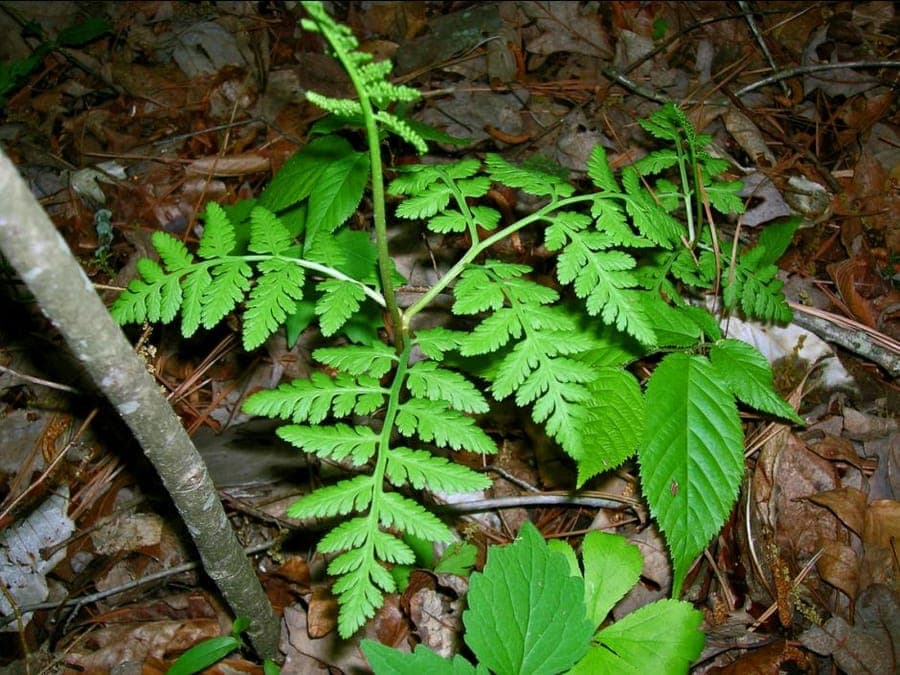
TheAlphaWolf / CC BY-SA 3.0, via Wikimedia Commons
Botrychium virginianum: complete guide
Botrychium virginianum
¿Quieres ver Botrychium virginianum: complete guide en tu jardín?
1 minuto, sin tarjeta de crédito
Overview
The grape fern (Botrychium virginianum), belonging to the Ophioglossaceae family, is one of the most intriguing ferns from North America and temperate Asia. This delicate, slow-growing plant distinguishes itself through its remarkable bifid structure: a sterile frond (trophophyll) and a separate fertile frond (sporophyll) arising from the same stalk. This unique morphology makes it a true collector's item for botanical enthusiasts. The plant thrives in moist, shaded corners where ordinary plants struggle.
With gardenworld.app, you can discover how the grape fern transforms a hidden corner into a botanical sanctuary. Its delicate, lacy foliage calls for minimalist companion plantings. Many private gardeners delight in cultivating grape fern in their shade borders, where it offers an atmospheric, almost prehistoric charm.
Appearance and bloom cycle
The grape fern is an understated beauty with highly specific morphology. The sterile frond grows in a single rosette, reaching 30-40 cm tall, triangular in outline with finely divided segments. It lies horizontal or slightly declined, especially during the growing season. The fertile frond, by contrast, stands upright and branches into fine structures where spores develop. These two lobes arise together from the same petiole - a characteristic that distinguishes grape ferns from many other ferns.
Coloring ranges from pale to mid-green, depending on light and moisture. In autumn, foliage gradually yellows before disappearing entirely. The plant is entirely herbaceous - everything dies back in fall, with fresh growth emerging in early spring. No visible flowers; only spore structures ripening to dark brown around August-September.
Ideal location
Grape fern flourishes in deep to partial shade, receiving at least 3-4 hours of indirect daylight. Direct sun is damaging; this plant is made for forest floor conditions. A spot beneath deciduous trees, on the north or east side of buildings, or under tall structures is ideal. Ensure wind protection, as strong breezes can damage the delicate fronds.
The grape fern thrives in gardens with large shade trees, in shaded front yards, or along woodland edges. With gardenworld.app, such locations are optimized by planting minimal companion species around the grape fern, allowing the plant to breathe and present itself as a botanical jewel.
Soil requirements
This fern loves rich, moisture-retentive, humus-rich soil with acidic to neutral pH (5.5-7.0). Sand or loam alone is insufficient; you need abundant organic material. Amend your soil with at least 30-40% leaf compost, garden compost, or finely sieved peat moss. The soil must never completely dry out but equally must not become waterlogged; drainage is essential to prevent root rot.
In moist soils with ample decaying leaf matter, grape fern thrives best. Think of the forest floor as your model. An annual fine compost mulch layer helps the plant flourish. Acidic gardens, such as heathland or peaty soils, are perfect; in chalky soils, you'll need to add extra acidity.
Diseño gratis
¿Quieres ver Botrychium virginianum: complete guide en tu jardín? Crea un diseño gratis ahora.
Watering
Prefers consistently moist soil, especially during the growing period (March through October). In warm, dry spells, extra watering may be needed - as much as twice weekly. Misting can help, as the delicate fronds appreciate increased air humidity.
Ensure soil never completely dries but remains neither soggy nor waterlogged. A mulch layer (5 cm) of fine leaves or compost helps retain moisture and buffers temperature fluctuations. In autumn and winter, when the plant is dormant, watering can be reduced, but complete drying must be avoided.
Pruning and shaping
This fern requires virtually no pruning. In late autumn, once foliage has completely yellowed and browned, you may gently remove it. Use clean, sharp scissors to cut dead frond portions close to the soil. This helps keep the plant tidy and creates space for new spring growth.
Handle with care - avoid aggressive pruning; this plant is delicate. Remove only genuinely dead portions. During growing season: hands off! No cutting work in the growing season, as this damages the plant.
Maintenance calendar
March-April: Growing season begins; check moisture levels; ensure old leaf litter is loose so new fronds can emerge.
May-June: Full growth; water regularly; apply liquid plant food (half-strength, monthly).
July-September: Spore ripening; keep soil moist; stop fertilizing.
October-November: Fronds yellow; gradually reduce watering.
December-February: Dormancy; minimal moisture; plant is underground.
Winter hardiness
Grape fern is extremely cold-hardy, suitable for USDA zones 3 (-35 to -40 degrees C). In temperate climates (Netherlands, Belgium, France, Germany) this fern handles winter without difficulty. Severe frost periods cause no harm - the plant dies back underground and re-emerges in spring.
In extremely wet winters, root rot can occur; ensure excellent drainage. Heavy snow load causes no damage since the plant is underground. After early spring frosts, check that soil hasn't remained permanently waterlogged.
Companion plants
Grape fern pairs beautifully with other shade-loving ferns such as Polystichum setiferum (soft shield fern), Athyrium (lady ferns), and Dryopteris (male ferns). Add bergenia, ivy, or shade-loving groundcovers. White-flowering lily-of-the-valley (Convallaria majalis) makes a nice combination. Ensure companion plants share the grape fern's moisture-loving, shade-preferring nature.
With gardenworld.app, you choose companion plants that enhance the botanical atmosphere without dominating. Less is more with this fern.
Conclusion
Grape fern isn't for everyone - it demands patience, shade preference, and appreciation for subtlety. But for true plant enthusiasts wanting something unusual to grow, Botrychium virginianum is a secret gem. Its delicate bifid structure, preference for forest-like conditions, and slow, elegant growth make it a worthwhile addition to any shade garden. Start small, provide consistent care, and this fern will reward you with years of quiet botanical joy.
¿Quieres ver Botrychium virginianum: complete guide en tu jardín? Crea un diseño gratis ahora.
Sube una foto, elige un estilo y obtén un diseño fotorrealista con lista de plantas en menos de un minuto.
Más de 10.000 jardines diseñados
Sin tarjeta de crédito


Plantas similares
Azores Adderstongue: complete guide
Ophioglossum azoricum
Ophioglossum azoricum is a rare fern from Europe and Macaronesia. Learn how to cultivate this delicate, moisture-loving fern in shaded gardens.
Botrychium matricariifolium: complete guide
Botrychium matricariifolium
Master cultivation of daisy-leaf grape fern: habitat requirements, propagation challenges, and specialized forest garden care.
Northern moonwort: complete guide
Botrychium boreale
Northern moonwort (Botrychium boreale), also called boreal moonwort, is a rare fern from northern regions with distinctive moon-shaped leaflets. Discover cultivation and care tips.