
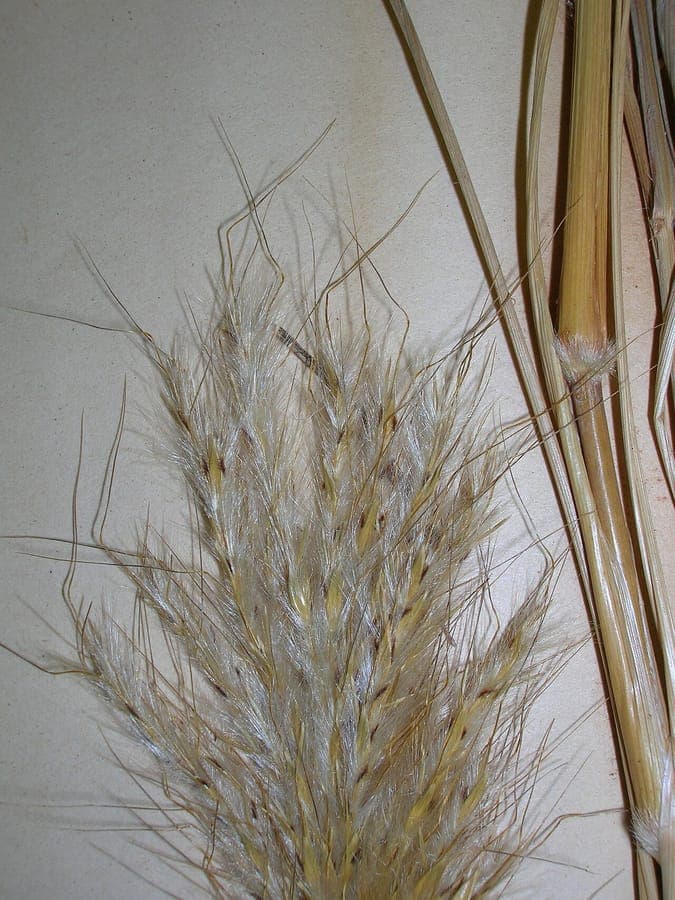
Forest & Kim Starr / CC BY 3.0, via Wikimedia Commons
Bothriochloa barbinodis: complete guide
Bothriochloa barbinodis
¿Quieres ver Bothriochloa barbinodis: complete guide en tu jardín?
1 minuto, sin tarjeta de crédito
Overview
Bothriochloa barbinodis, known as cane bluestem or cane beardgrass, is a native grass from western and southern United States through North Argentina. This Poaceae family member reaches 60-120 cm tall. It offers seasonal interest with spectacular flower structures and supports native grassland fauna.
Appearance and bloom
The plant forms dense tufts with green leaves that develop beautiful red and brown hues in autumn. The flower spikes are highly distinctive with characteristic dark barbed (hairy) nodes. The inflorescence appears from August to October, creating a stunning red-brown silhouette against autumn skies.
Ideal location
Select sunny locations with well-draining soil. Bothriochloa barbinodis thrives in warm climates with full sun. The plant grows well in USDA zones 5-10. Ensure at least 6-8 hours of direct sunlight daily.
Soil
Well-draining, lean to moderately fertile soil is preferred. The plant tolerates dry, sandy, or rocky soils excellently. Heavy clay soils should be amended with sand or gravel. This grass is highly adaptable.
Diseño gratis
¿Quieres ver Bothriochloa barbinodis: complete guide en tu jardín? Crea un diseño gratis ahora.
Watering
Once established, Bothriochloa barbinodis is extremely drought-tolerant. Water regularly during the first growing year. Afterward, supplemental irrigation is needed only during severe drought. This is perfect for low-rainfall regions.
Pruning
Wait until late winter to prune. Cut the grass back to about 10 cm height in February or March before new growth. This stimulates vigorous spring growth. Remove dead leaves carefully.
Maintenance calendar
May: First growth begins. August: Flowers form. October: Bloom reaches peak. November: Color changes to red. December: Plant dies back. February: Pruning.
Winter hardiness
Bothriochloa barbinodis is hardy to USDA zone 5 (-20 degrees Celsius). This makes it suitable for many American gardens. Plant in sheltered locations in colder areas.
Companion plants
Pair with other native grasses like Bouteloua curtipendula and Buchloe dactyloides. Add Coreopsis and Rudbeckia for color. These combinations support native pollen and seed-eating birds.
Closing thoughts
Bothriochloa barbinodis is an extraordinary ornamental grass offering seasonal drama. With its drought tolerance and low maintenance needs, it is perfect for xeriscape and prairie restoration projects.
¿Quieres ver Bothriochloa barbinodis: complete guide en tu jardín? Crea un diseño gratis ahora.
Sube una foto, elige un estilo y obtén un diseño fotorrealista con lista de plantas en menos de un minuto.
Más de 10.000 jardines diseñados
Sin tarjeta de crédito


Plantas similares
Sporobolus pungens: complete guide
Sporobolus pungens
Sporobolus pungens is a stoloniferous Mediterranean coastal grass with outstanding salt and drought tolerance, perfect for seaside and dry gardens.
Mediterranean aegilops: complete guide
Aegilops biuncialis
Everything about Aegilops biuncialis, a Mediterranean annual grass with ornamental spikes and outstanding drought tolerance for dry gardens.
Silver bluestem: complete guide
Bothriochloa saccharoides
Full guide to Bothriochloa saccharoides (silver bluestem): site, soil, watering, winter hardiness, pruning, and garden companions.