
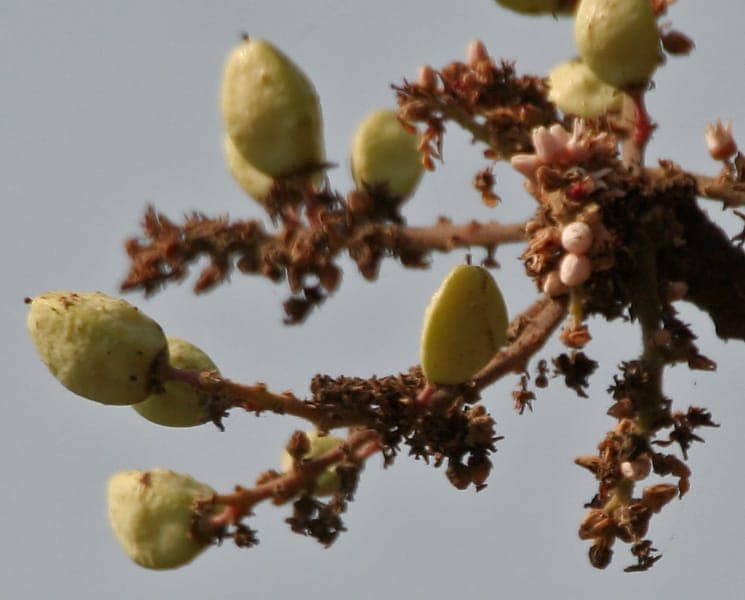
J.M.Garg / CC BY-SA 4.0, via Wikimedia Commons
Boswellia serrata: complete guide
Boswellia serrata
¿Quieres ver Boswellia serrata: complete guide en tu jardín?
1 minuto, sin tarjeta de crédito
Overview
Boswellia serrata, commonly known as the Indian frankincense tree or salai, is a fascinating specimen from the Burseraceae family. Native to the Indian subcontinent, it thrives primarily in the dry forests of India and the West Himalayan region. This plant carries a millennia-old legacy, deeply rooted in traditional medicine and spiritual practices. The tree produces a resinous substance created through natural exudation, known as frankincense or boswellia gum.
Beyond its famous resins, this tree offers considerable ornamental value for warm-climate gardens and serious plant collections.
Appearance and bloom
Boswellia serrata develops into a medium to large tree with an open, spreading canopy. Its compound pinnate leaves consist of numerous small leaflets arranged along a central stem. Each leaflet features a finely serrated margin and gradually tapers to a sharp point. The foliage ranges from bright green to olive tones.
Partial leaf-drop occurs seasonally in dry periods, creating interesting textural changes throughout the year. Small yellow-white flowers emerge in paniculate clusters. While not showy, they provide pleasant contrast against the foliage.
The resulting fruits are small, winged seeds dispersed effectively by wind, displaying natural aerodynamic design.
Ideal location
Select a position with full sun exposure. The tree tolerates partial shade but grows more slowly and establishes less robust growth there. Good air circulation helps prevent fungal issues.
Space is essential for optimal development. Maintain at least 4-5 meters clearance from walls and structures, allowing the canopy to expand freely. In cooler climates, cultivation in a heated greenhouse works well.
Soil
Boswellia serrata thrives in well-draining soil. This is non-negotiable. Heavy clay requires amendment with sand, peat, and organic matter. Optimal pH ranges from 6.0 to 7.5.
The tree tolerates poor soils readily. Excessive feeding proves counterproductive. A 5-7 cm mulch layer conserves moisture and moderates soil temperature.
Diseño gratis
¿Quieres ver Boswellia serrata: complete guide en tu jardín? Crea un diseño gratis ahora.
Watering
During the growing season, provide regular moisture. Water when the top 3-4 cm of soil feel dry. Reduce watering during winter dormancy or dry seasons.
Prevent water pooling around the trunk. Slightly sloped growing beds or raised containers prevent waterlogging. In temperate climates, rainfall often suffices.
Pruning
This tree requires minimal pruning. Remove only dead, damaged, or disease-affected branches. Early spring pruning in warm regions can refine the form.
Geometric shaping is inappropriate. Allow its natural structure to develop fully.
Maintenance calendar
Spring: Check for winter damage and remove dead wood. Begin gentle feeding.
Summer: Water regularly, especially during dry spells. Monitor for pests and diseases.
Autumn: Adjust watering as temperatures drop. Prepare for dormancy.
Winter: Minimize watering in cold regions. Provide frost protection in temperate zones.
Winter hardiness
Boswellia serrata lacks hardiness for temperate European climates. It tolerates only brief exposure to -3 to -5 degrees Celsius, not prolonged freezing.
In moderate and cold zones, container cultivation is recommended. Overwinter in a bright, cool space maintaining minimum temperatures of 10-12 degrees Celsius.
Companion plants
Excellent partners include other drought-tolerant exotics. Combine with agaves, yuccas, and dry-climate climbers. Mediterranean herbs harmonize beautifully.
Avoid moisture-loving plants and grass groundcovers. Conflicting water requirements create competition.
Closing thoughts
Boswellia serrata represents an exceptional choice for plant enthusiasts seeking something beyond conventional selections. With attention to proper siting, drainage, and moisture management, it becomes a rewarding addition to warm gardens and greenhouse projects.
This tree connects us to ancient cultures and traditional knowledge. Both botanically and spiritually, it deserves space in every serious plant collector's world.
Get free design advice on gardenworld.app - design your ideal front garden digitally and explore thousands of plant combinations. Want to learn more about Boswellia serrata in your region? Consult local garden centers for personalized expert guidance.
¿Quieres ver Boswellia serrata: complete guide en tu jardín? Crea un diseño gratis ahora.
Sube una foto, elige un estilo y obtén un diseño fotorrealista con lista de plantas en menos de un minuto.
Más de 10.000 jardines diseñados
Sin tarjeta de crédito


Plantas similares
West Indian-Birch: complete guide
Bursera simaruba
Discover the Gumbo Limbo, famous for its striking red bark. Learn how to grow this tropical tree and enjoy its unique beauty and character.
Myrrh tree: complete guide
Commiphora myrrha
Discover the myrrh tree (Commiphora myrrha), valued for its aromatic resin. A drought-tolerant shrub for tropical and subtropical gardens. Cultivation and care guide.
Okoume: complete guide
Aucoumea klaineana
Aucoumea klaineana, the Okoume tree, is an African timber tree from West-Central Africa. Fast-growing with aromatic wood used in woodworking and rosin extraction.