
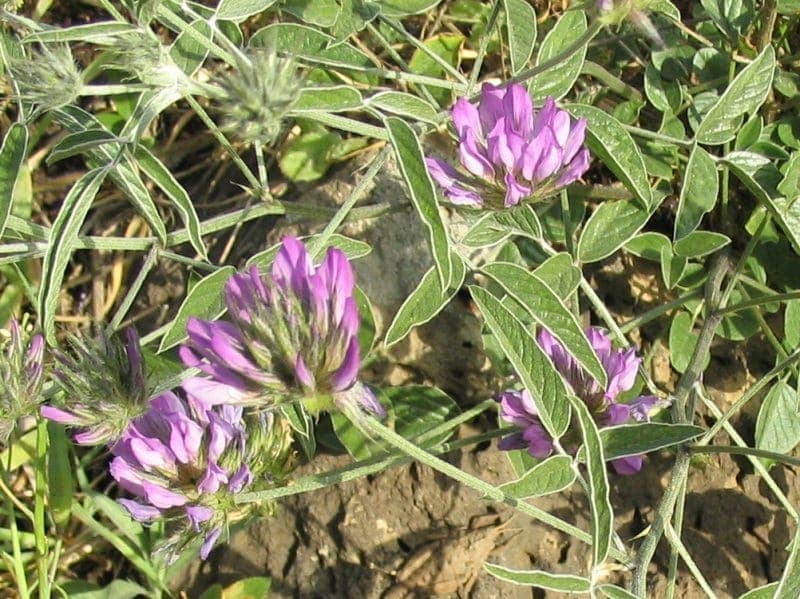
Iorsh / Public domain, via Wikimedia Commons
Bituminaria bituminosa: complete guide
Bituminaria bituminosa
¿Quieres ver Bituminaria bituminosa: complete guide en tu jardín?
1 minuto, sin tarjeta de crédito
Overview
Bituminaria bituminosa, also known as Arabian pea or pitch trefoil, is a fascinating Mediterranean plant from the Fabaceae family. This long-lived, semi-shrubby plant naturally grows on rocky areas, slopes and dry places from the Mediterranean to the Caucasus. The name bituminosa refers to the bituminous odor that emanates from the plant when it is wounded or in warm weather.
This plant is unique for its distinctive odor - a strong, turpentine-like or bitumen-like scent that some gardeners find irresistible but others may find off-putting. With its slowly growing shrubs, beautiful blue or purple flowers and drought tolerance, it is interesting for xeriscapes and Mediterranean gardens. The plant grows in height to about a meter and grows densely by nature.
Appearance and blooming
Bituminaria bituminosa grows as a semi-shrub or sturdy herbaceous plant to about 50 to 100 centimeters tall. The plant has compound, trifoliate leaves that grow in clusters. The leaves are small, oval leaflets with an interesting gray-green color. When you rub them or in warm weather, the leaves release their characteristic strong, enigmatic odor.
Flowers appear from May to October in dense, upright clusters at the tops of the stems. Each flower is about 0.5 to 1 centimeter across and has a typical butterfly-shaped legume form. The flowers are usually bright blue to purple-blue, although some varieties may have pink or white. These flowers attract bees and butterflies and are a major nectar source for pollinators.
After blooming, hairy seed pods form that slowly ripen. These pods can retain seed for the next season.
Ideal location
Bituminaria bituminosa grows best in very sunny locations with at least six to eight hours of direct sunlight daily. The plant can tolerate moderate shade but flowers more abundantly in full sun. In very hot climates, light afternoon shade may be beneficial to prevent desiccation.
The plant is very wind-tolerant and can grow in coastal gardens. It is also suitable for hot, dry corners of the garden. In temperate climates, it grows better when grown against a warm wall or in a sunny bed, where it stores warmth.
It prefers open, well-ventilated locations where air movement is good. This helps prevent moisture-related diseases.
Soil type
Bituminaria bituminosa grows well on virtually all soil types but prefers well-draining, moderately poor soil. The plant can grow on very nutrient-poor, sandy soil, making it ideal for difficult gardening. Heavy clay or waterlogged soil should be improved for drainage.
A pH between 7 and 8 is suitable, so the plant can grow in neutral to slightly alkaline soil. The plant tolerates salt and is suitable for coastal gardens.
Good drainage is important. Add sand, gravel or perlite to heavy soil to improve drainage. The plant grows better on poor than rich soil, so do not add excessive compost.
Diseño gratis
¿Quieres ver Bituminaria bituminosa: complete guide en tu jardín? Crea un diseño gratis ahora.
Watering
Bituminaria bituminosa is very drought-tolerant once established and needs little watering. However, young plants need regular moisture until they are well established.
Water deeply but not frequently during the growing period. Let the soil dry between waterings. Once established, the plant can survive long periods without watering. In regions with normal rainfall, supplemental water is usually not needed.
In winter, withhold watering entirely unless extremely dry. Excessive moisture can lead to root rot.
Pruning
Bituminaria bituminosa can be pruned regularly to maintain shape and stimulate dense growth. Best pruned in early spring (March) before active growth begins.
Hard pruning back to about two-thirds size will promote a full, woody shrub. This plant can also be "hardened" - cut nearly to the ground - every three or four years for complete renewal.
During the growing season, remove wayward shoots and shape carefully. Avoid heavy pruning in summer as this can reduce flowering.
Dead or damaged wood should always be removed. After frost, prune winter-damaged parts back in spring.
Maintenance calendar
January to March: Prune for shape, check for winter damage, no feeding needed.
April to May: Growth begins, regular watering (once per two weeks), no feeding needed.
June to July: Full flowering, minimize watering to once per month, no feeding.
August to September: Flowering continues, very minimal watering, no feeding.
October to December: Growth slows, prepare for winter dormancy, no watering except in extremely dry weather.
Winter hardiness
Bituminaria bituminosa is moderately winter hardy and can tolerate temperatures to about -5 degrees Celsius. In colder climates where it cannot overwinter outdoors safely, protection can help. Add a protective layer of mulch around the base in autumn.
In very cold regions, the plant can grow against a warm, south-facing wall where it stores warmth. If frost damage occurs, prune dead wood back in spring; healthy parts will regrow.
In mild climates, the plant grows practically year-round. In warm climates, it may become somewhat stressed in very hot summers.
Companion plants
Bituminaria bituminosa combines well with other Mediterranean drought-tolerant plants:
Lavandula (lavender) blooms purple and forms nice contrast.
Salvia (sage) adds different flower form and structure.
Oreoganum and thyme add fragrant, low-growing elements.
Rosemary adds growth diversity.
Desmodium and other legumes form interesting groupings.
Conclusion
Bituminaria bituminosa is a unique Mediterranean plant for gardeners wanting something different with character and durability. With its long flowering period, strong fragrance, drought tolerance and frugal requirements, it is ideal for xeriscape and Mediterranean garden designs.
The plant can be challenging to grow initially, but once established, it is low-maintenance and very rewarding with rich flowering. Perfect for gardeners wanting something unforgettable and Mediterranean.
Looking for Bituminaria bituminosa plants? Visit your local garden center. At gardenworld.app, find designs that showcase this unique plant. Bring Mediterranean charm with strong character to your garden.
Want more advice or designs featuring Bituminaria bituminosa? Visit gardenworld.app for personalized garden designs.
¿Quieres ver Bituminaria bituminosa: complete guide en tu jardín? Crea un diseño gratis ahora.
Sube una foto, elige un estilo y obtén un diseño fotorrealista con lista de plantas en menos de un minuto.
Más de 10.000 jardines diseñados
Sin tarjeta de crédito


Plantas similares
Tall Silky Lupine: complete guide
Lupinus elatus
Tall silky lupine is a fast-growing Californian perennial with silvery foliage and blue-purple flower spikes, ideal for a prairie-style garden.
Garfield Lupine: complete guide
Lupinus garfieldensis
The Garfield lupine is a rare, fast-growing American perennial for alkaline, dry grassland gardens, with striking blue flower spikes.
Lupinus elegans: complete guide
Lupinus elegans
Lupinus elegans, the elegant lupine, is a spectacular blooming plant from Mexico with blue flower spikes. Care, cultivation and garden use.