
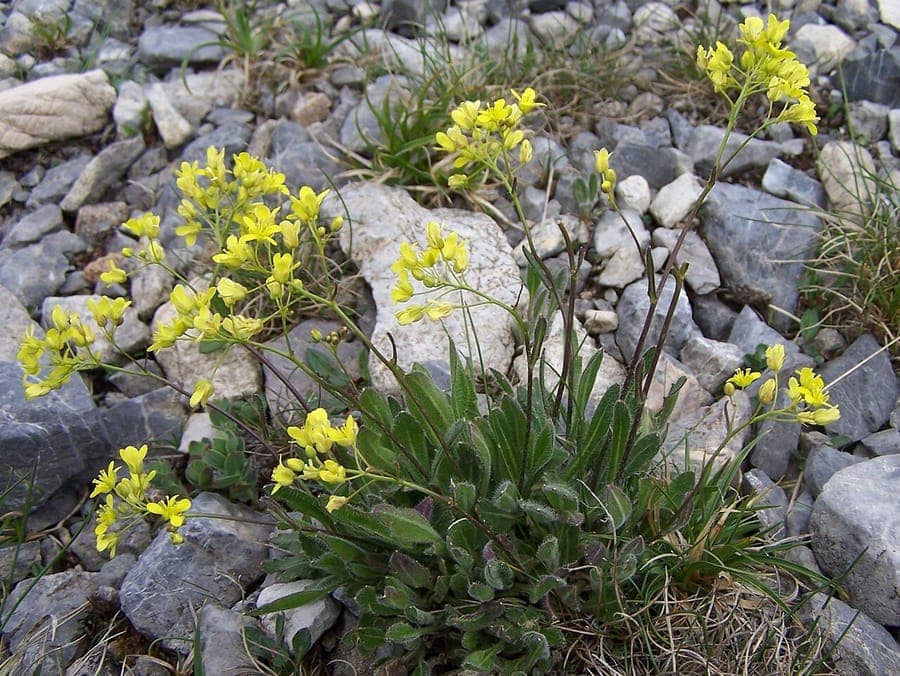
Jerzy Opioła / CC BY-SA 3.0, via Wikimedia Commons
Buckler mustard: complete guide for rock gardens and alpine zones
Biscutella laevigata
¿Quieres ver Buckler mustard: complete guide for rock gardens and alpine zones en tu jardín?
1 minuto, sin tarjeta de crédito
Overview
Buckler mustard (Biscutella laevigata) is a fascinating alpine plant from the Brassicaceae family (mustard family), native to mountainous regions from northern Spain through to Romania. The common name "buckler mustard" references the unique seed-fruits bearing two rounded, separated wing-like structures resembling spectacles. This is a compact, winter-hardy plant ideally suited to rock gardens, scree slopes, and alpine gravel beds, where it produces elegant yellow flowers.
Appearance and bloom cycle
Buckler mustard grows as a compact, cushion-like plant, typically 15-30 cm in height with equivalent spread. Leaves are very small, linear to spathulate, forming tight rosettes. The plant develops slender stems bearing small yellow flowers in simple or branched racemes. Blooming occurs abundantly from May through August. Following bloom, the plant develops characteristic seed-fruits - two rounded, wing-like bodies resembling spectacles. This distinctive seed structure is botanically attractive and renders buckler mustard readily identifiable.
Ideal location
Buckler mustard thrives best in full sun on open, well-drained positions. This is a true alpine plant requiring sunlight and growing space. In gardens, position buckler mustard on rock gardens, scree slopes, dry banks, and gravel areas where excess moisture is absent. Buckler mustard is perfect for alpine troughs and container cultivation on elevated surfaces. In garden design, it works beautifully in minimalist, contemporary alpine compositions.
Soil requirements
Buckler mustard demands exceptional drainage. This is a mountain plant occurring on rocks, gravelly mountainsides, and in extremely well-drained, nutrient-poor soil. Plant buckler mustard in sharp sand-gravel mix, alpine potting soil, or directly in rocks. Soil may be acidic to neutral. Regarding moisture: dry is superior to boggy. If you possess heavy garden soil, incorporate at least 50% gravel or mineral amendment.
Watering
Buckler mustard tolerates drought well. Once established, supplemental water is rarely required. During the first season after planting, provide moderate water during dry periods. Excess water is harmful: it promotes root rot. In containers, water sparingly, only when substrate feels dry. Buckler mustard thrives with minimal water.
Diseño gratis
¿Quieres ver Buckler mustard: complete guide for rock gardens and alpine zones en tu jardín? Crea un diseño gratis ahora.
Pruning and maintenance
Buckler mustard requires no pruning. The plant naturally develops neat form. Remove dead or damaged foliage as needed. If the plant self-seeds prolifically and you have excess seedlings, remove unwanted individuals. Otherwise, minimal maintenance suffices.
Maintenance calendar
January-March: Winter dormancy. Monitor drainage during wet periods. Remove dead plant material as needed.
April-May: Growing season begins. Plant flowers profusely in May.
June-August: Peak flowering and seed production. Yellow flowers are highly conspicuous.
September-October: Seed-fruits mature. Plant begins decline in autumn.
November-December: Dormancy. Plant persists as compact rosette.
Winter hardiness
Buckler mustard is extremely winter-hardy throughout northern Europe. The plant is native to mountainous regions with severe winters and grows as a small rosette-forming plant that survives excellently beneath snow. In the Netherlands, Belgium, France, and Germany, buckler mustard overwinters without protection. Even in severe winters, the plant endures well. The only precaution: ensure drainage is exceptional, preventing water accumulation behind the plant during winter.
Companion planting
Buckler mustard grows beautifully with other alpine and drought-tolerant plants:
- Saxifrage species (small alpine companions)
- Alpine roses (complementary colours)
- Artemisia (grey-foliage contrast)
- Alpine poppies (yellow flowering partners)
- Alpine sedums (textural foliage contrast)
Avoid positioning buckler mustard with moisture-loving plants in the same zone. Buckler mustard looks magnificent in alpine troughs with gravel and small rocks.
Conclusion
Buckler mustard brings alpine elegance to any garden. Compact, hardy, and full of botanical charm: buckler mustard deserves place in every rock garden. Using gardenworld.app, design rock gardens and alpine zones with buckler mustard as accent feature. Buckler mustard, combined with other alpines, provides robust foundation for beautiful, low-maintenance alpine gardening. The distinctive seed-fruits add extra botanical interest.
Available through specialized alpine plant nurseries.
¿Quieres ver Buckler mustard: complete guide for rock gardens and alpine zones en tu jardín? Crea un diseño gratis ahora.
Sube una foto, elige un estilo y obtén un diseño fotorrealista con lista de plantas en menos de un minuto.
Más de 10.000 jardines diseñados
Sin tarjeta de crédito

