
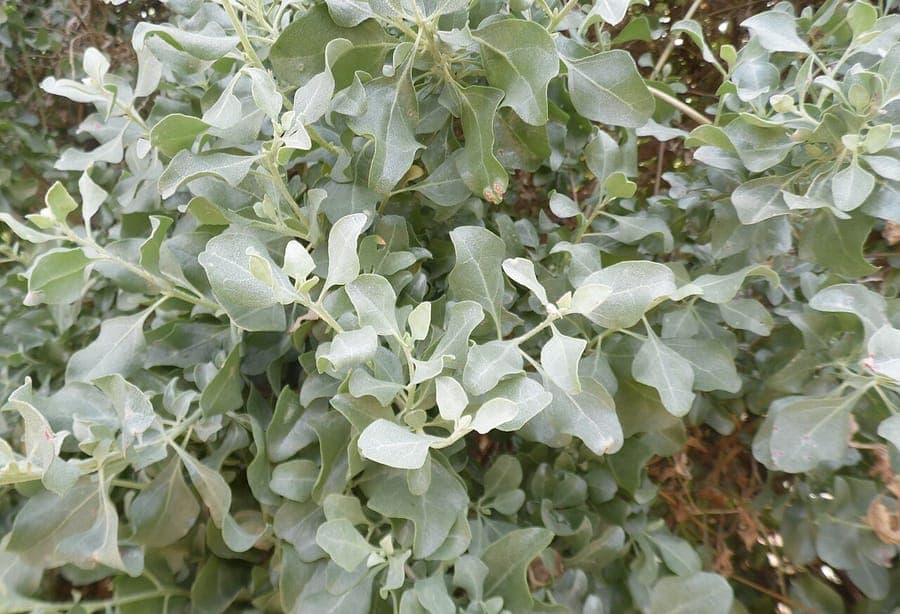
Krzysztof Ziarnek, Kenraiz / CC BY-SA 3.0, via Wikimedia Commons
Sea Orache: complete guide for a Mediterranean garden
Atriplex halimus
¿Quieres ver Sea Orache: complete guide for a Mediterranean garden en tu jardín?
1 minuto, sin tarjeta de crédito
Overview
Sea orache (Atriplex halimus) is a Mediterranean ornamental shrub prized for its distinctive silvery-grey foliage and naturally compact form. Native to coastal regions around the Mediterranean Sea, it also occurs in North Africa and the Middle East. In contemporary gardens, sea orache is valued primarily for its year-round visual impact: the silvery tones create striking contrast with greener plantings and maintain aesthetic interest across all seasons.
Appearance and bloom cycle
Sea orache grows to approximately 100-150 cm in height, developing into a dense, rounded shrub. The leaves are small, lanceolate, and coated with a fine silvery-grey bloom. This epicuticular wax coating serves a dual purpose: it provides aesthetic character and protects the plant from intense solar radiation and moisture loss. During summer, small, inconspicuous yellow-green flowers emerge among the foliage. While not ornamentally significant, these flowers attract beneficial pollinators and support local ecosystems.
Ideal location
Sea orache thrives in full sun positions, requiring at least six hours of direct sunlight daily to maintain its silvery colouration. The plant can tolerate light dappled shade but develops less of its characteristic grey tone in reduced light. Sea orache excels in windy sites, as it naturally inhabits coastal exposures. It handles sea-spray and salt-laden winds exceptionally well, making it ideal for seaside gardens. In landscape design, it functions effectively as a windbreak or component of contemporary shrub borders.
Soil requirements
Sea orache is notably unfussy about soil composition. It grows best in well-draining, slightly impoverished sandy or gritty substrates. Heavy clay soils with poor drainage will cause root rot. Incorporating sand or coarse grit into existing soil significantly improves drainage. Soil pH may range from neutral to slightly alkaline. The plant is also moderately salt-tolerant, rendering it particularly suitable for coastal gardens or container cultivation in salt-spray zones.
Watering
Once established, sea orache is exceptionally drought-tolerant. During the first growing season, regular water is necessary, particularly during dry spells, but thereafter supplemental irrigation is rarely required. Excess water poses greater risk than drought. In wet winters, sea orache can develop root issues from waterlogging. Water only when soil is visibly dry. This characteristic makes sea orache ideal for water-conscious gardeners and sustainable landscape design.
Diseño gratis
¿Quieres ver Sea Orache: complete guide for a Mediterranean garden en tu jardín? Crea un diseño gratis ahora.
Pruning and maintenance
Sea orache requires minimal pruning. To maintain compact form and neat appearance, light tip-pruning can be performed in early spring (March-April). Avoid hard cutting back into dead wood, as sea orache does not readily regenerate from old timber. For mature plants, light trimming typically suffices. Remove dead or damaged stems as needed.
Maintenance calendar
January-March: Inspect for frost damage. Avoid heavy pruning if frost is forecast. Light formative pruning possible in March.
April-May: Growing season begins. Water only during dry periods.
June-August: Sea orache flowers, though inconspicuously. Continue water-sparing regime.
September-October: No special care required.
November-December: Prepare for winter. In very wet regions, enhance drainage.
Winter hardiness
Sea orache has moderate winter hardiness in northern Europe. In the Netherlands, Belgium, and coastal France, it typically overwinters outdoors without protection, provided the soil is not waterlogged. In Germany, some damage may occur during severe winters. Recovery usually follows any injury. Potted specimens can be relocated to sheltered positions during extreme cold snaps.
Companion planting
Sea orache pairs well with other Mediterranean garden subjects:
- Lavender (colour contrast and complementary fragrance)
- Rosemary (similar moisture requirements)
- Santolina (grey-green foliage partnership)
- Cistus (pink or white flowering)
- Sage species (lower-tier layering)
Avoid pairing with moisture-demanding plants in the same zone. Sea orache also creates striking compositions in modern, minimalist schemes with gravel or pale stone mulch.
Conclusion
Sea orache introduces Mediterranean character and understated elegance to any garden, particularly if you favour silvery tones and low-maintenance planting. Whether you garden in a coastal location or simply appreciate Mediterranean garden aesthetics, sea orache merits serious consideration. Using gardenworld.app, you can optimise the positioning of sea orache in your front garden, ensuring it receives adequate light, wind exposure, and drainage. Sea orache, combined with other drought-tolerant species, provides a robust foundation for beautiful, resource-efficient gardening.
Available at major garden centres in the UK and Europe.
¿Quieres ver Sea Orache: complete guide for a Mediterranean garden en tu jardín? Crea un diseño gratis ahora.
Sube una foto, elige un estilo y obtén un diseño fotorrealista con lista de plantas en menos de un minuto.
Más de 10.000 jardines diseñados
Sin tarjeta de crédito

