
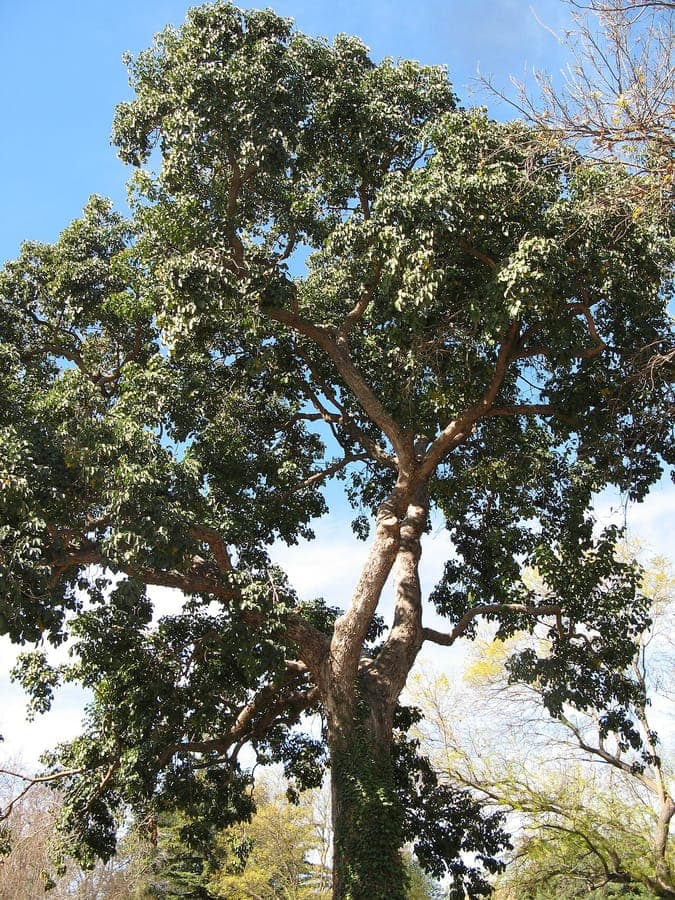
Geographer / CC BY-SA 3.0, via Wikimedia Commons
Bishopwood: complete guide
Bischofia javanica
¿Quieres ver Bishopwood: complete guide en tu jardín?
1 minuto, sin tarjeta de crédito
Overview
Bischofia javanica, commonly called Bishopwood or Java-cedar, is a remarkable tropical tree originating from Southeast Asia. This impressive specimen naturally grows in regions such as Java, Indonesia, and Malaysia, and has since spread to subtropical zones worldwide. The tree is particularly renowned for its rapid growth rate and beautiful, distinctive foliage that displays a characteristic sheen. For those dreaming of an authentic Asian garden experience, this tree is an excellent choice.
Appearance and Bloom
The Bishopwood develops into a medium to large tree that can reach 12-20 meters in height. The leaves are compound and display a dark green color with a silvery sheen. This gives the tree a modern, refined appearance. The foliage is textured and shows interesting surface qualities that are particularly striking in sunlight. Flowers are small and inconspicuous, but the tree is primarily valued for its growth pattern and leaf quality.
Ideal Location
Choose a sunny spot in your garden where the tree receives at least 6-8 hours of direct sunlight. Full sun is actually ideal. The tree thrives well in warm climates and suits gardens in temperate to subtropical zones. Protect young specimens against strong winds. Ensure this tree has adequate space to grow to its full potential.
Soil Requirements
The Bishopwood is not too demanding, but prefers well-draining, fertile soil. A neutral to slightly acidic soil (pH 6.0-7.0) is ideal. Mix humus-rich potting soil with seed compost or garden soil. The tree appreciates organic matter such as compost or leaf mold. Ensure the soil does not become waterlogged.
Watering
Regular watering is important, especially during the growing season in spring and summer. Water when the top centimeter of soil feels dry. Avoid waterlogging, which can lead to root rot. In winter, you can reduce watering. During summer drought, extra vigilance is necessary. In temperate climates with abundant rainfall, supplementary watering is less essential.
Pruning
Pruning is not always necessary but can be performed to maintain shape and encourage structure. Remove dead or damaged branches promptly. Sharp pruning shears help shape young trees. Pruning is best done after the growing season, in late summer or early autumn. This tree grows rapidly, so regular monitoring is advisable.
Diseño gratis
¿Quieres ver Bishopwood: complete guide en tu jardín? Crea un diseño gratis ahora.
Maintenance Calendar
Spring: Plant new trees, review fertilizing. Summer: Water regularly, check for pests. Autumn: Remove fallen leaves, prepare for winter. Winter: Protect against frost if needed, limit watering.
Winter Hardiness
The Bishopwood is frost-sensitive and can suffer frost damage below 5 degrees Celsius. In cooler climates, the tree should be protected or grown in a pot so it can be brought indoors during winter. For temperate gardens this is recommended. In warm regions, winter protection is not needed.
Companion Plants
Plant this tree together with other tropical specimens such as lilies, hibiscus, and exotic grasses. Underplant with low-growing fuchsias or begonias for a layered effect. Avoid harsh windy locations where underplanting might suffer.
Propagation and Growing
Bischofia javanica can be grown from seed, although this requires patience as germination can be tricky. Seeds must be sterilized and placed on warmbed (25-27 degrees Celsius). Germination may take 2-6 weeks. Seedlings grow rapidly and can reach 50 centimeters height after just one season. Young plants appreciate warm, humid environments. They reach good planting size only after 2-3 years of cultivation, making the investment worthwhile for serious gardeners.
Practical Growing Tips
Perfect your growing techniques: Regular misting helps manage dry-air environments. Fertilize monthly during growing season. Monitor for spider mites and powdery mildew, especially in warm, dry weather. For container growing, ensure adequate drainage holes. When growth stops, check for root rot by carefully unpacking the pot to inspect the root system.
Cultural Significance
In its native regions, this tree plays an important role in traditional gardening practices. In Java, it is a valued shade tree in agricultural plantations. The wood is used locally for furniture making. The tree symbolizes growth and progress. For modern landscape designers, it represents dynamism and exoticism in architectural gardening.
Closing
Bischofia javanica offers a unique combination of rapid growth, attractive foliage, and impressive appearance. This makes it an excellent choice for those wanting to create a tropical atmosphere without fear of extra maintenance challenges. Both local garden centers regularly stock seedlings of this beautiful tree. Visit gardenworld.app for more inspiration for exotic gardens. Discover more plant ideas on gardenworld.app and create your dream garden with this spectacular tropical specimen.
¿Quieres ver Bishopwood: complete guide en tu jardín? Crea un diseño gratis ahora.
Sube una foto, elige un estilo y obtén un diseño fotorrealista con lista de plantas en menos de un minuto.
Más de 10.000 jardines diseñados
Sin tarjeta de crédito


Plantas similares
Breynia disticha: complete guide
Breynia disticha
Discover the Snowbush: a frost-sensitive houseplant with stunning red-white foliage. Perfect growing guide for terrariums.
Bridelia micrantha: complete guide
Bridelia micrantha
Bridelia micrantha, or Mitzeerie, is a tropical African shrub supporting bird populations. This native plant provides food and shelter throughout the year.
Flueggea leucopyrus: complete guide
Flueggea leucopyrus
Discover the Spinous flueggea, a robust shrub with sharp thorns from tropical regions. Perfect for dry gardens and demanding conditions.