
Wikimedia Commons / Public domain, via Wikimedia Commons
Water-parsnip: complete guide for water gardens and wetland edges
Berula erecta
¿Quieres ver Water-parsnip: complete guide for water gardens and wetland edges en tu jardín?
1 minuto, sin tarjeta de crédito
Overview
Water-parsnip (Berula erecta) is a remarkable aquatic plant from the Apiaceae family (carrot family), native to temperate and subtropical regions throughout the northern hemisphere and extending to north and east Africa. This is a slender, upright-growing aquatic plant ideally suited to pond margins and wetland zones. With its fine, delicate foliage, water-parsnip presents a light, almost graceful appearance. The plant benefits the entire aquatic food chain, from water insects to small fish.
Appearance and bloom cycle
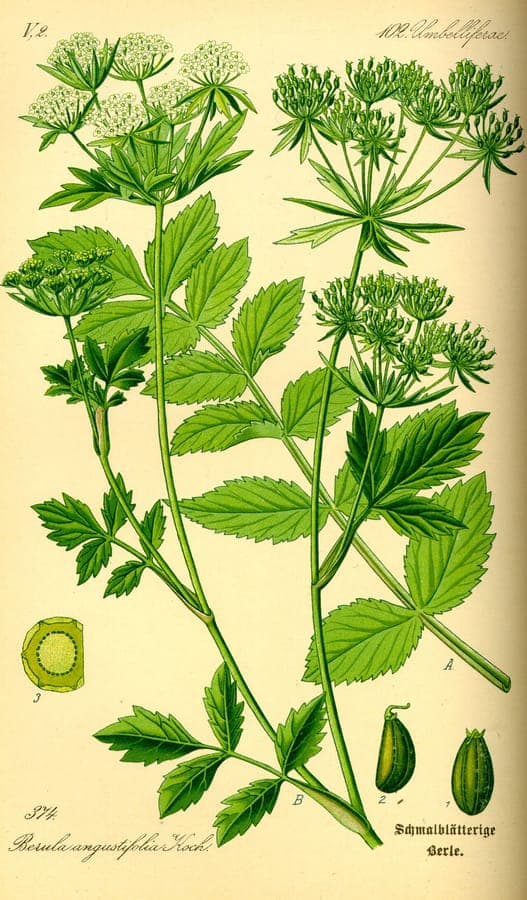
Water-parsnip grows to approximately 30-60 cm in height, developing stiff, upright stems with extremely fine, dissected foliage capable of growth both submerged and emergent. This is a semi-aquatic plant: depending on water depth, submerged leaves develop more laterally, whilst emergent foliage is slightly broader and more robust. During summer, minute white-green flowers appear in compound umbel-like panicles. These flowers attract aquatic insects and support specialized pollinators.
Ideal location
Water-parsnip prospers in full to partial sun. Position the plant along water margins, in shallow pools, or in wetland zones where feet remain permanently wet. The plant adapts to varying water depths, from several centimetres to 30 cm. Ideal placement is where the plant is exposed during low water periods and inundated during high water. Water-parsnip excels as marginal vegetation in ornamental water gardens, natural swimming ponds, and reconstructed wetlands.
Soil requirements
Water-parsnip is undemanding about soil composition. This is fundamentally a wetland plant thriving in wet clay, marsh mud, and water substrates. Add organic material if you have aquatic silt or muck. The plant also grows in coarse sand-gravel mixtures provided moisture is maintained. Soil pH can range from acidic to neutral. In ornamental ponds, introduce a layer of nutrient-rich mud mix and plant water-parsnip in shallow planting baskets.
Watering
Water-parsnip must remain permanently wet: this is not a plant for dry soil. Plant water-parsnip in shallow water zones where feet remain continuously moist. In ornamental ponds, construct shallow planting zones 10-20 cm deep. Water-parsnip tolerates inundation well but dies out under persistent drought. Monitor during dry periods that wetland zones do not desiccate.
Diseño gratis
¿Quieres ver Water-parsnip: complete guide for water gardens and wetland edges en tu jardín? Crea un diseño gratis ahora.
Pruning and maintenance
Water-parsnip requires minimal pruning. Remove dead or damaged portions as needed. If the plant becomes overcrowded or overgrows allocated space, selectively remove older stems. In spring, cut back frosted or deformed portions. Weed regularly, particularly removing pioneering invasive aquatic plants.
Maintenance calendar
January-March: Monitor water levels. Remove dead biomass from prior season.
April-May: Growing season begins. Young shoots emerge. Plant new water-parsnip in shallow zones.
June-July: Peak growth and flowering. Water-parsnip flowers delicately.
August-September: Abundant growth. Possible secondary growth flush.
October-December: Decline toward winter. Maintain wet conditions.
Winter hardiness
Water-parsnip is reliably winter-hardy in northern Europe, provided it remains submerged. The plant overwinters as a rhizome beneath the water surface. In shallow pools, frost can cause damage. Ensure water remains at least 30-40 cm deep or protect shallow planting zones with straw or other insulating material. During severe winters, the plant may die, but typically regenerates from rhizome fragments.
Companion planting
Water-parsnip thrives alongside other wetland and aquatic plants:
- Reed grasses (complementary height)
- Willow catkins (framing vegetation)
- Water-lilies (visual focal points)
- Marsh forget-me-not (smaller-growing companion)
- Water mint (aromatic and medicinal)
Avoid aggressive growers that smother water-parsnip. Water-parsnip itself contributes to healthy aquatic plant ecosystems.
Conclusion
Water-parsnip brings elegance and ecological benefit to water gardens. Whether you maintain a formal ornamental pool or naturalistic wet zone: water-parsnip adapts readily. Using gardenworld.app, design your water garden with water-parsnip as part of a complete aquatic planting scheme. Water-parsnip, combined with other aquatic species, provides robust foundation for water garden environments that are simultaneously beautiful and ecologically beneficial.
Available through specialised aquatic plant nurseries.
¿Quieres ver Water-parsnip: complete guide for water gardens and wetland edges en tu jardín? Crea un diseño gratis ahora.
Sube una foto, elige un estilo y obtén un diseño fotorrealista con lista de plantas en menos de un minuto.
Más de 10.000 jardines diseñados
Sin tarjeta de crédito

