
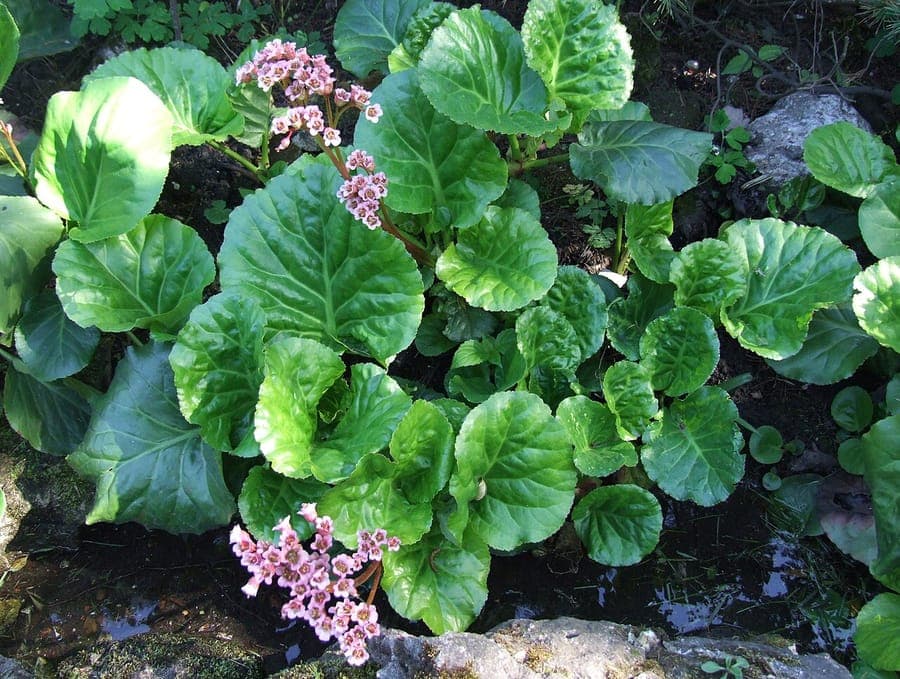
Jerzy Opioła / CC BY-SA 4.0, via Wikimedia Commons
Siberian-tea: complete guide
Bergenia crassifolia
¿Quieres ver Siberian-tea: complete guide en tu jardín?
1 minuto, sin tarjeta de crédito
Overview
Bergenia crassifolia, commonly called Siberian-tea, is a hardy perennial from the saxifrage family (Saxifragaceae). Native to wet mountain meadows from Siberia to Korea, this distinctive plant features enormous glossy leaves and spring pink flowers. It's an essential addition to shaded gardens.
Appearance & bloom cycle
This plant forms robust clumps reaching 30-40 cm tall. The leaves are large (15-25 cm), heart-shaped, leathery and glossy dark green. In full sun, they develop reddish-bronze tones in autumn. Flowers appear in March-April, early in the season when colour is scarce.
The blooms are borne in dense panicles of pink to warm coral, set beautifully against the green foliage. After flowering, attractive seed heads persist. The leaves remain evergreen, providing winter interest.
Ideal location
This plant tolerates half-shade to full shade, making it unique for difficult corners. Full sun results in smaller, less attractive leaves. Siberian-tea thrives under trees, against walls, and on north-facing borders.
Winter hardiness is excellent - hardy to USDA zone 3 (-35°C). Garden centres throughout the UK stock this plant year-round.
Soil requirements
This plant prefers moist, humus-rich soil. Add generous quantities of compost or leaf mould at planting. Bergenia tolerates acidic and neutral soils (pH 5.5-7.0). It even tolerates some foot traffic - ideal for borders you walk through.
While it retains moisture, prevent waterlogging. Add sand or gravel to heavy clay soils.
Diseño gratis
¿Quieres ver Siberian-tea: complete guide en tu jardín? Crea un diseño gratis ahora.
Watering
Ensure the plant doesn't dry out, particularly during the growing season. Water regularly until moisture penetrates deeply. After planting, water regularly for 3-4 weeks. Subsequently, this plant is reasonably water-efficient, especially in humus-rich soil.
Supplement during extreme droughts, particularly in full sun.
Pruning
Remove dead leaves in spring as new growth emerges. Cut out worn foliage. After flowering, you can remove flower panicles for a neater appearance, though many gardeners leave them for decorative seed heads.
Maintenance calendar
- February-March: Wait until new leaves emerge. Add compost around the plant.
- March-April: Enjoy the pink flowers. Extremely early and valuable for pollinators.
- May-September: Monitor for slugs, particularly in wet soil. Water during dry periods.
- October-November: Foliage turns reddish-bronze. Enjoy this display. Leaves persist through winter.
- December-January: Winter dormancy. Minimal attention. Evergreen leaves protect the crown.
Winter hardiness
Siberian-tea is extremely hardy to USDA zone 3 (-35°C). No protection required. The evergreen foliage actually adds winter structure.
Companion plants
Excellent combinations include:
- Hostas and other foliage plants
- Forget-me-nots and hellebores
- Toad lilies and other shade-tolerant perennials
- Early daffodils and snowdrops
Mix with large leaf groupings for dramatic effect. Extremely valuable on gardenworld.app for shade designs.
Closing thoughts
Siberian-tea is an essential shade plant with extended seasonal interest. With minimal maintenance, this plant develops into a magnificent specimen. Perfect for modern, low-maintenance gardens.
¿Quieres ver Siberian-tea: complete guide en tu jardín? Crea un diseño gratis ahora.
Sube una foto, elige un estilo y obtén un diseño fotorrealista con lista de plantas en menos de un minuto.
Más de 10.000 jardines diseñados
Sin tarjeta de crédito


Plantas similares
Korean astilbe: complete guide
Astilbe grandis
Discover Korean astilbe (Astilbe grandis): a tall shade plant with elegant flower plumes for pond edges and borders.
Heuchera pilosissima: complete guide to seaside alumroot
Heuchera pilosissima
Seaside alumroot (Heuchera pilosissima), an elegant North American dwarf perennial with hairy red-tinged foliage and red flower spikes.
Starry saxifrage: complete guide
Micranthes stellaris
Full guide to Micranthes stellaris, the starry saxifrage: location, soil, blooming and garden use. A tough alpine plant for moist, shady rock faces and pond margins.