
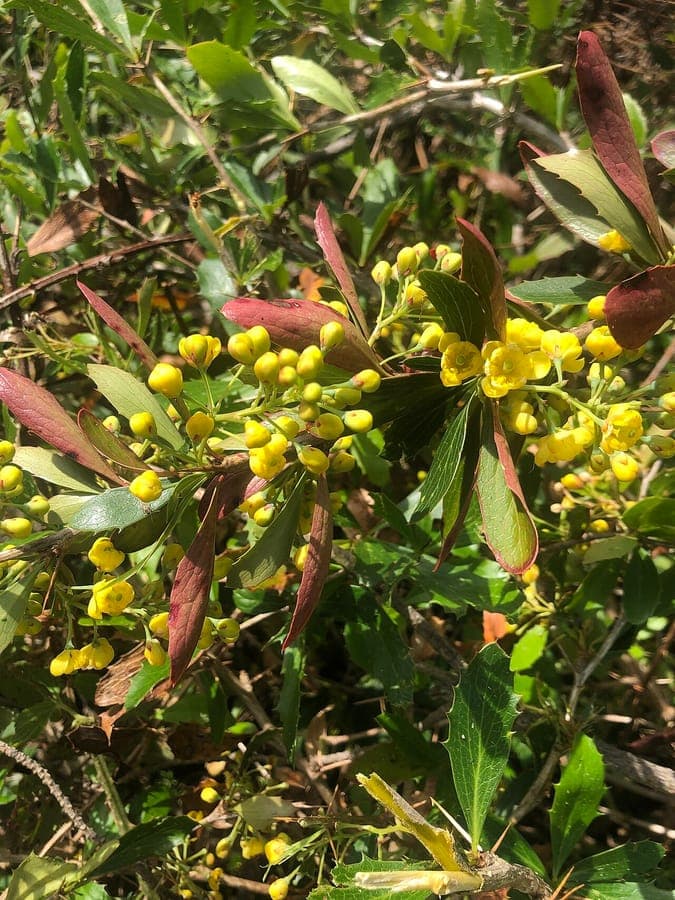
Mark / CC BY 4.0, via Wikimedia Commons
Berberis glaucocarpa: complete guide
Berberis glaucocarpa
¿Quieres ver Berberis glaucocarpa: complete guide en tu jardín?
1 minuto, sin tarjeta de crédito
Overview
Berberis glaucocarpa, better known as great barberry, is an impressive shrub from the Berberidaceae family. This plant grows naturally in the Himalayan mountains (West Himalaya to West-Central Nepal). With its fine, silvery-green foliage and bird-attracting red berries, it's a valuable addition to modern gardens.
The plant reaches 150-200 cm in height and forms a dense, oval to rounded outline. Berberis glaucocarpa is known for its density and structure, making it ideal for wildlife, birds, and as a protective plant.
Appearance and Bloom
Berberis glaucocarpa has very fine, linear leaves that are silvery-green. This soft color gives the plant an elegant appearance. The leaves are extremely numerous, creating a dense, compact growth habit.
Flowers appear in May-June and are yellow in color. They are small but extremely numerous, in compact clusters. These flowers attract pollinators and later produce numerous, shiny red berries.
The berries appear in August-September and remain visible until winter. This makes Berberis glaucocarpa valuable for birds seeking food and for autumn garden appearance.
Ideal Location
Berberis glaucocarpa thrives best in full sun to partial shade. The plant can stand sunny but also grows well beneath trees. This makes it flexible for various garden situations.
The plant is perfect as a hedge, screen, or specimen shrub. It can also be used in borders for texture and bird food. Berberis glaucocarpa works well in urban gardens where space is limited.
Ensure good air circulation to prevent fungal problems.
Soil
Berberis glaucocarpa is quite adaptable regarding soil. It grows in heavy clay, light sand, and everything in between. The plant thrives in poor to moderately fertile soils.
Ideal pH is neutral to slightly acidic (6.0-7.5). The plant can tolerate acidic groundwater and modest nutrition.
Drainage is important but not essential. The plant even tolerates brief waterlogging.
Diseño gratis
¿Quieres ver Berberis glaucocarpa: complete guide en tu jardín? Crea un diseño gratis ahora.
Watering
Berberis glaucocarpa is moderately drought-tolerant once established. Young plants need regular watering, particularly during dry periods.
Once well-rooted (after 2-3 years), the plant can rely largely on rainfall. In very dry summers, you can water, but this is usually unnecessary.
In the first year, ensure consistently moist soil without waterlogging.
Pruning
Berberis glaucocarpa requires minimal pruning. As a hedge, it can be pruned annually after flowering. As a specimen plant, it requires virtually no pruning except removal of dead branches.
The plant naturally forms a compact, attractive shape. Excessive pruning can damage flowering and berry production.
Maintenance Calendar
March: Remove dead branches from previous season. Wake the plant for spring.
April-May: Growth begins. Plant will flower soon.
May-June: Flowering period. Yellow flowers attract pollinators.
July-August: Flowers fade, berries begin forming. Plant continues growing.
September-October: Berries ripen and turn red. Bird food available.
November-February: Winter dormancy. Red berries remain decorative until bird food is consumed.
Winter Hardiness
Berberis glaucocarpa is winter-hardy to USDA zone 5 (-29 to -23 degrees Celsius). In the Netherlands and Belgium, it's completely hardy without any protection needed.
The plant doesn't lose its leaves in winter and remains evergreen year-round. This makes it valuable for winter structure in the garden.
Companion Plants
Berberis glaucocarpa combines well with:
- Bamboo (Fargesia): Contrast of fine foliage and color
- Mahonia: Other Berberidaceae with yellow flowers
- Ilex (Holly): Similar red fruit, different foliage
- Euonymus: For variety in growth habit and color
- Hebe: For flowering contrast and texture
Closing Thoughts
Berberis glaucocarpa is a valuable shrub for bird gardens and modern landscapes. With its fine foliage, yellow spring flowers, and red winter berries, it's a true all-rounder.
Available at nurseries. Check GardenWorld for more woody plant combinations.
¿Quieres ver Berberis glaucocarpa: complete guide en tu jardín? Crea un diseño gratis ahora.
Sube una foto, elige un estilo y obtén un diseño fotorrealista con lista de plantas en menos de un minuto.
Más de 10.000 jardines diseñados
Sin tarjeta de crédito


Plantas similares
Bambú celeste: guía completa
Nandina domestica
Todo sobre el bambú celeste (Nandina domestica): plantación, poda, resistencia al invierno y efectos de color. Advertencia: las bayas son tóxicas para aves y mascotas.
Colorado barberry: complete guide
Berberis fendleri
Everything about Berberis fendleri, the Colorado barberry with yellow flowers and red berries. Perfect as a thorny hedge or specimen shrub in dry gardens.
Jeffersonia diphylla: complete guide
Jeffersonia diphylla
Discover Twinleaf, a charming woodland plant from North America. White flowers, unique foliage, perfect for shady borders.