
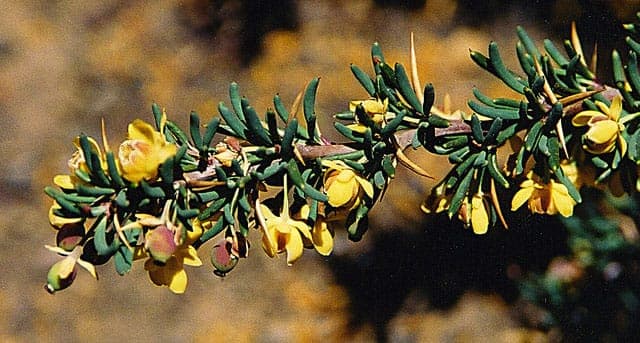
Dick Culbert from Gibsons, B.C., Canada / CC BY 2.0, via Wikimedia Commons
Berberis empetrifolia: complete guide
Berberis empetrifolia
¿Quieres ver Berberis empetrifolia: complete guide en tu jardín?
1 minuto, sin tarjeta de crédito
Overview
Berberis empetrifolia, commonly known as Crown Barberry, is an elegant shrub native to the mountain regions of South America. Belonging to the Berberidaceae family, this plant combines compact growth habit, fine foliage texture, and attractive golden-yellow flowers. In gardens, it is valued for its ornamental qualities and robust nature, making it ideal for diverse landscape designs.
The plant grows endemically in the Andes of Chile and northwestern Argentina, where it has adapted to cool mountain climates. This adaptation makes it particularly suitable for temperate European climates, where it can prove invaluable in borders, hedges, and mixed shrub plantings.
Appearance and Bloom
Berberis empetrifolia forms a dense, compact shrubby mound typically reaching 1-2 meters in height. The characteristic leaves are remarkably small and needle-like, tightly packed along the branches, creating a refined appearance. Foliage color ranges from bright green during the growing season to reddish-brown tones in autumn and winter.
Flowers appear in spring (April-May) in bright golden yellow, typically growing in small clusters along the branches and attracting pollinators. Following flowering, red berries develop that gradually darken to deep red or black. These fruits persist long on the plant, providing valuable food for birds.
Ideal Location
Berberis empetrifolia thrives in full sun to light shade conditions. For optimal growth and abundant flowering, full sun is preferred. A location receiving at least 6 hours of direct sunlight daily produces the best results. The plant is quite tolerant of windy exposure and handles strong winds well, making it suitable for exposed positions.
Ensure the plant has sufficient space to maintain its natural form. Its compact growth makes it perfect for smaller gardens and use in borders or hedging. However, protect it from strong north winds in cold regions.
Soil
Berberis empetrifolia is not particularly demanding regarding soil quality. The plant grows well in virtually all soil types, from sandy to clay soils, provided drainage is adequate. It tolerates acidic to neutral soil readily. For optimal growth, incorporate some humus or well-aged compost when planting.
Heavy, waterlogged soil should be avoided as this can cause root rot. Ensure good drainage by adding drainage material to heavy soils if necessary. A pH value between 6.0 and 7.5 is ideal, though the plant tolerates a broader range.
Watering
After planting, young plants require regular watering until well-established (4-6 weeks). Once established, Berberis empetrifolia is reasonably drought-tolerant and requires minimal water. During dry periods, provide occasional thorough watering, though the plant can endure dry spells.
In wet autumn and winter weeks, prevent water from pooling around the plant as this causes root damage. Ensure good surface drainage. Mature plants typically require no supplemental watering except during very dry summers.
Diseño gratis
¿Quieres ver Berberis empetrifolia: complete guide en tu jardín? Crea un diseño gratis ahora.
Pruning
Berberis empetrifolia requires only minimal pruning. The plant has a naturally beautiful form and grows compactly without much intervention. Remove old or damaged branches in spring. If you prefer a more compact plant, pruning after flowering (May-June) helps maintain shape.
Note: The plant has sharp thorns, so wearing gloves is essential when pruning. The plant tolerates heavy pruning poorly, so regular light pruning is preferable to maintain form.
Maintenance Calendar
February-March: Check for winter damage and remove dead wood. This is also the time for light shape pruning. April-May: Flowering period. Ensure adequate watering if weather is dry. June-July: Growth slows during hot summers. Provide sufficient water. August-September: Fruits ripen. No pruning needed except for damaged branches. October-November: Foliage changes color. No extra maintenance required. December-January: Winter period. Plant is dormant, no maintenance needed.
Winter Hardiness
Berberis empetrifolia is excellent winter hardy, tolerating temperatures down to -20 to -25 degrees Celsius, making it suitable for harsh winter conditions across temperate Europe. In sheltered locations, the plant can thrive outdoors in many cold regions.
However, it is recommended to provide light protection for young plants during their first winter, such as a mulch layer around the plant base. This helps insulate the roots. Once established (after 2-3 years), the plant requires virtually no winter protection.
Companion Plants
Berberis empetrifolia works well with other alpine plants and shrubs with similar growing requirements. Good planting combinations include:
Juniperus species (Juniper) - both are drought-tolerant with compact growth. Cotoneaster species - similar appearance with red fruits. Ilex crenata - for hedging, both provide dense foliage. Deschampsia flexuosa - this grass creates nice contrast with barberry's fine foliage.
Combine barberry with low-growing groundcovers such as Thymus or Sedum for interesting texture contrast.
Closing
Berberis empetrifolia is a versatile and reliable shrub offering numerous advantages for diverse garden designs. With its fine foliage texture, attractive golden spring flowers, and red autumn fruits, this plant provides seasonal beauty throughout the year. Low maintenance requirements and excellent hardiness make it particularly practical for modern gardens.
If you seek a compact, decorative shrub requiring minimal care and thriving with little attention, Berberis empetrifolia is an exceptional choice. Available at major garden centers, this South American gem will bring years of enjoyment to your garden. Discover this beautiful barberry and add exotic charm to your outdoor space.
Visit gardenworld.app for more plant tips and designs. When you want to transform your garden with professional designs backed by years of plant expertise, gardenworld.app offers the perfect combination of professional knowledge and innovation.
¿Quieres ver Berberis empetrifolia: complete guide en tu jardín? Crea un diseño gratis ahora.
Sube una foto, elige un estilo y obtén un diseño fotorrealista con lista de plantas en menos de un minuto.
Más de 10.000 jardines diseñados
Sin tarjeta de crédito


Plantas similares
Bambú celeste: guía completa
Nandina domestica
Todo sobre el bambú celeste (Nandina domestica): plantación, poda, resistencia al invierno y efectos de color. Advertencia: las bayas son tóxicas para aves y mascotas.
Colorado barberry: complete guide
Berberis fendleri
Everything about Berberis fendleri, the Colorado barberry with yellow flowers and red berries. Perfect as a thorny hedge or specimen shrub in dry gardens.
Jeffersonia diphylla: complete guide
Jeffersonia diphylla
Discover Twinleaf, a charming woodland plant from North America. White flowers, unique foliage, perfect for shady borders.