
Zeynel Cebeci / CC BY-SA 4.0, via Wikimedia Commons
Cretan Barberry: complete guide
Berberis cretica
¿Quieres ver Cretan Barberry: complete guide en tu jardín?
1 minuto, sin tarjeta de crédito
Overview
Berberis cretica, commonly known as Cretan barberry, is a beautiful Mediterranean shrub native to the Greek island of Crete, Cyprus, and southwestern Turkey. This evergreen shrub belongs to the Berberidaceae family and is prized for its ornamental value in gardens with dry conditions. With its glossy, dark green foliage and striking red berries, Berberis cretica makes an attractive addition to both modern and traditional garden designs.
The plant is highly valuable for naturally tinted landscapes, especially in regions with Mediterranean climate conditions. Its compact growth habit and minimal maintenance requirements make it perfect for gardeners who have little time but still want an attractive garden.
Appearance and bloom
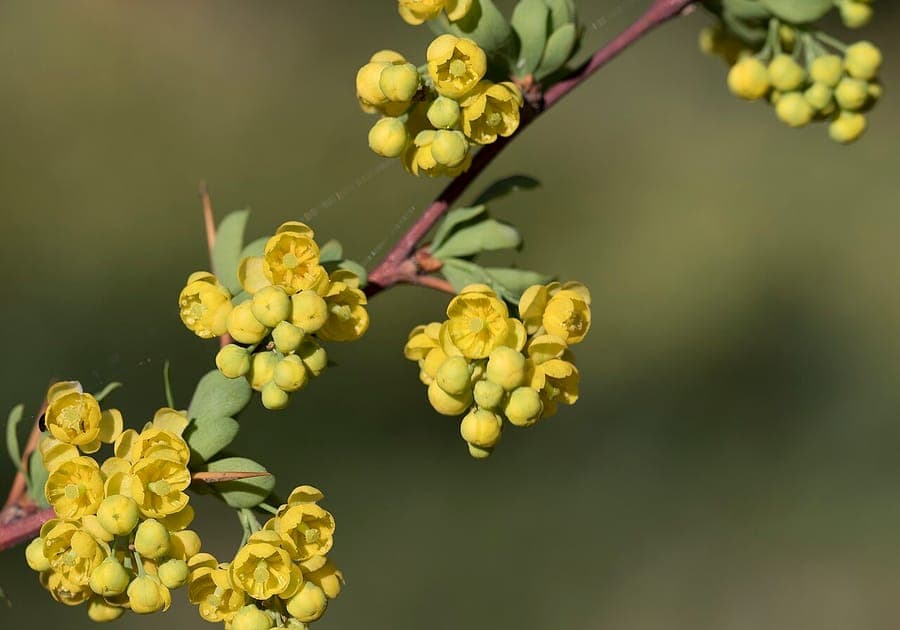
Berberis cretica grows as a compact, densely branched shrub with a fine-textured structure. The leaves are small, glossy, and dark green, remaining attractive year-round. In spring, small, soft yellow flowers appear that are subtly fragrant and attract many pollinators.
After flowering, bright red, glossy berries form that persist deep into fall. These berries are not only beautiful but also food for birds that enjoy eating them. The plant typically reaches a height of 1 to 1.5 meters and a width of approximately the same dimensions, depending on growing conditions.
The branches are equipped with sharp thorns, making this plant also suitable as a defensive hedge. This accent makes the plant both functionally and aesthetically interesting for landscape designers.
Ideal location
Berberis cretica thrives best in full sun to partial shade locations. The plant needs at least 6 hours of direct sunlight daily to bloom optimally and develop color. In places with insufficient light, growth can become thinner and less vigorous.
The plant is a very wind-resistant shrub and does well in open, exposed locations. This makes it ideal for gardens on higher ground or in windy regions. Protection against extreme frost is desirable in areas with winters below -15 degrees Celsius.
This is a perfect choice for rock gardens, Mediterranean gardens, and dry borders. The compact growth habit also makes it suitable for smaller gardens and as a container plant on balconies and terraces.
Soil
Berberis cretica is not particular about soil type as long as it drains well. The plant prefers well-draining soils because waterlogging can lead to root rot. Sandy, rocky, or gravelly soils are ideal.
The pH preference is around neutral to slightly acidic (pH 6.0-7.5). In more humid climates, it is essential to amend the soil with coarse sand or gravel to improve drainage. When planting, compost or garden soil should be mixed with at least 30% coarse sand or perlite.
The plant can grow in poor soils with minimal nutrition. Over-fertilizing can lead to dense growth and reduced flower production. A single application of mineral fertilizer in spring is usually sufficient.
Diseño gratis
¿Quieres ver Cretan Barberry: complete guide en tu jardín? Crea un diseño gratis ahora.
Watering
Once established, Berberis cretica is very drought-tolerant and requires little water. Young plants, however, should be watered regularly during the first growing season until roots are well established.
During dry periods, supplemental water may be needed, especially in containers. Ensure the soil dries completely between waterings. Overwatering is the biggest death sentence for this Mediterranean plant.
In regions with regular rainfall, supplemental water is usually not needed after the first year. Check regularly that the soil is moist enough without being wet.
Pruning
Berberis cretica undergoes natural compact growth and requires minimal pruning. Light shaping can be done in early spring to control shape or remove damaged branches.
Because thorns are abundant, pruning should be done carefully with gloves and shears. Avoid aggressive pruning that can damage the bark and introduce disease.
Growth becomes practically self-supporting through its dense branching. Pruning is actually not necessary unless you want to impose a specific shape.
Maintenance calendar
January-February: Check for winter damage. Remove dead branches if necessary. March: Light shaping pruning. Optionally apply compost. April-May: Blooms appear. Monitor for pests. June-July: Berries begin to form. Support weak branches. August-September: Berries ripen to bright red. Monitor moisture in dry periods. October-November: Berries persist and attract birds. Clean fallen leaves. December: Consider winter protection in cold regions.
Winter hardiness
Berberis cretica is moderately winter-hardy and can tolerate temperatures down to about -15 degrees Celsius. In regions with harsher winters, frost protection such as a layer of leaves or straw around the root zone is beneficial.
In areas with very severe winters (below -20 degrees), it is better to keep this plant in a container and move it to a cool shed in winter, or only plant it in protected microclimates.
The plant is, however, evergreen and will not be defoliated by normal winters. Ensure adequate drainage to prevent root rot from freezing.
Companion plants
Berberis cretica combines beautifully with other Mediterranean plants such as:
- Lavender (Lavandula) for color and fragrance
- Rosemary (Rosmarinus officinalis) for texture contrast
- Cistus for similar drought tolerance
- Sage (Salvia) for complementary colors
- Teucrium for fine texture
- Santolina (Cotton lavender) for silver accent
- Grasses like Stipa for movement
These combinations create a layered, natural effect with minimal water requirements.
Closing thoughts
Berberis cretica is an underrated Mediterranean shrub that offers many benefits to gardeners in dry climates. With its evergreen foliage, beautiful yellow bloom, and bright red berries, it offers year-round interest. The plant is extremely low-maintenance, drought-resistant, and attractive to wildlife. Whether you're designing a Mediterranean garden or simply looking for a resilient, attractive shrub, Berberis cretica definitely deserves a place in your garden.
Try this plant at local garden centers for the best quality and advice. For more plant knowledge and inspiration, visit gardenworld.app where you can discover thousands of species. gardenworld.app also offers personalized garden designs tailored to your wishes.
¿Quieres ver Cretan Barberry: complete guide en tu jardín? Crea un diseño gratis ahora.
Sube una foto, elige un estilo y obtén un diseño fotorrealista con lista de plantas en menos de un minuto.
Más de 10.000 jardines diseñados
Sin tarjeta de crédito


Plantas similares
Bambú celeste: guía completa
Nandina domestica
Todo sobre el bambú celeste (Nandina domestica): plantación, poda, resistencia al invierno y efectos de color. Advertencia: las bayas son tóxicas para aves y mascotas.
Colorado barberry: complete guide
Berberis fendleri
Everything about Berberis fendleri, the Colorado barberry with yellow flowers and red berries. Perfect as a thorny hedge or specimen shrub in dry gardens.
Jeffersonia diphylla: complete guide
Jeffersonia diphylla
Discover Twinleaf, a charming woodland plant from North America. White flowers, unique foliage, perfect for shady borders.