
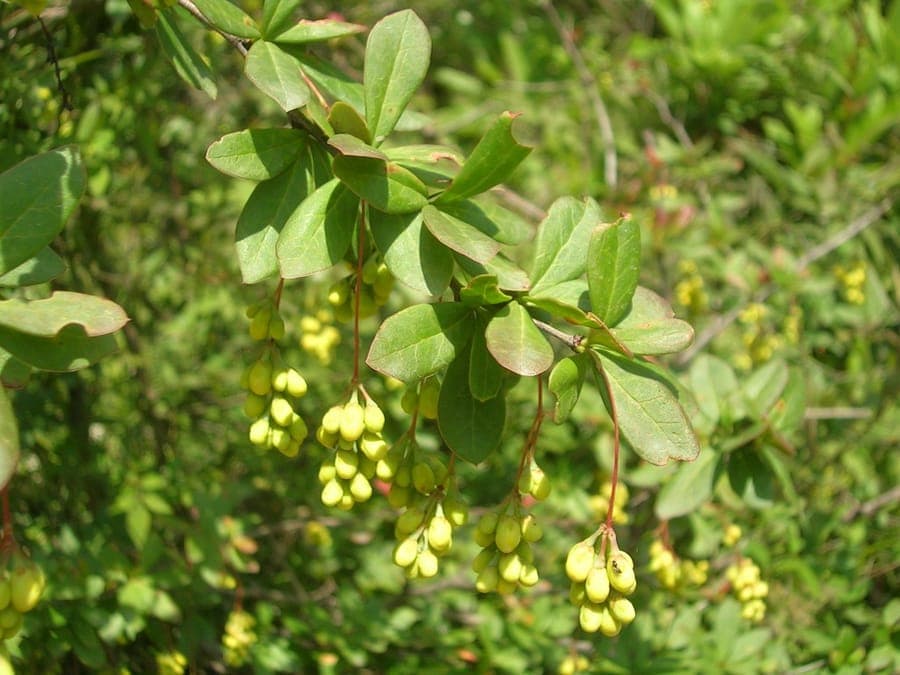
L. Shyamal / CC BY-SA 3.0, via Wikimedia Commons
Berberis aristata: complete guide
Berberis aristata
¿Quieres ver Berberis aristata: complete guide en tu jardín?
1 minuto, sin tarjeta de crédito
Overview
Berberis aristata, also known as Indian barberry or tree-turmeric, is a robust deciduous shrub native to the mountainous regions of the Himalaya. This plant is celebrated for its gorgeous golden-yellow flowers and decorative foliage that tints an attractive red in spring and transforms to golden hues in autumn. The shrub provides valuable nectar for bees and produces berries that feed birds, making it ideal for ecologically responsible gardens.
Appearance and Bloom
Berberis aristata grows into a sturdy, upright shrub reaching approximately 2-3 meters in height, potentially taller with age. The leaves are elongated with noticeable tinted coloring that flushes red in spring and turns golden-yellow in autumn. Flowers appear in spring (April-May) in compact clusters of soft yellow, fragrant blooms. Following flowering, dark blue, waxy fruits develop and persist well into autumn, providing bird food. The overall form is naturally graceful and requires minimal intervention.
Ideal Location
Plant Berberis aristata in full sun to partial shade. Minimum 4-6 hours of direct sunlight daily is necessary for optimal flowering. The shrub tolerates shade but produces fewer blooms and less intense foliage coloring. Ensure adequate spacing: mature plants need at least 1.5-2 meters of width. Protection from strong winds is beneficial, especially in exposed locations.
Soil
Berberis aristata is undemanding and grows in virtually all well-draining soils. Sandy, loamy, and even poor soils are suitable. Soil pH can range from neutral to slightly acidic. Poorly draining clay soils may cause root rot; amend these with organic matter or grow in containers. Rich humus-rich soil promotes growth but is not essential for success.
Watering
Once established, Berberis aristata is drought-tolerant and requires minimal watering. Newly planted young specimens should be watered regularly during the first growing season. Once established, natural rainfall suffices in most regions. During prolonged dry periods, supplemental water may be necessary. Avoid waterlogging, which causes root rot. Winter irrigation is rarely needed.
Diseño gratis
¿Quieres ver Berberis aristata: complete guide en tu jardín? Crea un diseño gratis ahora.
Pruning
Berberis aristata responds well to pruning, though it is not essential. Prune after flowering (June) to maintain shape and encourage new growth. For maintenance, remove old branches at the base. For hedge purposes, trim 2-3 times per season. Be cautious: sharp thorns require gloves. Heavy rejuvenation pruning can be applied to neglected specimens.
Maintenance Calendar
February-March: Inspect for winter damage and perform heavy pruning. April-May: Enjoy blooms and cease heavy pruning. June-July: Perform maintenance pruning after flowering. August-September: Monitor for drought, water if needed. October-November: Harvest fruits for birds, enjoy autumn colors. December-January: Minimal maintenance required.
Winter Hardiness
Berberis aristata is extremely hardy, withstanding temperatures to -15degC (some sources cite -20degC). In colder regions, winter protection during the first year helps, especially for young plants. The shrub may drop leaves in severe winters but typically recovers fully. Snow and ice rarely damage the plant; sturdy branches resist considerable weight.
Companion Plants
Excellent companions for Berberis aristata include:
- Blue juniper (for structural contrast)
- Dwarf conifer groupings (for winter interest)
- Lavender (for floral and fragrance complement)
- Low groundcovers like purple saxifrage (for texture)
- Hedera helix (ivy, for shade-tolerant under-planting)
Closing
Berberis aristata is a versatile, low-maintenance shrub that rewards years with bird food, spring flowers, and autumn color. Whether planted as a specimen, hedge, or part of a mixed border, this robust Himalayan barberry deserves a place in every well-planned garden.
For the UK and beyond, garden centers stock healthy young plants. Discover personalized Berberis aristata garden designs using gardenworld.app/en!
¿Quieres ver Berberis aristata: complete guide en tu jardín? Crea un diseño gratis ahora.
Sube una foto, elige un estilo y obtén un diseño fotorrealista con lista de plantas en menos de un minuto.
Más de 10.000 jardines diseñados
Sin tarjeta de crédito


Plantas similares
Bambú celeste: guía completa
Nandina domestica
Todo sobre el bambú celeste (Nandina domestica): plantación, poda, resistencia al invierno y efectos de color. Advertencia: las bayas son tóxicas para aves y mascotas.
Colorado barberry: complete guide
Berberis fendleri
Everything about Berberis fendleri, the Colorado barberry with yellow flowers and red berries. Perfect as a thorny hedge or specimen shrub in dry gardens.
Jeffersonia diphylla: complete guide
Jeffersonia diphylla
Discover Twinleaf, a charming woodland plant from North America. White flowers, unique foliage, perfect for shady borders.