
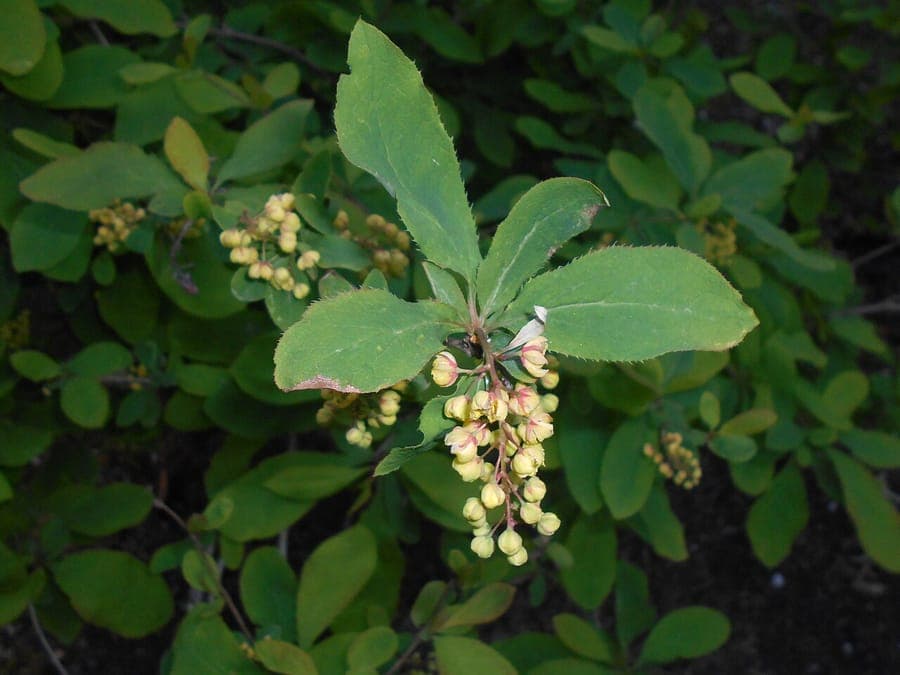
Salicyna / CC BY-SA 4.0, via Wikimedia Commons
Amur barberry: complete guide
Berberis amurensis
¿Quieres ver Amur barberry: complete guide en tu jardín?
1 minuto, sin tarjeta de crédito
Overview
The Amur barberry (Berberis amurensis) is a robust ornamental shrub native to the mountainous regions of Amur, Mongolia, and Japan. This hardy deciduous shrub is renowned for its golden flowers, vibrant orange fruits, and spectacular reddish-orange autumn foliage. It's an excellent choice for natural, sustainable gardens.
Appearance & bloom cycle
This shrub grows into a spreading specimen reaching 150-250 cm tall, with slender branches armed with sharp spines. The foliage is elongated and green, turning golden-yellow before leaf drop. In May-June, small golden-yellow flowers appear in clusters, attracting bees and pollinators.
Following flowering, bright golden-orange berries develop, approximately 8-10 mm in diameter. These persist well into winter, providing food for birds. In October-November, the foliage turns spectacular reddish-orange. The thorns are sharp, so site carefully away from pathways.
Ideal location
This shrub is remarkably flexible regarding location. Full sun produces the finest foliage colour and flowering, though it tolerates half-shade to shade reasonably well. Shaded positions result in looser growth and weaker flowering.
The Amur barberry is a true survivor, thriving on sand, gravel, and ordinary soil. Perfect for difficult corners, steep slopes, and windy locations. Hardy to USDA zone 3 (-35°C). Garden centres throughout the UK stock this plant regularly.
Soil requirements
This shrub makes minimal soil demands. It grows in virtually all soil types, from sand to clay, provided waterlogging drains effectively. The barberry tolerates drought, acidic soil, and even slightly saline conditions. Intensive feeding is unnecessary and counterproductive, as rich soil stimulates weak, sappy growth.
Apply a single application of compost at planting; thereafter, the shrub is self-sufficient.
Diseño gratis
¿Quieres ver Amur barberry: complete guide en tu jardín? Crea un diseño gratis ahora.
Watering
Water regularly after planting until the root system establishes (3-4 weeks). Thereafter, this shrub is exceptionally drought-tolerant. Supplemental watering during dry periods is beneficial but not essential. Excessive moisture can cause root rot.
Pruning
The Amur barberry requires minimal pruning. Allow it to develop its natural form. Remove only dead branches and severely congested specimens. Growth is slow, making heavy pruning unnecessary. Pruning wounds can attract disease.
Maintenance calendar
- March-April: Assess frost damage. Remove dead wood.
- May-June: Enjoy the golden flowers. They're richly fragrant and attract pollinators.
- July-September: Monitor for pests (rare). Water during extreme drought.
- October-November: Admire spectacular autumn colour. Leave berries for birds.
- December-February: Winter dormancy. Minimal attention required.
Winter hardiness
The Amur barberry is extremely hardy to USDA zone 3 (-35°C). It survives the severest winters without protection. Even after significant frost damage, the plant regenerates from the base.
Companion plants
Excellent combinations include:
- Other thorny shrubs like hawthorn and sea buckthorn
- Dry-ground plants and sedums
- Native shrubs and ornamental grasses
- Conifers and evergreens for contrast
This shrub performs exceptionally well in mixed hedging with privet and variegated deciduous species. For gardenworld.app, it's ideal for sustainable, pollinator-friendly garden designs.
Closing thoughts
The Amur barberry is a tough, hardy ornamental shrub requiring minimal maintenance. With its spectacular autumn colour and bird-feeding berries, it offers year-round value. An excellent choice for natural, sustainable gardens.
¿Quieres ver Amur barberry: complete guide en tu jardín? Crea un diseño gratis ahora.
Sube una foto, elige un estilo y obtén un diseño fotorrealista con lista de plantas en menos de un minuto.
Más de 10.000 jardines diseñados
Sin tarjeta de crédito


Plantas similares
Bambú celeste: guía completa
Nandina domestica
Todo sobre el bambú celeste (Nandina domestica): plantación, poda, resistencia al invierno y efectos de color. Advertencia: las bayas son tóxicas para aves y mascotas.
Colorado barberry: complete guide
Berberis fendleri
Everything about Berberis fendleri, the Colorado barberry with yellow flowers and red berries. Perfect as a thorny hedge or specimen shrub in dry gardens.
Jeffersonia diphylla: complete guide
Jeffersonia diphylla
Discover Twinleaf, a charming woodland plant from North America. White flowers, unique foliage, perfect for shady borders.