
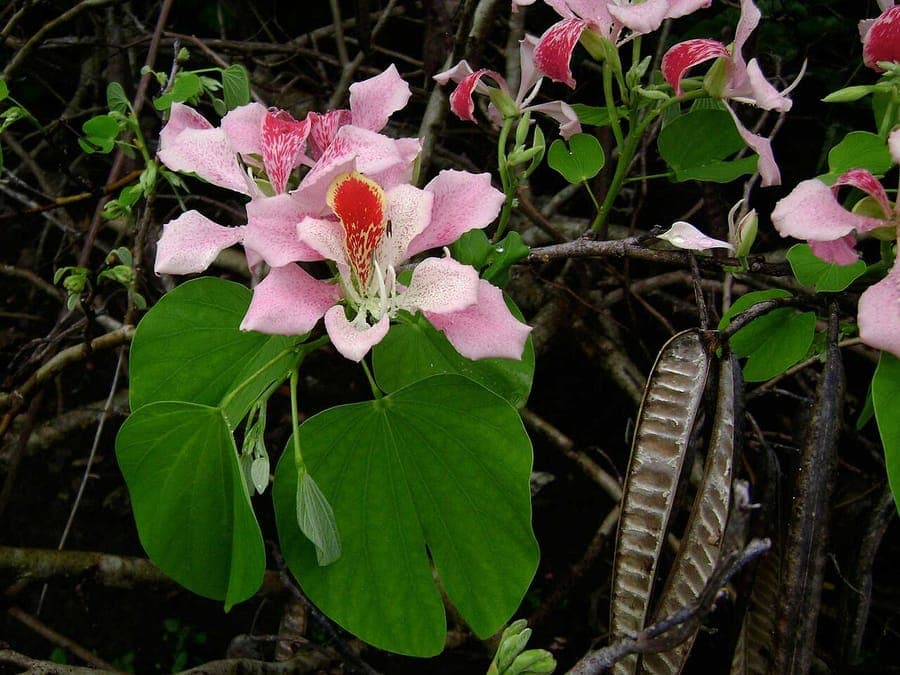
Tauʻolunga / CC BY-SA 3.0, via Wikimedia Commons
Bauhinia monandra: complete guide
Bauhinia monandra
¿Quieres ver Bauhinia monandra: complete guide en tu jardín?
1 minuto, sin tarjeta de crédito
Overview
Bauhinia monandra, commonly known as the Jerusalem date or orchid tree, is a stunning tropical specimen from the Fabaceae family. This plant captivates gardeners with its striking orchid-like flowers in shades of pink, magenta, and deep purple. Native to Madagascar, it thrives in tropical and subtropical regions worldwide. With distinctive two-lobed leaves and spectacular flowering displays, Bauhinia monandra is a favorite choice for landscape designers and plant enthusiasts seeking exotic elegance.
Appearance and Bloom
Bauhinia monandra develops into a medium to large tree with an open, spreading crown. Its leaves are characteristically two-lobed, resembling butterfly wings or a split hoofprint. The real showstopper is the flowers: large, fragrant, orchid-like blooms in light rose, magenta, or deep purple, often with contrasting red stamens. These flowers appear in profuse clusters during warm months, typically from spring through early autumn. The extended flowering period and dramatic color make this tree a landscape focal point.
Ideal Location
Position Bauhinia monandra in full sun, requiring at least 6-8 hours of direct sunlight daily for optimal growth and abundant flowering. In intensely hot tropical climates, light afternoon shade can prevent sun scorch on container plants. Protection from strong winds is important, as the delicate flowers and thin canopy can suffer damage. In cooler regions, grow this tree in a warm greenhouse or conservatory where temperature can be maintained year-round.
Soil
Bauhinia monandra prefers well-draining soil with a slightly acidic to neutral pH (6.5-7.0). Create an ideal mix combining garden soil, sand, and organic matter in a 2:1:1 ratio. Proper drainage is crucial, especially during dormant winter months when waterlogging causes root rot. For container cultivation, use a quality tree-growing medium with added perlite or coarse sand to enhance drainage and prevent compaction.
Watering
Maintain consistent moisture during growing and flowering periods. Water when the top 5cm of soil becomes dry. During active growth in summer, you may need to water every 2-3 days depending on heat and humidity. In winter, dramatically reduce watering frequency as growth slows. Always ensure water can drain freely and never allow standing water around the base. Overhead watering in humid climates increases disease risk; water at soil level instead.
Diseño gratis
¿Quieres ver Bauhinia monandra: complete guide en tu jardín? Crea un diseño gratis ahora.
Pruning
While not essential, pruning helps maintain an attractive shape and encourages bushier growth. Prune immediately after flowering ends to redirect energy into new growth rather than seed development. Remove any dead, diseased, or weak branches year-round. For containerized plants, selective pruning keeps the tree within bounds and promotes a denser flowering form. Always use clean, sharp tools to prevent disease transmission.
Maintenance Calendar
Spring: Assess health and treat pest infestations promptly. Resume regular watering and begin monthly balanced fertilization. Prune to shape and remove winter damage. Summer: Switch to high-potassium fertilizer monthly to encourage blooms. Monitor soil moisture closely as heat increases evaporation. Mist foliage regularly in dry conditions. Fall: Gradually reduce feeding frequency. Maintain adequate water as temperatures drop. Monitor for late-season pests. Winter: Minimize watering substantially. Maintain minimum 50°F (10°C) temperature. Withhold fertilizer entirely.
Winter Hardiness
Bauhinia monandra is tropical and frost-intolerant, dying at temperatures below 50°F (10°C). In temperate climates, it must be grown in heated greenhouses, conservatories, or warm interiors. In mild zones (USDA 10-11), outdoor cultivation is possible but requires frost protection during unexpected cold snaps. In areas with occasional frost, prepare protective coverings (burlap or frost cloth) before temperatures drop.
Companion Plants
Bauhinia monandra pairs beautifully with other tropical specimens:
- Bougainvillea (purple or red for striking contrast)
- Thevetia peruviana (cheerful yellow blooms)
- Plumbago capensis (brilliant blue flowers)
- Frangipani (fragrant white or pink)
- Tropical vines like Passiflora or Clematis
These combinations create layered tropical gardens with extended bloom seasons.
Closing Thoughts
Bauhinia monandra is a genuine treasure for tropical garden enthusiasts. While it demands warmth and bright light, the reward is months of spectacular orchid-like blooms that command attention. Whether you're managing a conservatory or living in a warm climate, this tree justifies the care investment with unmatched exotic beauty. Visit local garden centers or online retailers for availability. Browse gardenworld.app for inspiration on integrating tropical specimens into your landscape design. Discover gardenworld.app for professional guidance on creating cohesive tropical garden schemes.
¿Quieres ver Bauhinia monandra: complete guide en tu jardín? Crea un diseño gratis ahora.
Sube una foto, elige un estilo y obtén un diseño fotorrealista con lista de plantas en menos de un minuto.
Más de 10.000 jardines diseñados
Sin tarjeta de crédito


Plantas similares
Tall Silky Lupine: complete guide
Lupinus elatus
Tall silky lupine is a fast-growing Californian perennial with silvery foliage and blue-purple flower spikes, ideal for a prairie-style garden.
Garfield Lupine: complete guide
Lupinus garfieldensis
The Garfield lupine is a rare, fast-growing American perennial for alkaline, dry grassland gardens, with striking blue flower spikes.
Lupinus elegans: complete guide
Lupinus elegans
Lupinus elegans, the elegant lupine, is a spectacular blooming plant from Mexico with blue flower spikes. Care, cultivation and garden use.