
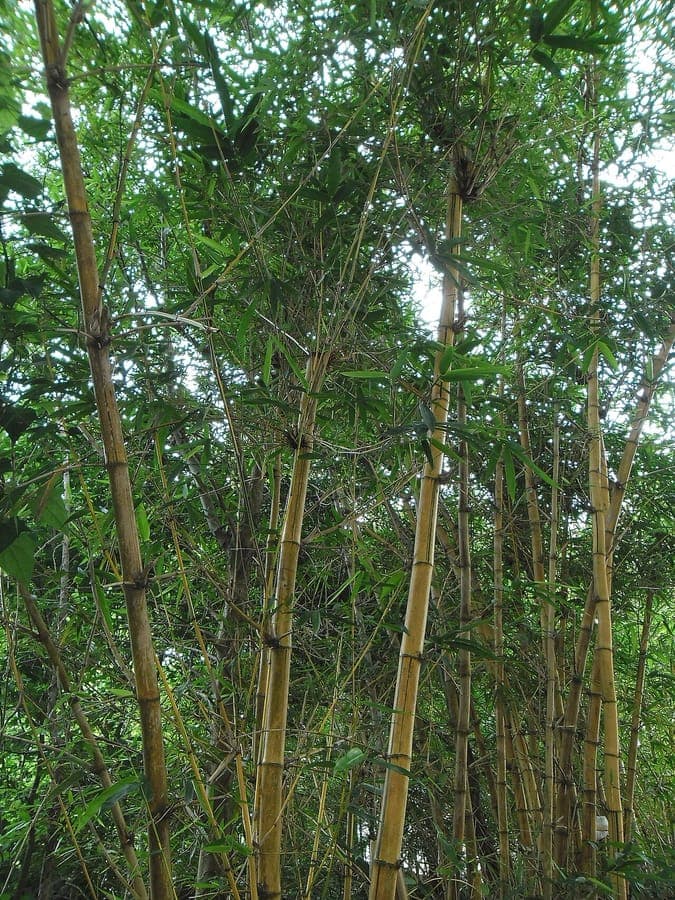
Earth100 / CC BY-SA 3.0, via Wikimedia Commons
Bambusa vulgaris: complete guide
Bambusa vulgaris
¿Quieres ver Bambusa vulgaris: complete guide en tu jardín?
1 minuto, sin tarjeta de crédito
Overview
Bambusa vulgaris, commonly called common bamboo or golden bamboo, is a spectacular grass species that fascinates many gardeners. This bamboo originates from China and Southeast Asia and is cultivated worldwide for its ornamental value and practical applications. In temperate gardens, bamboo grows well in suitable locations and forms an attractive specimen or background screening.
Bamboo is among the fastest-growing plants on Earth. Some species can grow more than one meter in a single season. Bambusa vulgaris reaches 8 to 12 meters in good conditions, though it stays somewhat smaller in cooler climates. The plant has slender, flexible culms covered with leaves and typically grows in hollow tubes characteristic of this genus.
Appearance and flowering
The culms of Bambusa vulgaris are smooth and green, with a diameter of 2 to 4 centimeters. The leaves are small, linear, and green, arranged alternately along the culms, giving the bamboo its classic appearance. In spring, new shoots emerge from the base and rapidly shoot upward, reaching full height within months.
Bamboo rarely flowers, especially in cultivation. When it does, the plant produces small greenish flowers in panicles. Flowering is not spectacular but demonstrates that your plant has reached maturity. After flowering, some culms naturally decline, which is normal behavior.
The structure of bamboo creates interesting light-and-shadow patterns in the garden, especially when sunlight filters through the culms. This makes bamboo suitable for gardens where light interplay is important.
Ideal location
Bambusa vulgaris thrives best in sunny to partly shaded locations. Provide at least 4 to 6 hours of direct sunlight daily. Too much shade slows growth and can result in thinner, weaker plants.
Ensure shelter from strong winds. Although bamboo is flexible, heavy wind gusts in winter can damage young culms. A location on the south side of a building or behind a wall provides ideal protection.
Note reflective warmth from walls. Bamboo can combine intense sun with afternoon shade in very hot periods. Avoid direct south-facing walls in very dry summers, as this can desiccate the plant excessively.
Soil
Bamboo thrives in virtually all soil types but prefers nutrient-rich, well-draining soil. Clay is tolerated, but heavy clay soils must be improved with compost or organic matter before planting.
The pH should be neutral to slightly acidic, between 5.5 and 7. Before planting, incorporate generous amounts of organic matter. Ripe compost, garden compost, or well-rotted leaf mold are excellent. This improves water retention and nutrient availability.
Good drainage is essential. Bamboo dislikes stagnant water or waterlogging. Improve poorly drained soils by constructing planting mounds or adding drainage amendments.
Watering
During the growing season (May to September), bamboo requires regular water. Water when the top 5 centimeters of soil feel dry. This typically means 2 to 3 times weekly in normal years, more during dry spells.
Young bamboo plants (first two years) need more water than established specimens. Keep them consistently moist but never waterlogged. A 5 to 10 centimeter mulch layer helps retain soil moisture.
In autumn and winter, gradually reduce watering. Once established, bamboo needs less water and can tolerate some drought. However, in very dry winters, minimal watering is still necessary.
Diseño gratis
¿Quieres ver Bambusa vulgaris: complete guide en tu jardín? Crea un diseño gratis ahora.
Pruning
Pruning bamboo is not strictly necessary but can control shape or rejuvenate older plants. Remove dead or damaged culms anytime. Cut low-hanging branches to maintain clear access paths.
When bamboo becomes too dense, selectively removing some older culms in spring encourages regeneration. Do this carefully to maintain the plant's appearance.
In May or June, you can slightly trim the tops of culms for a more compact form, though this is not essential. Pruning shears must be sharp to prevent damage to the hollow culms.
Maintenance calendar
Spring (March to May): Check for winter damage. Remove dead culms. Start regular watering as weather warms. Apply organic fertilizer or bamboo-specific fertilizer.
Summer (June to August): Water regularly, especially during dry periods. Monitor for pests like spider mites. Add mulch if water loss occurs rapidly. Monitor new culms for healthy development.
Autumn (September to October): Reduce fertilizing. Water regularly but less than in summer. Collect fallen leaves to add as mulch.
Winter (November to February): Minimal maintenance required. Water only during very dry periods. Check for frost damage, especially after heavy frosts. Some culm dieback in very cold nights is normal.
Winter hardiness
Bambusa vulgaris has limited winter hardiness in cooler regions. The plant survives winter temperatures down to approximately -8 to -10 degrees Celsius, though young plants are more vulnerable. In frost-prone areas, providing extra protection is recommended.
Winter protection: Wrap the plant with autumn leaves or straw. Place straw material around the base to 30 centimeters height. This insulates the root system, the most vulnerable part. Avoid plastic that traps moisture.
In very cold winters, above-ground portions may die back, but the plant typically regenerates from the root system in spring. This is normal behavior for bamboo in cooler climates.
Enhancing winter hardiness: Choose a sheltered location. Plant bamboo on the south side of buildings. Avoid windy open sites. Regular feeding during the growing season strengthens the plant.
Companion plants
Bamboo pairs well with shade-loving plants. Plant beneath the bamboo in its shade:
- Japanese hellebore (Helleborus niger)
- Wood anemone (Anemone nemorosa)
- Hostas in various varieties
- Cast-iron plant (Aspidistra elatior)
- Shade-loving ferns for structure
Around the bamboo, plant sun-loving elements:
- Japanese maple trees
- Ornamental grasses like Miscanthus
- Ground covers like Euonymus
Bamboo fits beautifully in Asian-themed gardens with bamboo, stones, and water features.
Closing remarks
Bambusa vulgaris brings an exotic, calming element to temperate gardens. With proper location, soil preparation, and winter protection, this bamboo grows well and remains an impressive accent for years. Visit quality nurseries for superior bamboo specimens and consult specialists about local winter protection strategies. Gardenworld.app helps you find the perfect spot in your garden for this practical and beautiful plant. Bamboo requires patience and good initial care, but the reward is a long-lived, strong, healthy plant that will thrive for generations.
¿Quieres ver Bambusa vulgaris: complete guide en tu jardín? Crea un diseño gratis ahora.
Sube una foto, elige un estilo y obtén un diseño fotorrealista con lista de plantas en menos de un minuto.
Más de 10.000 jardines diseñados
Sin tarjeta de crédito


Plantas similares
Sporobolus pungens: complete guide
Sporobolus pungens
Sporobolus pungens is a stoloniferous Mediterranean coastal grass with outstanding salt and drought tolerance, perfect for seaside and dry gardens.
Mediterranean aegilops: complete guide
Aegilops biuncialis
Everything about Aegilops biuncialis, a Mediterranean annual grass with ornamental spikes and outstanding drought tolerance for dry gardens.
Silver bluestem: complete guide
Bothriochloa saccharoides
Full guide to Bothriochloa saccharoides (silver bluestem): site, soil, watering, winter hardiness, pruning, and garden companions.