
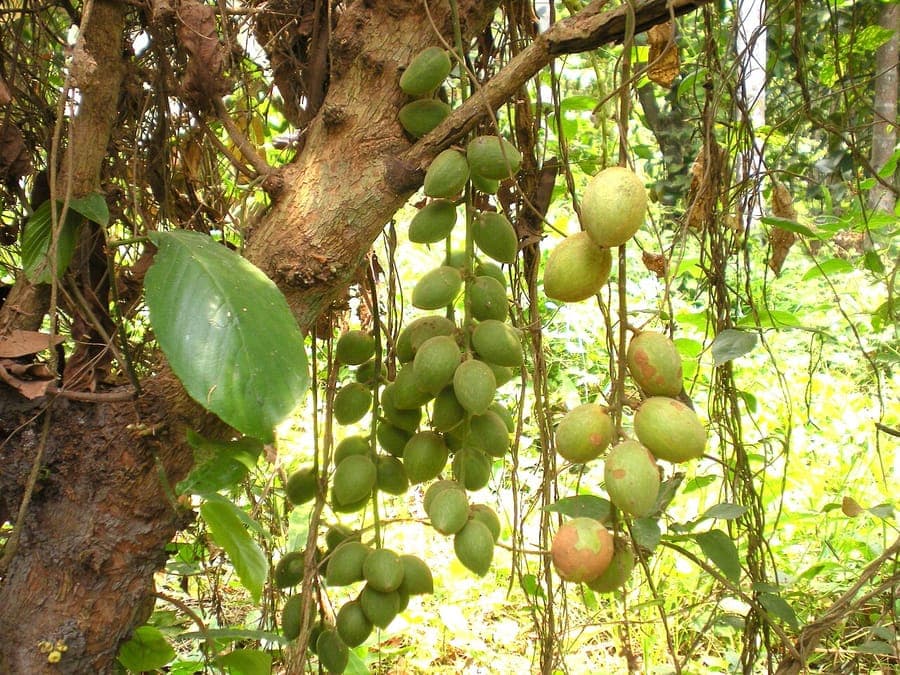
Phuong Tran / CC BY 2.0, via Wikimedia Commons
Burmese Grape: complete guide
Baccaurea ramiflora
¿Quieres ver Burmese Grape: complete guide en tu jardín?
1 minuto, sin tarjeta de crédito
Overview
Burmese Grape (Baccaurea ramiflora) is a fascinating tropical fruit tree from Southeast Asia, native from India to China and Malaysia. This is not a true grape but a unique fruit tree that produces juicy, tart fruits. The tree is also prized for its interesting architecture and ornamental value.
Burmese Grape grows well in tropical and subtropical climates and can also be cultivated in greenhouses or with protection in warmer temperate areas. Fruit production is the great reward for patient cultivation.
Appearance and growth
Baccaurea ramiflora grows as a medium-sized tree, usually 6-12 meters tall in nature, but larger in cultivation. The trunk is upright with grayish-brown bark. The leaves are compound, glossy green, giving the tree an elegant appearance.
Most striking are the flowers and fruits that grow directly from the trunk and branches (cauliflory). The fruits are round to oval, approximately 2-4 cm large, with yellow to red tint when ripe.
Ideal location
Burmese Grape loves full sun to partial shade. In very tropical areas preference for some afternoon shade. For optimal fruit production, full sun is essential.
Protection from strong winds is desired as the tree grows quite upright. Wind breakage can occur.
Soil
The tree grows well in moist, well-draining soil. This can be a mixture of garden soil, compost, and sand. Add organic matter for moisture retention.
The pH can vary, but neutral to slightly acidic is ideal. The tree is not very demanding and also grows in average garden soil.
Watering
Burmese Grape loves regular moisture, especially during growth and fruit formation. Water deeply and regularly, especially in dry seasons. Don't let the soil dry out completely.
Once established, the tree is reasonably drought-tolerant. In rainy climates, natural rainfall may be sufficient.
Diseño gratis
¿Quieres ver Burmese Grape: complete guide en tu jardín? Crea un diseño gratis ahora.
Fertilizing
Apply a complete fertilizer at least twice per year, especially during growing season. Use a balanced formula. Extra potassium promotes fruit production.
Organic matter such as compost is also beneficial. Preference for slow-release fertilizers.
Pruning
Minimal pruning is needed. Remove only dead or damaged branches. Pruning can lead to less fruit production so limit it.
In early years, light shaping can help with fruit production.
Maintenance calendar
Growth period: Regular water, add fertilizer Blooming period: Adequate moisture Fruit period: Careful harvesting Rest period: Reduce water
Harvest
Harvest fruits when they feel soft and have a yellow or red color. They can also be harvested green and ripen further.
The fruits contain acids and are usually eaten raw or processed into jam.
Winter hardiness
Burmese Grape is not hardy and cannot grow outdoors in cold climates. The tree dies in frost. In temperate regions, greenhouse cultivation or winter protection is needed.
Minimum temperature is approximately 10-15 degrees Celsius.
Pest control
The tree is relatively pest-free. Watch for spider mites and scale insects. Natural pest control is preferred.
Closing
Burmese Grape is a fascinating fruit tree for lovers of exotic fruits. With regular watering and adequate sunshine, the tree will grow and produce fruits. The exotic flavor of the fruits makes cultivation worthwhile. Discover on gardenworld.app how exotic fruit trees fit into your garden or greenhouse. Gardenworld.app helps you create the perfect environment for this tropical tree.
¿Quieres ver Burmese Grape: complete guide en tu jardín? Crea un diseño gratis ahora.
Sube una foto, elige un estilo y obtén un diseño fotorrealista con lista de plantas en menos de un minuto.
Más de 10.000 jardines diseñados
Sin tarjeta de crédito


Plantas similares
Breynia disticha: complete guide
Breynia disticha
Discover the Snowbush: a frost-sensitive houseplant with stunning red-white foliage. Perfect growing guide for terrariums.
Bridelia micrantha: complete guide
Bridelia micrantha
Bridelia micrantha, or Mitzeerie, is a tropical African shrub supporting bird populations. This native plant provides food and shelter throughout the year.
Flueggea leucopyrus: complete guide
Flueggea leucopyrus
Discover the Spinous flueggea, a robust shrub with sharp thorns from tropical regions. Perfect for dry gardens and demanding conditions.