
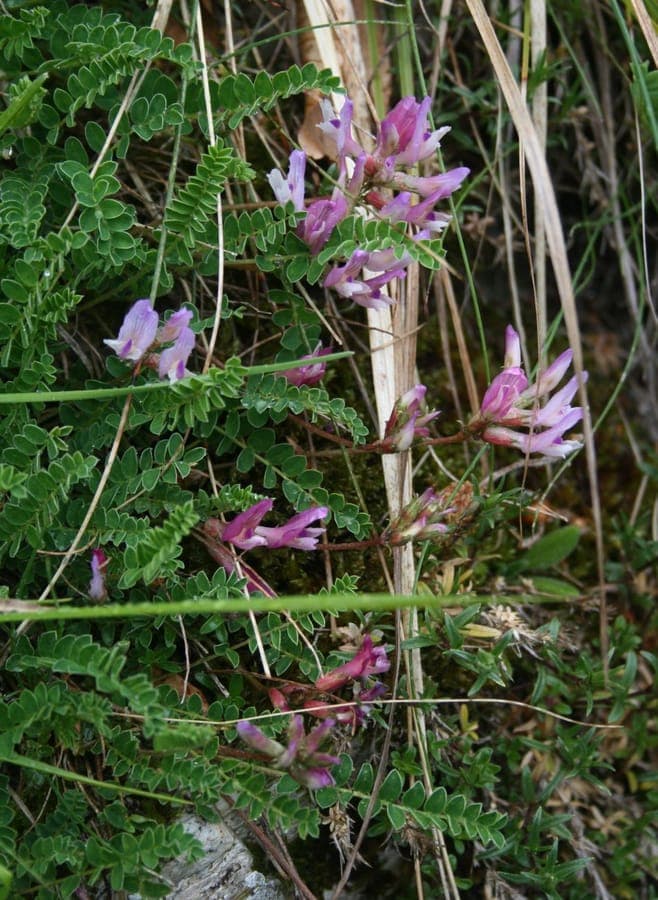
Franz Xaver / CC BY-SA 3.0, via Wikimedia Commons
Montpellier Milkvetch: complete guide
Astragalus monspessulanus
¿Quieres ver Montpellier Milkvetch: complete guide en tu jardín?
1 minuto, sin tarjeta de crédito
Overview
The Montpellier milkvetch (Astragalus monspessulanus) is a resilient perennial from southern Mediterranean Europe. This sturdy plant produces charming blue-pink flowers and forms a low, compact mound. It excels in dry, sunny locations and requires minimal maintenance once established. This legume belongs to the Fabaceae family, known for nitrogen-fixing capabilities that enrich surrounding soil naturally. The nitrogen-fixing ability means supplemental fertilization is rarely necessary, making this species both economical and ecological.
Appearance and bloom
Astragalus monspessulanus typically reaches 25-40 cm in height. The plant grows low and spreading, with finely divided, gray-green foliage. Flowers appear from May through July in dense clusters, typically pink or blue-tinted, creating a spectacular visual display. Foliage remains attractive throughout the season, turning golden in autumn. The plant forms naturally into a ball-like cushion shape without requiring extensive pruning. The compact form makes it ideal for borders, rock gardens, and alpine containers where space limitations exist.
Ideal location
This plant thrives in full sunlight, requiring at least 6-8 hours of direct sun daily for optimal performance. It tolerates intense heat excellently and produces more flowers with increased warmth. Shelter from strong winds is beneficial. Ensure the planting site has good air circulation. South-facing slopes and hillsides are particularly suitable for maximum light exposure. In mountainous areas, select locations with the greatest light availability to ensure vigorous growth.
Soil
Well-draining soil is essential for success. Amend heavy clay soils with sand and gravel to improve permeability. Optimal pH ranges from 7.0 to 7.5. This plant prefers poor to moderately fertile soil; excessive nutrients promote foliage at the expense of flowers. The nitrogen-fixing ability means supplemental fertilization is rarely necessary and often counterproductive to flower production.
Watering
Once established, minimal water is needed. Water regularly during the first growing season until deep roots develop. Thereafter, water only during prolonged drought. Excess moisture can cause root rot. In Mediterranean climates, supplemental irrigation may not be necessary. This plant is particularly valuable in water-scarce regions where conservation is essential.
Diseño gratis
¿Quieres ver Montpellier Milkvetch: complete guide en tu jardín? Crea un diseño gratis ahora.
Pruning
Minimal pruning required. Deadhead spent flowers in spring to encourage additional blooms throughout the season. In autumn, remove withered stems and seed pods. Avoid heavy pruning, as this plant recovers slowly from severe cutting. Light shaping in spring maintains desirable form without stressing the plant.
Maintenance
This plant demands minimal care once established. No fertilizer needed under normal conditions. Monitor for common pests like aphids in early spring. Clear dead foliage and dried stems regularly to maintain neat appearance. No special disease management required. This species is notably pest and disease resistant in most growing conditions.
Maintenance calendar
Spring: Prepare beds, plant seedlings, light pruning as needed. Summer: Check moisture levels, deadhead spent flowers to extend bloom season. Autumn: Remove seed pods, prepare for winter dormancy. Winter: Minimal activity; plant dormant and requires no intervention.
Winter hardiness
Astragalus monspessulanus is hardy to -10C, possibly colder in sheltered locations. In cold climates, provide extra drainage to protect roots from waterlogged winter soils. Avoid planting in very wet winter regions. In protected alpine areas, this plant can survive even colder temperatures successfully.
Companion plants
Pair with other low-growing drought-tolerant species: Artemisia, Lavandula, Cistus, and Santolina. This combination creates beautiful, low-maintenance borders that bloom across multiple seasons. Avoid pairing with moisture-loving plants that require frequent watering. The result is a cohesive, drought-resistant landscape that minimizes ongoing maintenance.
Conclusion
The Montpellier milkvetch is ideal for gardeners seeking a drought-tolerant plant with minimal maintenance requirements. This versatile species suits borders, rock gardens, containers, and alpine troughs equally well. Available from major European retailers. For design inspiration, visit gardenworld.app/en and discover how this plant fits your landscape! Plant it once and forget about watering and fertilizing concerns forever.
¿Quieres ver Montpellier Milkvetch: complete guide en tu jardín? Crea un diseño gratis ahora.
Sube una foto, elige un estilo y obtén un diseño fotorrealista con lista de plantas en menos de un minuto.
Más de 10.000 jardines diseñados
Sin tarjeta de crédito


Plantas similares
Tall Silky Lupine: complete guide
Lupinus elatus
Tall silky lupine is a fast-growing Californian perennial with silvery foliage and blue-purple flower spikes, ideal for a prairie-style garden.
Garfield Lupine: complete guide
Lupinus garfieldensis
The Garfield lupine is a rare, fast-growing American perennial for alkaline, dry grassland gardens, with striking blue flower spikes.
Lupinus elegans: complete guide
Lupinus elegans
Lupinus elegans, the elegant lupine, is a spectacular blooming plant from Mexico with blue flower spikes. Care, cultivation and garden use.