
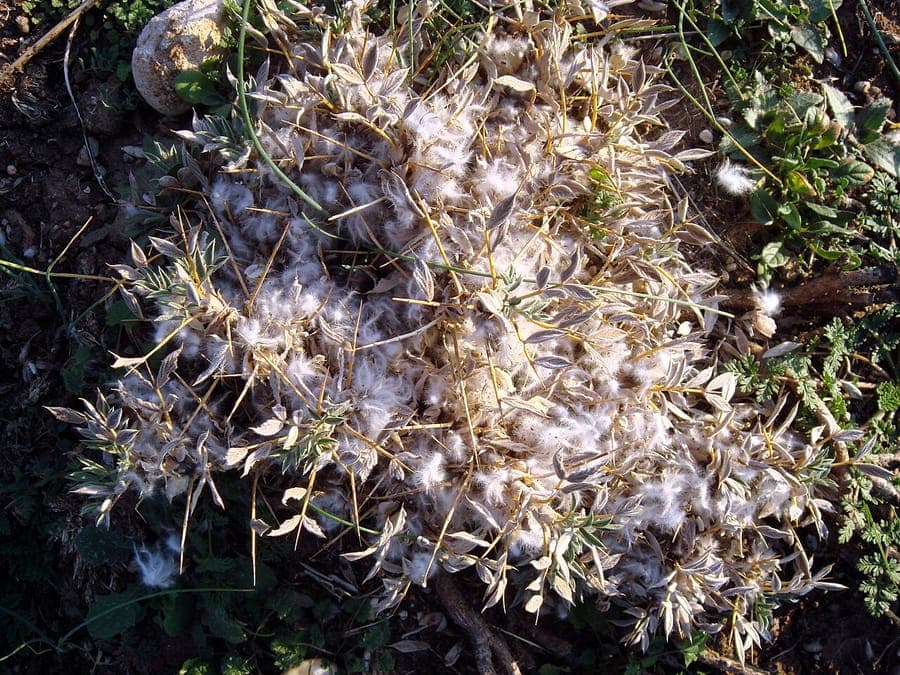
MikaelF / CC BY-SA 3.0, via Wikimedia Commons
Astragalus hamosus: complete guide
Astragalus hamosus
¿Quieres ver Astragalus hamosus: complete guide en tu jardín?
1 minuto, sin tarjeta de crédito
Overview
Astragalus hamosus, better known as yellow milk-vetch or hooked-pod milk-vetch, is a compact annual plant from the Fabaceae family. This Mediterranean plant naturally grows in dry, rocky areas from North Africa, the Mediterranean to Pakistan. The name hamosus refers to the characteristic hooked pods that form after flowering.
This plant is known for its bright yellow flowers that appear in dense clusters. With its low growth, drought tolerance and attractive flowers, it is excellent for Mediterranean gardens, rock walls and xeriscapes. The plant grows quickly from seed and reaches full bloom in about four months.
Appearance and blooming
Astragalus hamosus is a compact plant typically growing 20 to 40 centimeters tall, sometimes taller in ideal conditions. The plant has fern-like, gray-green leaves that are divided into many small leaflets. The leaves have a silky texture and are not very striking until flowering occurs.
Flowers appear in April to May as small, compact clusters of bright yellow flowers. Each flower is about 0.5 centimeters across and has a typical legume shape. The flowers attract bees and butterflies. After blooming, characteristic hooked, hairy seed pods form that become brownish and contain seeds.
The plant usually dies at the end of summer or early autumn, especially in warm climates, but may last longer in cooler regions.
Ideal location
Astragalus hamosus prefers full sunlight and grows best in very sunny locations with at least eight hours of direct sunlight daily. The plant cannot cope well with shade and will become thin and produce poor flowering in partially shaded locations.
The plant is very drought-tolerant once established and can grow in virtually any sunny location, including hot, dry corners of the garden, along rocky slopes, and in containers. It is a good choice for gardens with limited water availability or for gardeners wanting weather-resistant plants.
It tolerates wind well and is suitable for coastal gardens and windy locations.
Soil type
Astragalus hamosus grows on virtually all soil types but prefers well-draining, poor soil. The plant tolerates heavy clay poorly and struggles in waterlogged conditions. A dry, sandy or stony soil is ideal.
Do not add excessive compost or manure, as this promotes lush foliage at the expense of flowering. The plant grows much better on poor soil. A pH between 7 and 8 is suitable; the plant can also tolerate somewhat saline soil, making it suitable for coastal gardens.
Good drainage is critical. If water stagnates around roots, rot will occur. Plant in raised beds or containers if your soil drains poorly.
Watering
The plant is very drought-tolerant once established and needs little or no supplemental water in regions with normal rainfall. In dry climates, water deeply a few times during the growing period, but let the soil dry between waterings.
During the sowing and young plant stage, provide regular moisture until well established. Once established (after four to six weeks), watering can be significantly reduced.
Overwatering is the main killer of this plant. In winter, withhold watering entirely in temperate climates.
Diseño gratis
¿Quieres ver Astragalus hamosus: complete guide en tu jardín? Crea un diseño gratis ahora.
Pruning
Astragalus hamosus requires no pruning. It has a natural, low-growing form that needs no shaping. Let it grow naturally for best effect.
You can remove dead parts or damaged areas when present. After it dies at the end of the growing season, you can remove dead material to keep the garden bed clean.
If you want to harvest seeds for next year, leave a few pods on the plant to dry completely until they are brown and hard, and collect them before they break.
Maintenance calendar
January to March: No maintenance needed. Sow seeds directly outdoors in late winter or early spring.
April to May: Young plants appear, give regular watering (if no rain), feeding not needed.
June to July: Flowering at peak, minimal watering, no feeding.
August to September: Flowering declines, plant weakens. Seed collection if desired. Withhold watering.
October to December: Plant dies naturally. Remove dead plant material from beds.
Winter hardiness
Astragalus hamosus is not winter hardy in severe climates and is an annual plant that dies after frost. In temperate and warm climates where frost is rare, the plant may regrow from scattered seed the next spring.
In colder regions, resow seed each spring. The plant tolerates light frost in the young stage but dies with persistent frost. Sow in spring when soil temperature reaches at least 15 degrees Celsius.
Given that it is a very fast-growing plant, you can easily resow it every year.
Companion plants
Astragalus hamosus combines well with other Mediterranean wildflowers and drought-tolerant species:
Adonis (pheasant's eye) blooms in yellow and provides nice contrast in flower sequencing.
Lavandula (lavender) adds fragrance and attractive flower towers that appear after yellow blooms.
Oreoganum and other herbaceous plants provide texture contrast.
Rosmarinus (rosemary) adds growth diversity and fragrance.
Small garlic-like alliums or irises create interesting flower sequences.
Conclusion
Astragalus hamosus is an excellent wildflower for Mediterranean gardens, rock gardens and xeriscape designs. With its bright yellow flowers, low growth, drought tolerance and simple cultivation, it is ideal for gardeners wanting quick, sustainable beauty.
This is a plant requiring little maintenance but rewarding with early, rich flowering. Perfect for gardens where water must be used carefully, and for those experimenting with Mediterranean wildflowers.
Looking for seeds of Astragalus hamosus? Visit your local seed supplier or online growers. At gardenworld.app, find designs that showcase this unique blooming. Bring Mediterranean wildflower charm to your garden with yellow milk-vetch.
Want more advice or designs featuring Astragalus hamosus? Visit gardenworld.app for personalized garden designs.
¿Quieres ver Astragalus hamosus: complete guide en tu jardín? Crea un diseño gratis ahora.
Sube una foto, elige un estilo y obtén un diseño fotorrealista con lista de plantas en menos de un minuto.
Más de 10.000 jardines diseñados
Sin tarjeta de crédito


Plantas similares
Tall Silky Lupine: complete guide
Lupinus elatus
Tall silky lupine is a fast-growing Californian perennial with silvery foliage and blue-purple flower spikes, ideal for a prairie-style garden.
Garfield Lupine: complete guide
Lupinus garfieldensis
The Garfield lupine is a rare, fast-growing American perennial for alkaline, dry grassland gardens, with striking blue flower spikes.
Lupinus elegans: complete guide
Lupinus elegans
Lupinus elegans, the elegant lupine, is a spectacular blooming plant from Mexico with blue flower spikes. Care, cultivation and garden use.