
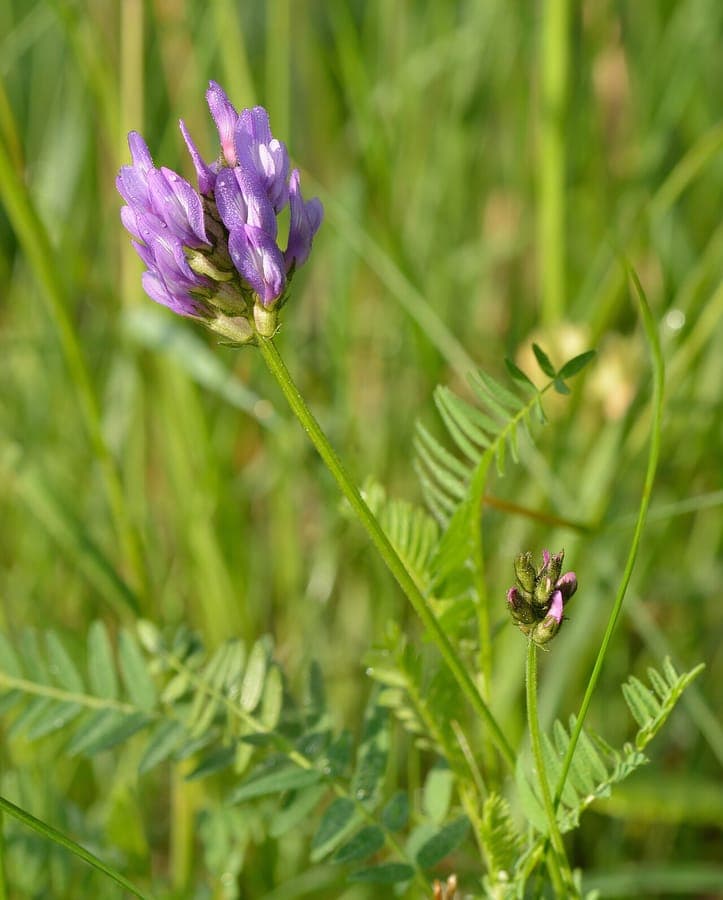
Ivar Leidus / CC BY-SA 3.0, via Wikimedia Commons
Purple milk-vetch: complete guide
Astragalus danicus
¿Quieres ver Purple milk-vetch: complete guide en tu jardín?
1 minuto, sin tarjeta de crédito
Overview
The Purple milk-vetch, botanically known as Astragalus danicus, is a green, low shrubby plant from the Fabaceae family (legumes) that grows in alpine and subalpine zones from Europe to Asia. This sturdy plant is named after Denmark where it almost certainly grows. With its beautiful purple to rose-purple flowers and fine leaf structure, this plant offers refined beauty to dry, sunny garden corners. The plant reaches a height of about 20 to 50 centimeters and is part of the Astragalus family, famous for its uses in traditional medicine and its strong growth in difficult conditions. The plant is also known as Astragalus danicus.
On gardenworld.app you can have a garden design created in which this elegant alpine plant plays a central role in alpine gardens or dry plantings. The plant is very suitable for rocks, borders, and dry sunny spots where other plants struggle. Once planted and established, this plant grows for years without any further attention.
Appearance & Bloom Cycle
The Astragalus danicus is a compact plant with very fine, feathery leaves typical of the Fabaceae family. The flowers appear in dense, upright clusters (racemes) in purple to rose-purple and appear in May to July. Each small flower is a characteristic pea flower with an upright banner and two side wings. After blooming, small, ribbon-shaped pods with seeds form. This is a semi-evergreen plant, so in mild winters the foliage can partially remain. The plant forms a low, broad growth pattern.
Ideal Location
The Purple milk-vetch thrives best in full sun and warm locations. A south-facing wall, dry terrace, or rock garden is ideal. This plant requires plenty of sun and ventilation. In half shade, it grows less and blooms less. Protect against wet, heavy soils and peaty soils. The plant grows wild in alpine zones where it combines lots of sun and low temperatures.
Soil Requirements
The Purple milk-vetch is very tolerant of poor, dry soils. Well-draining soil is essential - heavy clay or wet soils are deadly. Sand, gravel, or sharp sand mixed with some garden soil is perfect. The plant is not fussy about pH and grows from acidic to alkaline (5.5-8.0). No special feeding is needed; strong growers grow better in poor soils than in nutrient-rich ones.
Diseño gratis
¿Quieres ver Purple milk-vetch: complete guide en tu jardín? Crea un diseño gratis ahora.
Watering
The Purple milk-vetch is very drought tolerant and requires virtually no extra water after the first summer. Give some water right after planting so roots can grow. Once established, the plant tolerates drought excellently thanks to its deep roots. Excessive water can lead to root rot, so less is more with this plant.
Pruning & Maintenance
The Purple milk-vetch requires no pruning. In spring, dead wood can be removed. After blooming, damaged tips can be carefully trimmed to look neater, but many gardeners let the plant grow naturally. No further maintenance is needed. Once established, this plant grows for years without maintenance.
Maintenance Calendar
- March-April: New foliage appears, start watering
- May-July: Full bloom, purple flowers very striking
- July-August: Bloom ends, seed formation
- September-October: Plant gradually goes dormant
- November-February: Winter dormancy, minimal water needed
Winter Hardiness
The Purple milk-vetch is hardy to USDA zone 5 (around -28°C) in dry, well-drained situations. The plant can tolerate long frost periods but not wet, frozen soils. Extra drainage in very heavy winters helps. The plant grows wild in alpine zones from all over Europe to Asia, so cold is not a problem as long as it stays dry.
Companion Plants
The Purple milk-vetch combines beautifully with other alpine and drought-tolerant plants:
- Lavender: Purple flowers, similar maintenance
- Sedum: Evergreen and texture
- Santolina: Yellow and silvery foliage
- Cistus: Pink and white flowers
- Dianthus: Small flowers, high edge
With these combinations you create an alpine rock garden. On gardenworld.app you'll find designs that perfectly combine drought-tolerant plant groupings.
In Conclusion
The Purple milk-vetch is an elegant choice for dry, sunny garden spots. With its purple flowers, strong growth, and extreme drought tolerance, it provides years of ornamental value effortlessly. Plant it in well-draining soil, water it the first year, and then enjoy years of effortless beauty. This is a plant for those who appreciate alpine gardens and designs.
¿Quieres ver Purple milk-vetch: complete guide en tu jardín? Crea un diseño gratis ahora.
Sube una foto, elige un estilo y obtén un diseño fotorrealista con lista de plantas en menos de un minuto.
Más de 10.000 jardines diseñados
Sin tarjeta de crédito


Plantas similares
Tall Silky Lupine: complete guide
Lupinus elatus
Tall silky lupine is a fast-growing Californian perennial with silvery foliage and blue-purple flower spikes, ideal for a prairie-style garden.
Garfield Lupine: complete guide
Lupinus garfieldensis
The Garfield lupine is a rare, fast-growing American perennial for alkaline, dry grassland gardens, with striking blue flower spikes.
Lupinus elegans: complete guide
Lupinus elegans
Lupinus elegans, the elegant lupine, is a spectacular blooming plant from Mexico with blue flower spikes. Care, cultivation and garden use.