
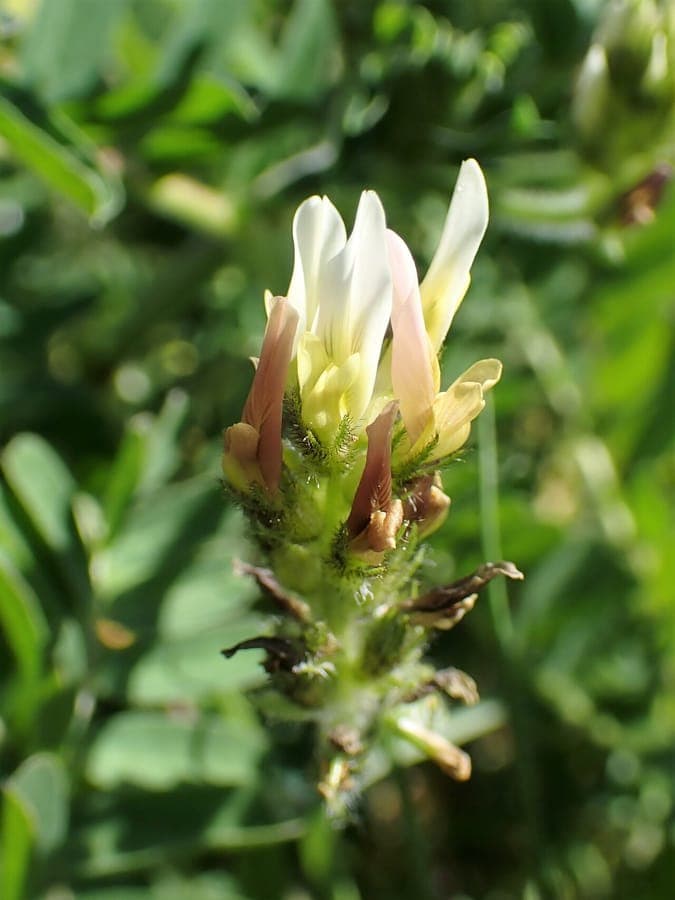
Krzysztof Ziarnek, Kenraiz / CC BY-SA 4.0, via Wikimedia Commons
Yellow milk-vetch (Astragalus boeticus): complete guide
Astragalus boeticus
¿Quieres ver Yellow milk-vetch (Astragalus boeticus): complete guide en tu jardín?
1 minuto, sin tarjeta de crédito
Overview
The yellow milk-vetch (Astragalus boeticus) is an elegant plant native to the Mediterranean region, growing from North Africa to Iran. This legume belongs to the Fabaceae family and is renowned for its beautiful golden flowers that attract bees and butterflies. It is an excellent choice for Mediterranean gardens and drought-resistant plantings.
Appearance and blooming period
Astragalus boeticus grows as a compact trailing plant reaching approximately 30 centimeters in height. The plant features fine, feathery leaves that create a soft grey-green appearance. Golden flowers appear in small clusters and bloom from April through June. The flowers display the characteristic shape of legumes, with a distinct banner, wings and keel. After flowering, small pods develop containing seeds.
Ideal location
Choose a sunny spot in your garden where the plant receives at least six to eight hours of direct sunlight. Astragalus boeticus thrives best in warm, dry locations. In Mediterranean climates, the plant can tolerate some afternoon shade. Avoid shaded corners and places where water might stagnate.
Soil
This Mediterranean plant makes no high demands on soil quality. However, well-draining soil is essential. Heavy clay soils should be improved by adding sand or gravel. The plant grows fine in poor, sandy or rocky soil. A pH value between neutral and slightly alkaline is ideal. Do not add organic matter excessively; this plant is adapted to sparse conditions.
Watering
Once established, the plant requires minimal watering. Astragalus boeticus is very drought-tolerant and withstands long periods without extra water. During the first growing season, water regularly until the plant develops a strong root system. Later, water only during very dry periods or extreme heat. Always ensure excellent drainage to prevent disease and root rot.
Diseño gratis
¿Quieres ver Yellow milk-vetch (Astragalus boeticus): complete guide en tu jardín? Crea un diseño gratis ahora.
Pruning
Regular pruning is not necessary. The plant grows naturally compact and maintains its shape. In spring, you can remove dead or damaged branches. After flowering, you may pinch off seed-forming pods to maintain a neater appearance, which also directs plant energy toward longer blooming rather than seed production.
Maintenance calendar
- Spring (April-May): Focus on ensuring good drainage. Remove damaged branches. Water carefully during very dry periods.
- Summer (June-August): Minimal care. Check during hot, dry spells. Deadhead spent flowers for neater appearance.
- Autumn (September-October): Plant may set seeds; leave these for birds if desired. No fertilization needed.
- Winter (November-March): Hardy plant; no protection needed in temperate climates. Minimal watering.
Winter hardiness
Astragalus boeticus is reasonably winter-hardy and can tolerate temperatures around -5 degrees Celsius, depending on origin. In Northern Europe, it is better to keep the plant in pots that you move to a cool greenhouse in winter. In warm summer areas, the plant can grow permanently outdoors.
Companion plants
The yellow milk-vetch combines beautifully with other Mediterranean plants. Combine with lavender, rosemary or silver sage for a classic Mediterranean garden. Also works well with stonecrop, thyme and other drought-tolerant plants. The golden flowers contrast nicely with purple flowers of lavender or salvias.
In conclusion
Astragalus boeticus is a valuable addition for those who want to create a low-maintenance, Mediterranean garden. The plant is drought-tolerant, blooms cheerfully and attracts pollinators. Easy to maintain and versatile in combinations, this legume makes a reliable partner in warmer climate zones. Find this plant at garden centers like OBI or Hornbach, where Mediterranean plant packages are often offered. Get more information on gardenworld.app where you can create complete garden designs.
Discover how gardenworld.app can help you design Mediterranean-inspired gardens with diverse legumes. Order your perfect garden plan and watch your garden transform into a low-maintenance oasis full of color and light.
¿Quieres ver Yellow milk-vetch (Astragalus boeticus): complete guide en tu jardín? Crea un diseño gratis ahora.
Sube una foto, elige un estilo y obtén un diseño fotorrealista con lista de plantas en menos de un minuto.
Más de 10.000 jardines diseñados
Sin tarjeta de crédito


Plantas similares
Tall Silky Lupine: complete guide
Lupinus elatus
Tall silky lupine is a fast-growing Californian perennial with silvery foliage and blue-purple flower spikes, ideal for a prairie-style garden.
Garfield Lupine: complete guide
Lupinus garfieldensis
The Garfield lupine is a rare, fast-growing American perennial for alkaline, dry grassland gardens, with striking blue flower spikes.
Lupinus elegans: complete guide
Lupinus elegans
Lupinus elegans, the elegant lupine, is a spectacular blooming plant from Mexico with blue flower spikes. Care, cultivation and garden use.