
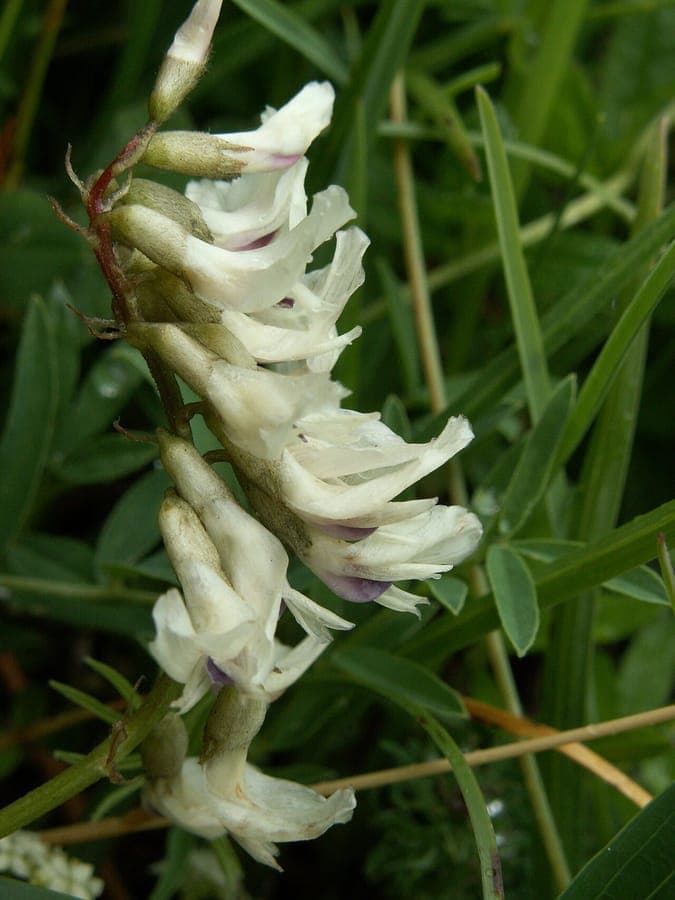
Thomas Mathis / CC BY-SA 3.0, via Wikimedia Commons
Southern milk-vetch: complete guide
Astragalus australis
¿Quieres ver Southern milk-vetch: complete guide en tu jardín?
1 minuto, sin tarjeta de crédito
Overview
Southern milk-vetch (Astragalus australis), also called Astragale austral or Indian milkvetch, is a compact mountain plant from the Fabaceae family. This plant grows naturally in the mountains of central and southern Europe, particularly the Alps and Carpathians. It is a charming plant with delicate flower clusters and refined, feathery foliage.
The plant is a legume that can fix its own nitrogen, making it suitable for nutrient-poor soils. It is a perfect addition to alpine garden projects and mountain landscapes.
Appearance and bloom
Southern milk-vetch forms neat, compact mounds 30-50 cm tall. The plant has compound leaves with many small, blue-green leaflets giving it fine texture. The leaves resemble those of peas and beans.
The flowers are small but striking, appearing in purple to pink clusters from May through July. After blooming, small, hairy seed pods develop. The entire plant has a pleasant, soft appearance.
Ideal location
Southern milk-vetch grows best in full sun locations. The plant needs at least 5-6 hours of direct sunlight daily. This is a true mountain plant that thrives in sun and fresh air.
Perfect for alpine gardens, rock gardens, and slopes. Avoid shaded locations where the plant becomes weak and flowers poorly. For more mountain plants, visit gardenworld.app/en.
Soil
Southern milk-vetch prefers well-draining, slightly lean soil. The plant grows well in stony, gravelly, or sandy soils. A pH of 6.0 to 7.5 is ideal.
Avoid heavy clay and moisture-prone soils. This plant can even grow in very poor soils. If adding organic matter, do so only moderately, as the plant prefers lean terrain.
Diseño gratis
¿Quieres ver Southern milk-vetch: complete guide en tu jardín? Crea un diseño gratis ahora.
Watering
Once established, this plant is very drought tolerant. It requires regular water in the first growing season until well established. Thereafter, the plant can thrive without supplemental water.
In alpine environments where snowmelt provides water, you need rarely water. Avoid waterlogged soils that cause root rot.
Pruning
Minimal pruning required. After blooming, old flower clusters can be carefully removed for health and appearance. The plant doesn't need cutting back.
Allow seed pods to ripen for self-seeding. The plant naturally maintains a neat form without maintenance pruning.
Maintenance calendar
Spring: Plant emerges as snow melts. Water in dry periods. Seeds naturally self-sow.
Summer: Minimal water needed. Enjoy the purple flowers. Ensure good drainage.
Autumn: Stop watering as temperatures drop. Seed pods ripen.
Winter: Plant is dormant. Snow provides protection against extreme cold.
Winter hardiness
Southern milk-vetch is winter hardy through zone 3 and thrives in virtually all temperate mountain climates. The plant is actually adapted to alpine winters with snow protection.
Mulch is not recommended; snow provides better protection. The plant can withstand subarctic conditions.
Companion plants
Southern milk-vetch pairs nicely with:
- Other alpine plants
- Rock geraniums
- Mountain edelweiss
- Low-growing ornamental grasses
- Dianthus varieties
Place with adequate spacing so light and air fully reach the plant. Too crowded conditions can promote fungal issues.
Closing
Southern milk-vetch is a worthwhile addition to alpine gardens and mountain habitats. The compact growth, purple flowers, and drought tolerance make it a true winner. With minimal care, this plant thrives and delivers faithful blooms for years.
Want to discover more alpine plants? Visit gardenworld.app/en for alpine inspiration.
¿Quieres ver Southern milk-vetch: complete guide en tu jardín? Crea un diseño gratis ahora.
Sube una foto, elige un estilo y obtén un diseño fotorrealista con lista de plantas en menos de un minuto.
Más de 10.000 jardines diseñados
Sin tarjeta de crédito


Plantas similares
Tall Silky Lupine: complete guide
Lupinus elatus
Tall silky lupine is a fast-growing Californian perennial with silvery foliage and blue-purple flower spikes, ideal for a prairie-style garden.
Garfield Lupine: complete guide
Lupinus garfieldensis
The Garfield lupine is a rare, fast-growing American perennial for alkaline, dry grassland gardens, with striking blue flower spikes.
Lupinus elegans: complete guide
Lupinus elegans
Lupinus elegans, the elegant lupine, is a spectacular blooming plant from Mexico with blue flower spikes. Care, cultivation and garden use.