
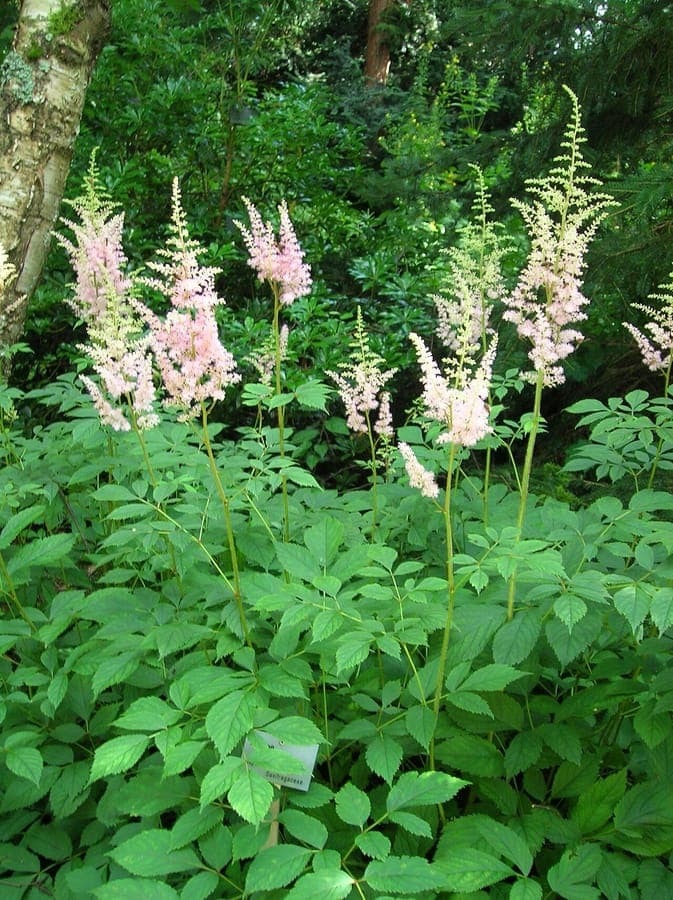
El Grafo / CC BY-SA 3.0, via Wikimedia Commons
Thunberg's astilbe: complete guide
Astilbe thunbergii
¿Quieres ver Thunberg's astilbe: complete guide en tu jardín?
1 minuto, sin tarjeta de crédito
Overview
Astilbe thunbergii, commonly known as Thunberg's astilbe, is an elegant perennial of Asian origin native primarily to Japan. This plant is distinguished by its delicate, red feathery flower plumes that bloom especially in autumn, making it a standout choice for borders, beds, and shaded garden arrangements. The plant grows low and forms dense clusters, providing attractive foliage throughout the season.
Gardeners cherish this plant for its unusual fall flowering period, when many other garden plants are fading. The finely divided foliage and early autumn blooms keep the garden vibrant in October and November when color is increasingly rare.
Appearance and Bloom
Thunberg's astilbe typically reaches 40 to 60 cm in height and forms compact clumps with feathery, fern-like foliage. The leaves are dark green with reddish-tinted new growth, adding visual interest throughout the season. The reddish hue intensifies in cooler weather.
The flowers are delicate red plumes that form from August through October. These feathery inflorescences are typical of the Astilbe genus - light and airy in appearance. While flowers are not fragrant, they attract pollinators generously. After blooming, the seed-bearing plumes remain decorative well into winter.
Ideal Location
Thunberg's astilbe thrives in partial to full shade. Plant it beneath trees, on the north side of buildings, or in shrub-sheltered areas. The plant tolerates more sun if soil remains consistently moist, but damp shade is always preferable to dry sun in hot climates.
Ensure adequate air circulation to prevent fungal issues, but avoid windy exposure that may damage delicate foliage and flowers.
Soil Composition
The ideal soil is moisture-retentive, rich in organic matter, and well-draining. Work substantial amounts of compost or peat moss into native soil before planting. An acidic to neutral pH between 5.5 and 7.0 is optimal. The plant prefers soils that retain moisture without becoming waterlogged.
Add organic fertilizer or aged manure in spring. A 5 to 10 cm mulch layer of organic material helps retain moisture, suppress weeds, and moderate soil temperature.
Diseño gratis
¿Quieres ver Thunberg's astilbe: complete guide en tu jardín? Crea un diseño gratis ahora.
Watering
Watering is critical for Astilbe thunbergii. Maintain consistently moist soil throughout the growing season, especially during dry periods. Check moisture weekly in summer - if the top 2-3 cm feels dry, water thoroughly.
During drought stress, water deeply and regularly. The plant will wilt if deprived of water but recovers quickly once watered. Conversely, avoid waterlogging; good drainage is essential.
Pruning and Maintenance
In early spring, trim back dead, damaged, or diseased stems. Deadhead spent flowers to maintain neatness and encourage continued blooming. After autumn flowers fade, cut the entire plant back to 10-15 cm height.
Remove fallen leaves and plant debris to reduce disease pressure.
Maintenance Calendar
- Spring (April-May): Cut back old growth; apply fertilizer; divide overcrowded plants
- Summer (June-July): Water regularly; deadhead spent flowers
- Fall (August-October): Enjoy the blooms; minimal maintenance needed
- Winter (November-March): Mulch for protection; no watering required
Winter Hardiness
Astilbe thunbergii is fully hardy in temperate regions including the Netherlands. The plant tolerates temperatures to -15 degrees Celsius or lower. Above-ground portions die back after autumn bloom, but the rhizome survives underground and re-emerges in spring.
Apply mulch in late fall for extra protection against extreme cold.
Companion Plants
Thunberg's astilbe pairs beautifully with other shade and moisture-loving plants:
- Hostas (foliage plants)
- Rodgersia
- Trollius (globe flower)
- Liriope (lilyturf)
- Ferns
- Helleborus (hellebore)
Together they create stunning, lush woodland gardens.
Closing
Thunberg's astilbe is an exceptional choice for gardeners seeking to brighten shaded, moist areas and extend garden color well into autumn. With proper moisture and shade, this plant will provide years of reliable fall blooms.
Explore companion planting ideas and shade garden design on gardenworld.app. Learn more about creating shade borders and autumn color combinations. Visit gardenworld.app for all your plant care questions and garden design inspiration.
¿Quieres ver Thunberg's astilbe: complete guide en tu jardín? Crea un diseño gratis ahora.
Sube una foto, elige un estilo y obtén un diseño fotorrealista con lista de plantas en menos de un minuto.
Más de 10.000 jardines diseñados
Sin tarjeta de crédito


Plantas similares
Korean astilbe: complete guide
Astilbe grandis
Discover Korean astilbe (Astilbe grandis): a tall shade plant with elegant flower plumes for pond edges and borders.
Heuchera pilosissima: complete guide to seaside alumroot
Heuchera pilosissima
Seaside alumroot (Heuchera pilosissima), an elegant North American dwarf perennial with hairy red-tinged foliage and red flower spikes.
Starry saxifrage: complete guide
Micranthes stellaris
Full guide to Micranthes stellaris, the starry saxifrage: location, soil, blooming and garden use. A tough alpine plant for moist, shady rock faces and pond margins.