
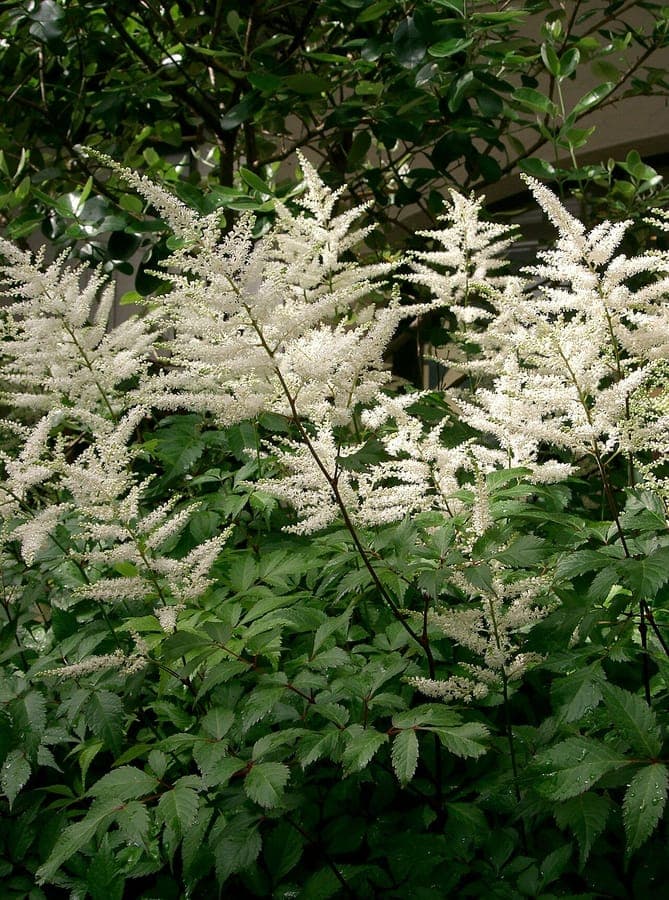
KENPEI / CC BY-SA 3.0, via Wikimedia Commons
Japanese astilbe: complete guide
Astilbe japonica
¿Quieres ver Japanese astilbe: complete guide en tu jardín?
1 minuto, sin tarjeta de crédito
Overview
Astilbe japonica, commonly known as Japanese astilbe or Florist's spiraea, is an elegant flowering perennial from Japan. This plant blooms spectacularly with impressive feathery flower plumes in red, pink, or white tones. The fine, finely divided foliage remains decorative throughout the growing season and provides lasting interest even after flowering. This is a classic border plant that transforms any shaded corner.
Appearance & Bloom
Japanese astilbe reaches 30-60 centimeters tall depending on cultivar. The leaves are triple-divided with very fine segments, creating a feathery, soft texture. Flowers appear in June and July in dense, plume-like clusters. Red varieties like 'Fanal' are most dramatic, white 'Bridal Veil' brings elegance, and pink forms like 'Peach Blossom' add warmth.
Ideal Location
Astilbe japonica grows best in partial to full shade. Direct south-facing sun in hot summers causes flower damage and scorching. Place this plant beneath trees, against northwest walls, or under deciduous shrubs where it receives morning sun but afternoon shade. In cooler northern gardens, full sun is sometimes acceptable if soil moisture remains high.
Soil
Astilbe demands rich, moisture-retentive soil full of organic matter. This plant naturally grows in moist woodland areas with abundant leaf mold. Add generous amounts of composted leaf mold before planting. An ideal mixture is 50% garden loam, 30% peat, and 20% sharp sand. Acidic to neutral pH (6.0-7.0) is ideal, though the plant shows some lime tolerance. Consistent soil moisture is essential.
Watering
Astilbe requires constantly moist soil-never completely dry but also not waterlogged. Water regularly during dry periods, especially in summer. Mulch heavily around plant base (8-10cm) with leafmold to improve moisture retention. Drip irrigation may be essential in well-draining beds. The plant shows clear stress signals-foliage hangs limply and flowers shrivel.
Diseño gratis
¿Quieres ver Japanese astilbe: complete guide en tu jardín? Crea un diseño gratis ahora.
Pruning
Remove wilted flower clusters immediately after blooming to encourage repeat flowering and maintain tidiness. Remove all dead stems in autumn down to ground level. New shoots emerge in spring from root crown. Avoid heavy pruning of green foliage as this weakens the plant.
Maintenance Calendar
March: Add generous leafmold mulch if not already applied. April-May: Support tall cultivars with bamboo stakes. June-July: Water well and remove faded flowers. August: Apply potassium-rich fertilizer. September-October: Remove dead foliage. November-February: Apply winter mulch in cold regions.
Winter Hardiness
Japanese astilbe is hardy to -15 degrees Celsius and tolerates all Dutch winters without protection. Young plants in their first year may be more tender and benefit from winter mulch. The plant completely dormant in winter and emerges late in spring-do not position other winter-growers immediately around plant location.
Companion Plants
Astilbe combines beautifully with other shade-loving perennials. Try it beside Hostas for foliage contrast. Introduce Helleborus and winter interest. Use with Polystichum setiferum ferns for a woodland effect. Red varieties suit dark-leaved Heuchera. White astilbe pairs elegantly with Actaea and pale Helleborus niger.
Closing Thoughts
Japanese astilbe is an essential perennial for any shaded garden area. With elegant flower plumes and fine foliage, it brings gentle refinement and years of interest. Once established, it requires minimal care. Available at garden centers in various cultivars and colors.
Wish to learn more about shade gardens? Visit gardenworld.app for inspiration and discover more at gardenworld.app/en.
¿Quieres ver Japanese astilbe: complete guide en tu jardín? Crea un diseño gratis ahora.
Sube una foto, elige un estilo y obtén un diseño fotorrealista con lista de plantas en menos de un minuto.
Más de 10.000 jardines diseñados
Sin tarjeta de crédito


Plantas similares
Korean astilbe: complete guide
Astilbe grandis
Discover Korean astilbe (Astilbe grandis): a tall shade plant with elegant flower plumes for pond edges and borders.
Heuchera pilosissima: complete guide to seaside alumroot
Heuchera pilosissima
Seaside alumroot (Heuchera pilosissima), an elegant North American dwarf perennial with hairy red-tinged foliage and red flower spikes.
Starry saxifrage: complete guide
Micranthes stellaris
Full guide to Micranthes stellaris, the starry saxifrage: location, soil, blooming and garden use. A tough alpine plant for moist, shady rock faces and pond margins.