
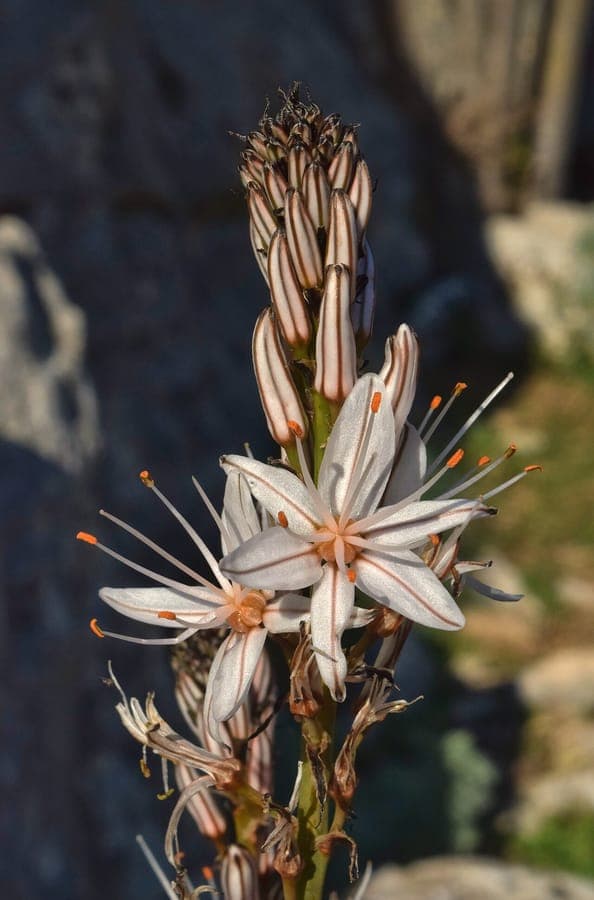
The Cosmonaut / CC BY-SA 2.5 ca, via Wikimedia Commons
Asphodelus ramosus: complete guide
Asphodelus ramosus
¿Quieres ver Asphodelus ramosus: complete guide en tu jardín?
1 minuto, sin tarjeta de crédito
Overview
Asphodelus ramosus, also called branched asphodel or silverrod, is a robust perennial from the Mediterranean. This Asphodelaceae member is prized for its characteristic branching flower stems carrying dozens of small white to red-orange blooms. Reaching 80 cm tall, it makes a striking garden statement. Classically used in Mediterranean landscaping.
Appearance and Bloom
The branched asphodel features thick, blue-green leaves in stiff rosettes. Flower stems branch uniquely, bearing dozens of tiny florets in white to coral tones. Blooming occurs May-June, lasting about four weeks. Though individual flowers are small, their quantity creates stunning visual impact. Seed pods remain decorative for months after drying.
Ideal Location
Asphodelus ramosus thrives in full sun with minimum 7 hours daily direct light. The plant tolerates partial shade but flowers less abundantly. A warm south or west-facing position works best. Position against walls to benefit from reflected heat. Protection from cold north winds helps.
Soil
Soil must drain excellently, as this plant abhors waterlogging. pH of 7.5-8 proves optimal. Heavy clay soils need significant improvement with sand, gravel, and organic matter. The plant grows fine in poor, mineral soils. Add copious gravel to prevent waterlogging. Minimal nutrients required.
Watering
Once established, Asphodelus ramosus becomes exceptionally drought-tolerant, enduring long dry spells without harm. Water regularly the first year until strong roots develop. Thereafter, supplemental irrigation rarely needed except during extreme heat. During intense heatwaves, occasional water helps but avoid regular irrigation.
Diseño gratis
¿Quieres ver Asphodelus ramosus: complete guide en tu jardín? Crea un diseño gratis ahora.
Pruning
Pruning is barely necessary. After flowering, remove spent flower stems for tidier appearance. Leave seed pods for bird food and natural effect. Remove only dead foliage in spring. The plant self-seeds readily, so remove seed heads if you prefer to prevent self-seeding.
Maintenance Calendar
April: Prepare growing season, light watering. May-June: Spectacular blooming period, enjoy. July-August: Seed formation, keep warm and dry. September-October: Harvest seed, plant prepares for winter. November-April: Winter dormancy, no maintenance needed.
Winter Hardiness
Asphodelus ramosus shows good winter hardiness, tolerating night frosts to -12 degrees Celsius. In Netherlands and Belgium, the plant grows outdoors without issues. In very cold regions, young plants benefit from mulch protection. The plant remains evergreen and decorative year-round.
Companion Plants
This asphodel combines beautifully with other drought-tolerant species. Pair with lavender, sage, and roses. Grasses like miscanthus and stipa provide contrasting textures. The plant grows well alongside other asphodel species and Asphodelaceae family members.
Final Thoughts
Asphodelus ramosus represents ideal choice for low-maintenance Mediterranean gardens. With minimal care in suitable conditions, this plant thrives for years. Find this plant at retailers in Netherlands and Germany. Visit gardenworld.app/en for more inspiration.
¿Quieres ver Asphodelus ramosus: complete guide en tu jardín? Crea un diseño gratis ahora.
Sube una foto, elige un estilo y obtén un diseño fotorrealista con lista de plantas en menos de un minuto.
Más de 10.000 jardines diseñados
Sin tarjeta de crédito


Plantas similares
Aloe castanea: complete guide
Aloe castanea
Discover Chestnut aloe, a South African succulent. Growth, nutrition, and garden integration for warm climates and container culture.
Aloe pratensis: complete guide
Aloe pratensis
Learn how to grow Meadow aloe, a South African succulent. Nutrition, propagation, and front yard integration for warm climates or containers.
Pretoria aloe: complete guide
Aloe pretoriensis
Discover Aloe pretoriensis, an elegant South African succulent with striking red blooms. Learn care tips, ideal conditions, and companion planting for this hardy, drought-tolerant plant.