
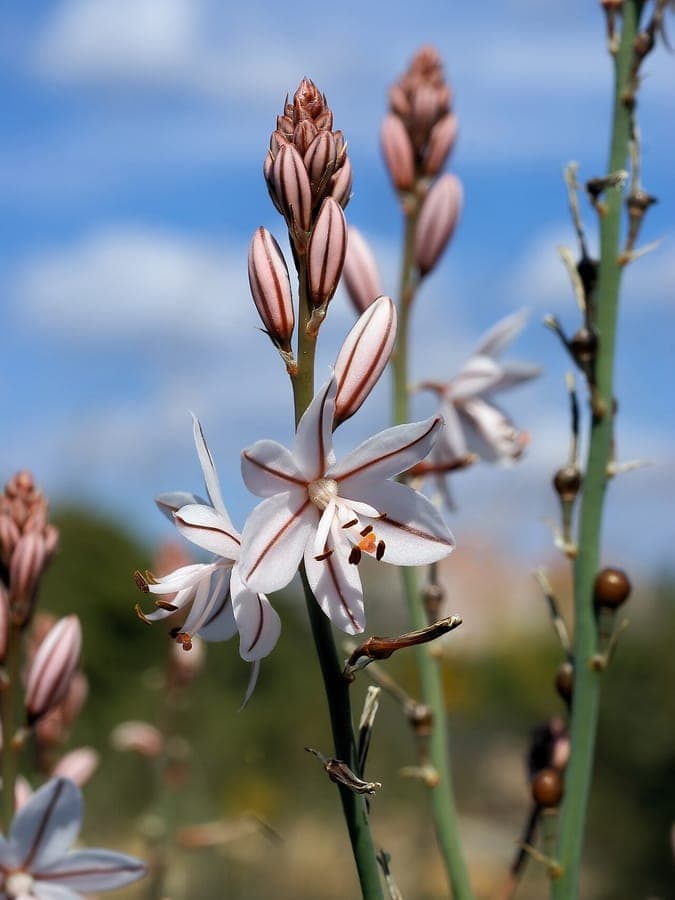
Hans Hillewaert / CC BY-SA 3.0, via Wikimedia Commons
Asphodelus fistulosus: complete guide
Asphodelus fistulosus
¿Quieres ver Asphodelus fistulosus: complete guide en tu jardín?
1 minuto, sin tarjeta de crédito
Overview
Asphodelus fistulosus, commonly known as hollow-stem asphodel or onion asphodel, is an elegant flowering plant native to Mediterranean regions. This member of the Asphodelaceae family is celebrated for its delicate white and purple flowers arranged in distinctive clusters. The plant reaches up to 60 cm in height and thrives in dry, sunny settings. The name fistulosus refers to the hollow, tube-like leaves that give the plant its unique character.
Appearance and Bloom
The hollow-stem asphodel stands out due to its fine, tubular foliage arranged in tight rosettes. Flowers are small yet abundant, with each bloom displaying white or pale pink coloring accented by purple stripes. Blooming occurs in April and May, when the plant creates a stunning floral display. These flowers attract many insects, contributing significantly to garden biodiversity. After flowering, seed capsules develop and naturally disperse.
Ideal Location
This Mediterranean plant prefers full sun exposure. Ensure the plant receives 7-8 hours of direct sunlight daily for optimal growth and flowering. The plant tolerates partial shade but produces fewer flowers in such conditions. Protect from strong winds that can damage delicate flower stems. A position against a wall or in a sheltered corner works excellently.
Soil
The hollow-stem asphodel is not particular about soil type but performs best in well-draining substrate. A pH between 7 and 7.5 proves optimal. Improve heavy clay soils with sand and compost to prevent waterlogging. Mineral-poor soils are actually preferred. Add a layer of grit beneath the planting hole for enhanced drainage.
Diseño gratis
¿Quieres ver Asphodelus fistulosus: complete guide en tu jardín? Crea un diseño gratis ahora.
Watering
Proper moisture management is essential. Once established, this plant becomes exceptionally drought-tolerant. Water regularly during the first growing season but allow soil to dry between waterings. During summer, especially in dry periods, supplemental watering helps. Avoid waterlogging as it causes root rot. Minimize watering in winter.
Pruning
Pruning is not strictly necessary. Simply remove faded flowers and dead foliage at season's end. This sometimes encourages regrowth and reduces self-seeding. Cut the plant back to about 5 cm above ground in October. Remove old leaves for a tidier appearance.
Maintenance Calendar
March-April: Starting growing season, water regularly. May-June: Blooming period, enjoy beautiful flowers. July-August: Heat waves, provide occasional water. September-October: Seed production complete, plan regrowth. November-February: Dormant season, minimal watering.
Winter Hardiness
Asphodelus fistulosus shows moderate winter hardiness, tolerating night frosts around -10 degrees Celsius. In harsh northern winters, protect the plant with good drainage and mulch. In temperate climates, the plant overwinters outdoors successfully. In very cold regions, growing in containers and overwintering in a cool greenhouse works better.
Companion Plants
The hollow-stem asphodel pairs well with other Mediterranean species. Combine with dry foliage plants like lamium and betony. Sunflowers and salvias create attractive backdrops. Perfect for xeris gardens, Mediterranean borders, or alpine gardens.
Final Thoughts
Asphodelus fistulosus brings Mediterranean charm and dignity to any ornamental garden. With minimal care in ideal conditions, this plant flowers reliably for years. If you have a sunny, dry spot, definitely consider this beauty. Find this plant at Intratuin and Gamma in the Netherlands, OBI or Hornbach in Germany. Visit gardenworld.app/en for more inspiration.
¿Quieres ver Asphodelus fistulosus: complete guide en tu jardín? Crea un diseño gratis ahora.
Sube una foto, elige un estilo y obtén un diseño fotorrealista con lista de plantas en menos de un minuto.
Más de 10.000 jardines diseñados
Sin tarjeta de crédito


Plantas similares
Aloe castanea: complete guide
Aloe castanea
Discover Chestnut aloe, a South African succulent. Growth, nutrition, and garden integration for warm climates and container culture.
Aloe pratensis: complete guide
Aloe pratensis
Learn how to grow Meadow aloe, a South African succulent. Nutrition, propagation, and front yard integration for warm climates or containers.
Pretoria aloe: complete guide
Aloe pretoriensis
Discover Aloe pretoriensis, an elegant South African succulent with striking red blooms. Learn care tips, ideal conditions, and companion planting for this hardy, drought-tolerant plant.