
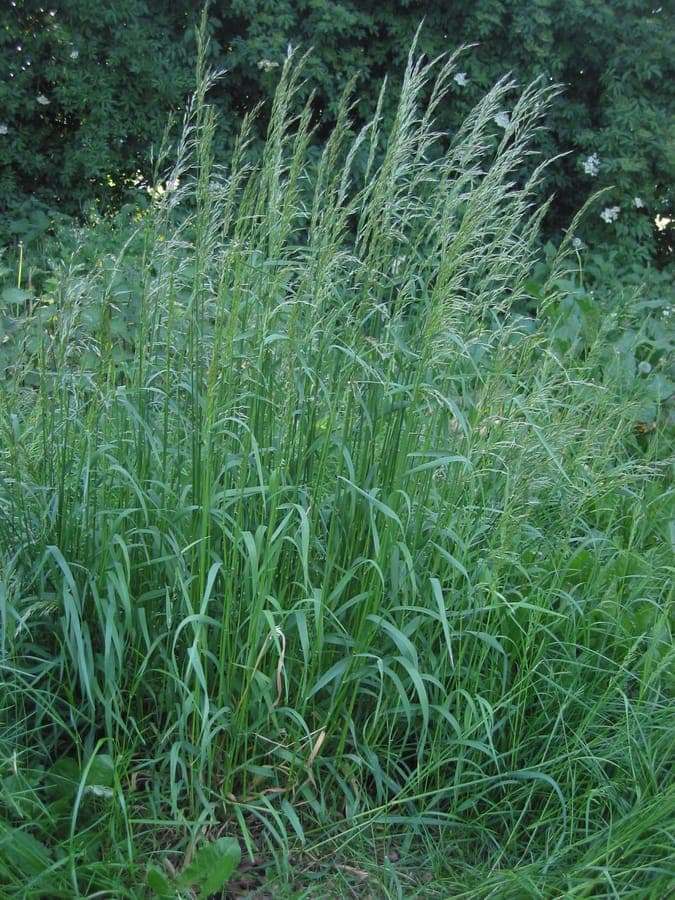
Rasbak / CC BY-SA 3.0, via Wikimedia Commons
Ray-grass-de-france: complete guide
Arrhenatherum elatius
¿Quieres ver Ray-grass-de-france: complete guide en tu jardín?
1 minuto, sin tarjeta de crédito
Overview
Ray-grass-de-france (Arrhenatherum elatius), also known as French oat-grass, is an elegant ornamental grass from the Poaceae family. This attractive perennial grass grows 90-150 cm tall and stands out for its fine, gently moving foliage and characteristic flowering panicles.
The grass originates from Europe and grows wild in nutrient-rich meadows, especially in Franco-Flemish regions and mountainous areas. Arrhenatherum elatius is popular in naturalistic garden and meadow management.
Appearance and Bloom Cycle
Ray-grass-de-france forms densely growing tufts of narrow, linear leaves that are greenish to light bronze colored. The leaves can be 2-5 mm wide and have a silky appearance.
From May to July, the plant produces elegant, branched flowering panicles that can reach 20-30 cm in length. The panicles are very finely cut, airy, and rhythmic. The individual flowers are very small and greenish-white to silvery-yellow, but collectively very decorative.
After blooming, very light seeds form in August to September.
Ideal Location
Ray-grass-de-france thrives best in:
- Full sun to light shade (minimum 3-4 hours direct sun daily)
- Well-drained, grassy locations
- Nutrient-rich meadows or grassy areas
- Sites with regular moisture
The grass also grows in semi-shaded areas but less vigorously. Consistent moisture preparation is important.
Soil Requirements
Ray-grass-de-france prefers:
- Well-drained, nutrient-rich soils
- Moderately moist ground
- pH between 5.5 and 7.5
- Not waterlogged
The grass struggles on very dry, sandy soils or very wet, waterlogged soils. Compost mixture can help on poor soil.
Watering
Once established, Ray-grass-de-france needs minimal supplemental watering. Regular natural rainfall is usually sufficient. During dry seasons, watering helps growth.
Young plants must be kept more consistently moist until rooted.
Diseño gratis
¿Quieres ver Ray-grass-de-france: complete guide en tu jardín? Crea un diseño gratis ahora.
Pruning and Maintenance
Ray-grass-de-france requires minimal maintenance:
- Do not mow during blooming season
- Can be cut back to 5-10 cm in October
- Remove withered foliage for neatness
- Remove flowering panicles after seeding if self-seeding is unwanted
The grass can be used in cut flower arrangements for dry arrangements.
Maintenance Calendar
March–April: Pre-chilling of seed, sowing indoors or directly outdoors.
May–July: Growing season, flowering period, water regularly.
August–September: Seed formation, seed drops and self-sows.
October: Cut back flower remains, optional thinning of clumps.
November–March: Rest period, plant remains greenish.
Winter Hardiness
Ray-grass-de-france is very frost-hardy to USDA zone 4 (-34°C). Frosty winters are not a problem. The grass remains largely green through frosty periods.
Young plants can suffer frost damage in very severe winters but regrow.
Companion Plants
Ray-grass-de-france grows well with:
- Other ornamental grasses: Stipa, Panicum, Miscanthus
- Flowering herbaceous plants: Shallot, Evening primrose, Various Nepeta
- Moisture-loving plants: Alfalfa, Clover, Lupine
- Bird-food plants: Rapeseed, Marjoram, Grass plumes
Avoid plants preferring waterlogged soils.
Closing Thoughts
Ray-grass-de-france is a beautiful choice for naturalistic meadows and ornamental grass borders. The grass brings movement, texture, and elegance to the garden. Once established, the grass self-seeds and forms lush populations.
Tip: For more information on ornamental grasses in your front yard, visit gardenworld.app. Upload a photo of your garden and receive a grassland or meadow design. Visit gardenworld.app for more inspiration.
Where to Buy
- UK: Ornamental grass nurseries, garden centers
- USA: Local nurseries, ornamental grass specialists
- Online: Grass seed suppliers
¿Quieres ver Ray-grass-de-france: complete guide en tu jardín? Crea un diseño gratis ahora.
Sube una foto, elige un estilo y obtén un diseño fotorrealista con lista de plantas en menos de un minuto.
Más de 10.000 jardines diseñados
Sin tarjeta de crédito


Plantas similares
Sporobolus pungens: complete guide
Sporobolus pungens
Sporobolus pungens is a stoloniferous Mediterranean coastal grass with outstanding salt and drought tolerance, perfect for seaside and dry gardens.
Mediterranean aegilops: complete guide
Aegilops biuncialis
Everything about Aegilops biuncialis, a Mediterranean annual grass with ornamental spikes and outstanding drought tolerance for dry gardens.
Silver bluestem: complete guide
Bothriochloa saccharoides
Full guide to Bothriochloa saccharoides (silver bluestem): site, soil, watering, winter hardiness, pruning, and garden companions.