
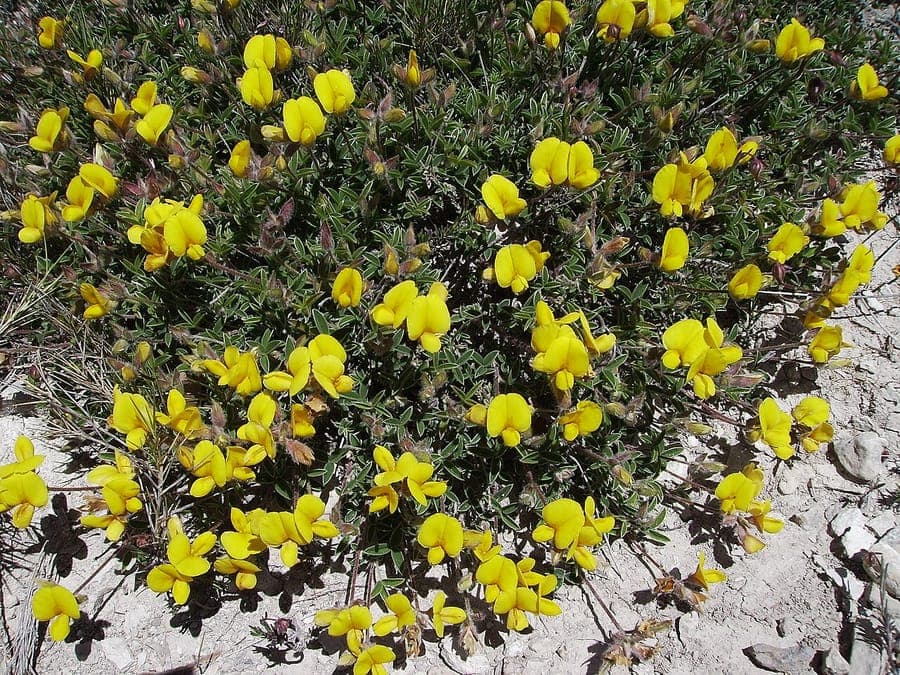
Victor M. Vicente Selvas / Public domain, via Wikimedia Commons
Argyrolobium zanonii: complete guide
Argyrolobium zanonii
¿Quieres ver Argyrolobium zanonii: complete guide en tu jardín?
1 minuto, sin tarjeta de crédito
Overview
Argyrolobium zanonii, commonly known as the silvered broom or golden-yellow shrub, is a stunning Mediterranean plant belonging to the Fabaceae family. Native to the Mediterranean region, this shrub thrives in dry, rocky environments from Spain through Italy and into Greece. The name refers to the distinctive silvery sheen of the foliage and the bright yellow flowers that emerge in spring.
This plant is perfect for gardeners seeking a low-water alternative to traditional ornamental shrubs. The combination of graceful growth habit, extended flowering period, and minimal maintenance requirements makes Argyrolobium zanonii ideal for Mediterranean and contemporary garden designs alike.
Appearance and bloom
Argyrolobium zanonii grows as an attractive, compact shrubby plant typically reaching 30 to 80 centimeters in height. The branches are elegantly curved and clothed in small, silvery-grey leaves that possess a fine, hairy texture. This silver-grey foliage creates a beautiful contrast with the bright yellow, simple flowers.
Flowers emerge in dense, clustered formations from April through May in Mediterranean climates, but in temperate regions, flowering may extend into June. Each individual flower measures approximately 1 centimeter in length and displays the characteristic papilionaceous form typical of legume family members. Following pollination, small seed pods develop during summer, eventually opening to release their seeds.
The silvery-grey leaf quality persists throughout the year, providing attractive visual interest even when the plant is not in flower. This makes Argyrolobium zanonii interesting to observe regardless of season.
Ideal location
Argyrolobium zanonii thrived naturally in full sun, dry Mediterranean conditions. For optimal blooming and growth, plant this shrub in a location receiving minimum 6-8 hours of direct daily sunlight. Reduced light leads to fewer flowers and increased disease susceptibility.
The plant is quite sensitive to night frost and performs best in warm, sheltered locations. Avoid areas with strong winds that might damage the delicate stems. A position against a south-facing wall is ideal, as it provides additional retained heat.
In regions experiencing harsh winters, this plant is best grown in containers that can be moved indoors from October through April. This offers superior frost protection while still allowing enjoyment of the plant throughout the year.
Soil type
This is probably the most critical factor for Argyrolobium zanonii success. The plant must be grown in very well-draining, light soil. Heavy clay soils or waterlogged conditions will lead to root rot and plant failure.
Prepare the planting hole with at least 30 percent sand, gravel, or pozzolanic material mixed with existing garden soil. The soil must drain excess water almost immediately and never remain wet around the roots.
Argyrolobium zanonii thrives on poor, nutrient-low soils. A single annual application of moderate fertilizer (such as slow-release mineral fertilizer) in spring is sufficient. Excessive feeding promotes leafy growth at the expense of flowers.
The plant prefers a pH between 7.0 and 7.5 (neutral to slightly alkaline), so if you have a very acidic garden, enrich the planting hole with some lime chips.
Diseño gratis
¿Quieres ver Argyrolobium zanonii: complete guide en tu jardín? Crea un diseño gratis ahora.
Watering
Once established, Argyrolobium zanonii is extremely drought-tolerant. However, during the first growing season, regular watering is necessary to establish a strong root system. Water consistently through the first summer.
After the first year, you can drastically reduce watering frequency. During normal moisture periods in spring and autumn, supplemental watering is probably unnecessary. During extreme summer drought, occasional deep watering is beneficial, though not essential.
In containers or pots, be more cautious and regularly check whether the soil is drying. During very dry periods, water once or twice weekly.
Pruning
Argyrolobium zanonii requires minimal pruning. After flowering (around June in most areas), you can gently remove spent flower clusters and trim any dead or damaged branches.
A gentle shaping pruning in late spring (March-April, before flowering) helps maintain a compact form. Never prune too severely, as the plant takes a long time to recover from deep pruning wounds.
You can remove dead wood completely back to healthy stems, but always leave at least a few growing buds remaining.
Maintenance calendar
January-February: Remove frost-damaged or dead branches, apply fertilizer (in mild winter regions).
March-April: Perform gentle shaping pruning; new growth will follow quickly.
May-June: Enjoy the flowering display; gently deadhead spent flowers.
July-September: Regularly check water needs during dry spells; cease feeding.
October-November: In colder climates, carefully move to shelter; in warm climates, continue normal care.
December: Protect against hard frost in areas at risk.
Winter hardiness
Argyrolobium zanonii is only moderately winter-hardy. In the Mediterranean where it naturally occurs, temperatures never drop below freezing. In northwest Europe and temperate climates, this plant is frost-sensitive.
The plant can tolerate brief temperature drops to -5 to -7 degrees Celsius, especially if these are isolated cold snaps. Prolonged frost or repeated freeze-thaw cycles will likely kill the plant.
In regions experiencing regular winter frost, grow the plant in a container that can be moved to a frost-free location from October through April. An unheated greenhouse, nursery, or against a warm building is ideal.
In sheltered positions against house walls, you might sometimes maintain the plant in open ground. Add insulating material around the plant base, such as mulch or fallen leaves, to protect the roots.
Companion plants
Argyrolobium zanonii combines beautifully with other Mediterranean low-water plants:
- Lavender (Lavandula angustifolia): same sunny, dry growing conditions
- Rosemary (Rosmarinus officinalis): compatible water requirements
- Various Sedum species: nice contrast with foliage color
- Stipa ornamental grasses: good for texture and movement
- Salvia nemorosa: purple flowers provide striking contrast against yellow
Closing
Argyrolobium zanonii is an excellent choice for gardeners seeking a beautiful, low-water Mediterranean shrub. With its golden flowers, silvery-grey foliage, and minimal maintenance requirements, this plant perfectly fits modern, ecological garden designs.
You can obtain this plant online through major garden retailers. Provide a sunny location, well-drained soil, and winter protection in cold climates, and Argyrolobium zanonii will reward you with years of enjoyment. Start today by adding this Mediterranean jewel to your garden. Visit gardenworld.app for more advice on garden planning and maintenance.
¿Quieres ver Argyrolobium zanonii: complete guide en tu jardín? Crea un diseño gratis ahora.
Sube una foto, elige un estilo y obtén un diseño fotorrealista con lista de plantas en menos de un minuto.
Más de 10.000 jardines diseñados
Sin tarjeta de crédito


Plantas similares
Tall Silky Lupine: complete guide
Lupinus elatus
Tall silky lupine is a fast-growing Californian perennial with silvery foliage and blue-purple flower spikes, ideal for a prairie-style garden.
Garfield Lupine: complete guide
Lupinus garfieldensis
The Garfield lupine is a rare, fast-growing American perennial for alkaline, dry grassland gardens, with striking blue flower spikes.
Lupinus elegans: complete guide
Lupinus elegans
Lupinus elegans, the elegant lupine, is a spectacular blooming plant from Mexico with blue flower spikes. Care, cultivation and garden use.