
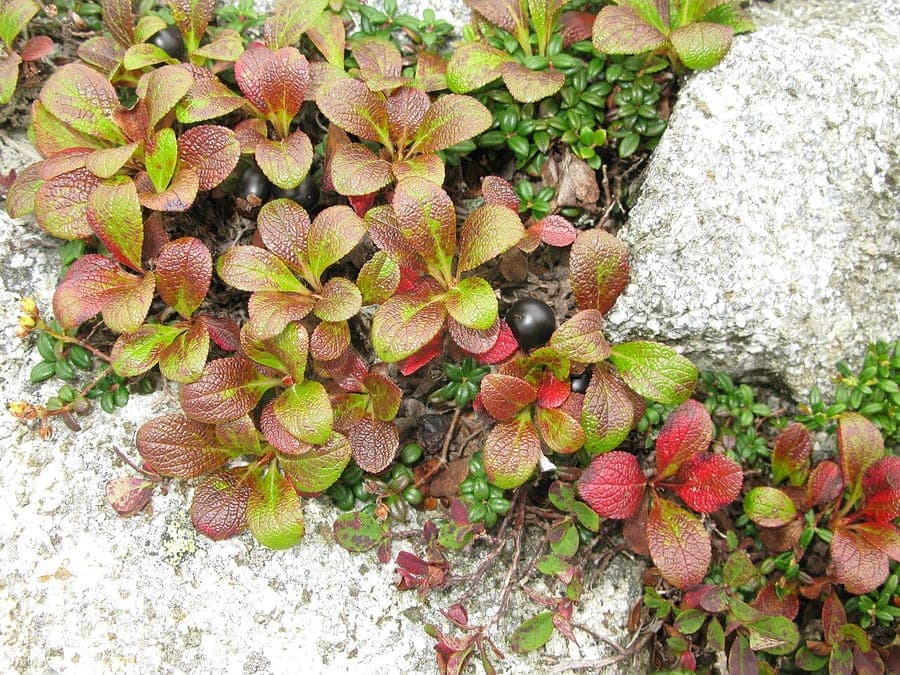
Qwert1234 / CC BY-SA 3.0, via Wikimedia Commons
Arctous alpina: complete guide
Arctous alpina
¿Quieres ver Arctous alpina: complete guide en tu jardín?
1 minuto, sin tarjeta de crédito
Overview
Arctous alpina, commonly called alpine bearberry or mountain bearberry, is a tiny shrub native to subarctic and alpine zones across North America, Europe, and Asia. This evergreen groundcover rarely exceeds 15 to 30 centimeters in height and forms dense mats of minute foliage crowned with spectacular red berries. The plant matures from pink to deep crimson, creating a jewel-like display that persists well into winter. Arctic wildlife and indigenous peoples have long valued it as a food source.
Appearance and Bloom
This miniature shrub displays exceptionally small, glossy leaves measuring just 5 to 15 millimeters long, arranged alternately along wiry stems. The foliage remains deep green and ornamental throughout the year. In late spring (May to June), tiny white or pink flowers emerge in small clusters barely a few millimeters across, so delicate they nearly disappear among the leaves. After pollination, the berries develop through stages from greenish to orange, finally reaching brilliant red by late summer. Each berry measures about 8 millimeters in diameter and often persists into winter, providing valuable winter forage for birds and small mammals.
Ideal Location
Arctous alpina flourishes in sunny to half-shaded positions. In temperate climates, it tolerates somewhat more shade, especially in warming regions. In nature, it colonizes open mountain slopes, rocky outcrops, and alpine grasslands. In cultivation, position it where it receives consistent light for at least several hours daily. Good air circulation helps prevent fungal issues.
Soil
Soil must be acidic (pH 5.0 to 6.0) and exceptionally well-draining. Arctous alpina cannot tolerate heavy clay, compacted earth, or limestone-based soils. It prefers moisture-retentive yet sandy to gravelly substrates enriched with organic matter such as peat. Ensure excellent drainage to prevent waterlogging. Container cultivation works well using specialized mixtures like heather compost or azalea potting mixes.
Watering
During the growing season (spring and summer), keep soil evenly moist but never waterlogged. Misting regularly in dry spells helps, as the plant naturally inhabits high-humidity regions. Autumn and winter allow slightly drier conditions, though no winter dormancy is necessary. Containerized specimens require more frequent watering than in-ground plants.
Diseño gratis
¿Quieres ver Arctous alpina: complete guide en tu jardín? Crea un diseño gratis ahora.
Pruning
Arctous alpina demands virtually no pruning. Growth is extremely slow, and formal shaping is unnecessary for attractive form. Dead wood may be carefully removed in spring. Occasionally, dead foliage should be gently removed. The plant naturally develops a compact mounded outline.
Maintenance Calendar
Spring (March-May): Check plant vigor and apply organic feed if needed. Monitor for fungal or pest issues after winter. Remove any dead material.
Summer (June-August): Maintain consistent soil moisture. Watch berry development. Avoid extreme heat stress.
Autumn (September-October): Enjoy the berry display. Gradually reduce watering. No pruning required.
Winter (November-February): Plant rests. Provide shelter if container-grown in severe cold. Monitor soil moisture.
Winter Hardiness
Arctous alpina is exceptionally hardy. Because it naturally inhabits arctic and alpine zones, it withstands extreme cold well below -30 degrees Celsius. In temperate regions, it will overwinter without difficulty. Container-grown specimens benefit from some shelter during extreme cold snaps. Wind protection may help in very exposed locations, though the plant requires no special winter care.
Companion Plants
Arctous alpina pairs excellently with other acid-loving alpine plants and heaths. Try combining with:
- Calluna and Erica species (heathers)
- Gaultheria procumbens (partridgeberry)
- Vaccinium vitis-idaea (lingonberry)
- Ajuga reptans (bugle)
- Liriope muscari
Ensure all companions prefer acidic, well-draining soil.
Final Thoughts
Arctous alpina stands as a unique and characterful groundcover for the alpine garden. Its diminutive stature, gleaming foliage, and jewel-like scarlet berries make it a cherished addition to rock gardens, alpine troughs, and heather borders. Despite modest growth, it offers exceptional hardiness and minimal maintenance needs. With proper growing conditions, this arctic beauty rewards gardeners with years of seasonal interest. Perfect for those seeking something rare and extraordinary.
Find alpine plants and quality potting mixes at specialist retailers. Gardenworld.app will help you design an authentic alpine garden scheme.
¿Quieres ver Arctous alpina: complete guide en tu jardín? Crea un diseño gratis ahora.
Sube una foto, elige un estilo y obtén un diseño fotorrealista con lista de plantas en menos de un minuto.
Más de 10.000 jardines diseñados
Sin tarjeta de crédito


Plantas similares
Zenobia pulverulenta: complete guide
Zenobia pulverulenta
Everything about Zenobia pulverulenta (honeycup): siting, acid soil, pruning and the fragrant white bells, in this complete care guide.
Dwarf huckleberry: complete guide
Gaylussacia dumosa
Everything about dwarf huckleberry (Gaylussacia dumosa): acidic soil, partial shade, pruning and care for this compact North American berry shrub.
Drooping leucothoe: complete guide
Leucothoe fontanesiana
Everything about drooping leucothoe (Leucothoe fontanesiana): shade tolerance, soil, watering, pruning, hardiness and companion plants.