
User:BotBln / CC BY-SA 3.0, via Wikimedia Commons
Chinese Laurel: complete guide
Antidesma bunius
¿Quieres ver Chinese Laurel: complete guide en tu jardín?
1 minuto, sin tarjeta de crédito
Overview
The Chinese Laurel (Antidesma bunius), also called Herbert River cherry, is a remarkable Asian fruit tree from the Phyllanthaceae family. This species is native to tropical and subtropical regions of Asia. In warmer climates, the tree is valued for its dark brown to black berries that taste sweet and tart simultaneously.
The common name reflects its glossy, laurel-like foliage. The plant grows as both a small shrub and medium tree. For gardeners in warmer European regions or those with heated conservatory facilities, this represents an intriguing horticultural addition.
Appearance and Bloom
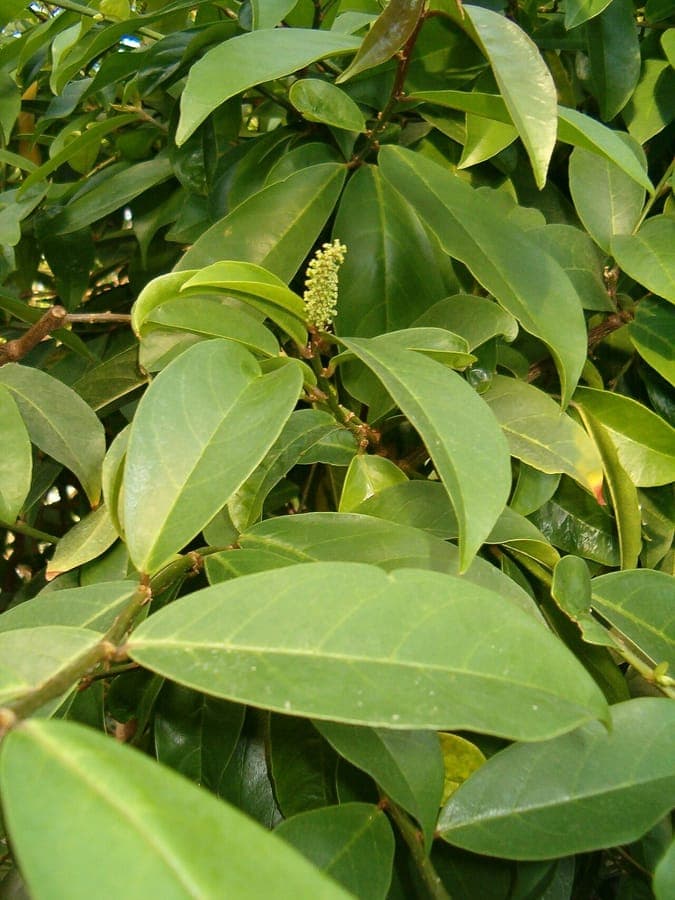
The Chinese Laurel typically grows to heights of 5 to 15 meters. The tree displays attractive dark, glossy foliage with lanceolate leaves. Leaves grow alternately and possess a shiny surface. The canopy forms a dense, oval to rounded shape.
The flowers are small, greenish to cream-colored, and relatively inconspicuous. They appear in elongated panicles along branches. Following bloom, small, irregularly-shaped berries develop. These berries transform from green through red to deep brown upon ripening.
Ideal Location
The Chinese Laurel thrives in warm climates with abundant daylight. The plant requires full sun exposure, minimum six to eight hours daily. In warmer regions, this tree grows outdoors successfully. In cooler Northern European zones, cultivation in heated conservatories is necessary.
Optimal growth temperature ranges from 20 to 35 degrees Celsius. In winter, the plant tolerates some cold but not below 10 degrees Celsius. Protection from strong winds proves important. A location with some shading in very hot climates benefits growth.
Soil
The Chinese Laurel exhibits minimal soil preferences. However, well-draining soil proves essential, as waterlogging leads to root rot. A mixture of garden soil, sand, and organic matter works well.
PH can range from 5.5 to 7.5. For container culture, nutrient-rich potting compost is recommended. Regular soil replacement supports plant vigor.
Diseño gratis
¿Quieres ver Chinese Laurel: complete guide en tu jardín? Crea un diseño gratis ahora.
Watering Requirements
During the growth period, the Chinese Laurel requires regular watering. Soil should remain consistently moist but never waterlogged. In warm periods, daily misting benefits humidity elevation. Summer months demand heightened watering attention.
During winter, water requirements decrease substantially. Once established, the plant tolerates drought reasonably well. When cultivated in containers, daily moisture checks become essential.
Pruning and Maintenance
The Chinese Laurel responds well to moderate pruning to maintain compact crown form. During the growing season, pruning shapes the tree's architecture. Removal of diseased branches remains always advisable.
Severe pruning proves unnecessary. For commercial fruit production, light thinning of excessive bloom helps produce larger fruits. The plant quickly regenerates.
Maintenance Calendar
April-May: Growth accelerates. Begin regular misting. June-July: Peak flowering. Intensive watering. Add fertilizer support. August-September: Fruit development. Continued care essential. October: Begin dormancy preparation. Gradually reduce watering. November-February: Rest period. Minimal watering. March: Growth preparation. Resume increased watering.
Winter Hardiness
The Chinese Laurel lacks winter hardiness in Northern European climates. Within conservatories and greenhouse environments, the plant grows without difficulty.
Companion Plants
Within greenhouse environments, the Chinese Laurel pairs beautifully with other tropical and subtropical plants. In garden settings, citrus trees and other warm-preferring fruit trees complement it nicely.
Closing Thoughts
The Chinese Laurel offers unique opportunities for gardeners in warmer regions or conservatory cultivators. Though less common than lemon or mango, this Asian tree possesses interesting nutritional profiles and ornamental value. For additional information, consult gardenworld.app.
¿Quieres ver Chinese Laurel: complete guide en tu jardín? Crea un diseño gratis ahora.
Sube una foto, elige un estilo y obtén un diseño fotorrealista con lista de plantas en menos de un minuto.
Más de 10.000 jardines diseñados
Sin tarjeta de crédito


Plantas similares
Breynia disticha: complete guide
Breynia disticha
Discover the Snowbush: a frost-sensitive houseplant with stunning red-white foliage. Perfect growing guide for terrariums.
Bridelia micrantha: complete guide
Bridelia micrantha
Bridelia micrantha, or Mitzeerie, is a tropical African shrub supporting bird populations. This native plant provides food and shelter throughout the year.
Flueggea leucopyrus: complete guide
Flueggea leucopyrus
Discover the Spinous flueggea, a robust shrub with sharp thorns from tropical regions. Perfect for dry gardens and demanding conditions.