
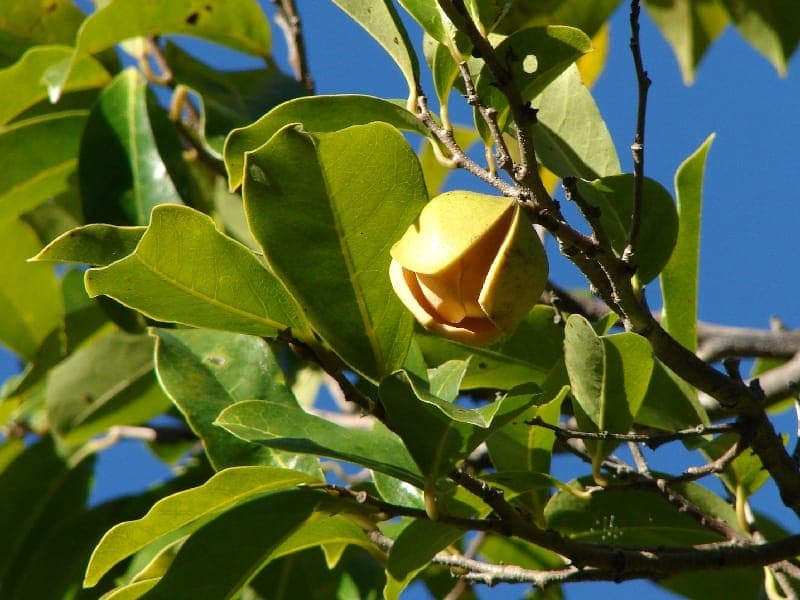
Tatiana Gerus from Brisbane, Australia / CC BY 2.0, via Wikimedia Commons
Mountain soursop: complete guide
Annona montana
¿Quieres ver Mountain soursop: complete guide en tu jardín?
1 minuto, sin tarjeta de crédito
Overview
The mountain soursop (Annona montana), also known as gottasop or wild soursop, is a less well-known but valuable tropical fruit tree. This tree is native to South America and naturally grows in mountainous areas at medium to high elevations. The fruits are spherical to heart-shaped and reach 10-30 cm in diameter.
Appearance & Bloom
The mountain soursop grows into a leafy and fruit-bearing structure with alternating leaves. The tree reaches 5-10 meters in height under optimal conditions. Small greenish flowers appear on the sides of branches and are attractive to pollinators. After blooming, the characteristic spherical fruits form with a smooth or slightly bumpy surface.
Ideal Location
The mountain soursop thrives in warm, tropical to subtropical climate. The tree prefers partial shade over full sun, especially in very hot areas. This preference differs from other Annona species. Good air circulation helps prevent diseases.
Soil
Use nutrient-rich, well-draining soil with pH 5.5-7.0. The mountain soursop responds well to adding organic material like compost or leaf mold. Ensure moderate to good drainage; waterlogging causes problems. Mulch around the base helps retain moisture.
Diseño gratis
¿Quieres ver Mountain soursop: complete guide en tu jardín? Crea un diseño gratis ahora.
Watering
Give regular water, especially during blooming and fruiting periods. Keep soil evenly moist but not wet. Once established, the tree tolerates some drought, but continuous water stress reduces yields. Slightly reduce watering during winter season.
Pruning
Minimal pruning is needed. Remove only damaged, dead or crossing branches. Formation of three to five primary branches promotes good structure. Prune carefully after harvest period.
Maintenance Calendar
March-April: Blooming begins July-August: Fruit setting November-January: Main harvest February: Rest period
Winter Hardiness
The mountain soursop is suitable only for USDA zones 10a-11 (minimum temperature -1 to 0 degrees Celsius). In temperate climates, the tree must be grown indoors. Protect against frost.
Companion Plants
Plant with other Annonaceae members like graviola or sugar apple. Avoid plantings with intensive root systems. Legume cover crops improve soil quality around the tree.
Closing Remarks
The mountain soursop is a rewarding addition for those interested in lesser-known exotic fruits. With proper climate sum and moisture management, this tree will provide benefits for years. Consult local nurseries for well-adapted cultivars.
Visit gardenworld.app for more inspiration about exotic fruit trees! Visit gardenworld.app/en for more garden planning.
¿Quieres ver Mountain soursop: complete guide en tu jardín? Crea un diseño gratis ahora.
Sube una foto, elige un estilo y obtén un diseño fotorrealista con lista de plantas en menos de un minuto.
Más de 10.000 jardines diseñados
Sin tarjeta de crédito


Plantas similares
Corkwood: complete guide
Annona glabra
Grow corkwood (Annona glabra) for tropical fruit. Pond-apple tree for wet gardens, edible fruit, soft tropical flesh.
Wild custard-apple: complete guide
Annona senegalensis
Discover Annona senegalensis - a delicious African fruit tree with creamy, sweet fruit. Read our full guide on growing, harvesting, and cultivating this exotic fruiting plant.
Calabash-nutmeg: complete guide
Monodora myristica
Discover Monodora myristica, a tropical fruit tree with striking blooms and aromatic seeds. Learn cultivation techniques for warm and subtropical climates.