
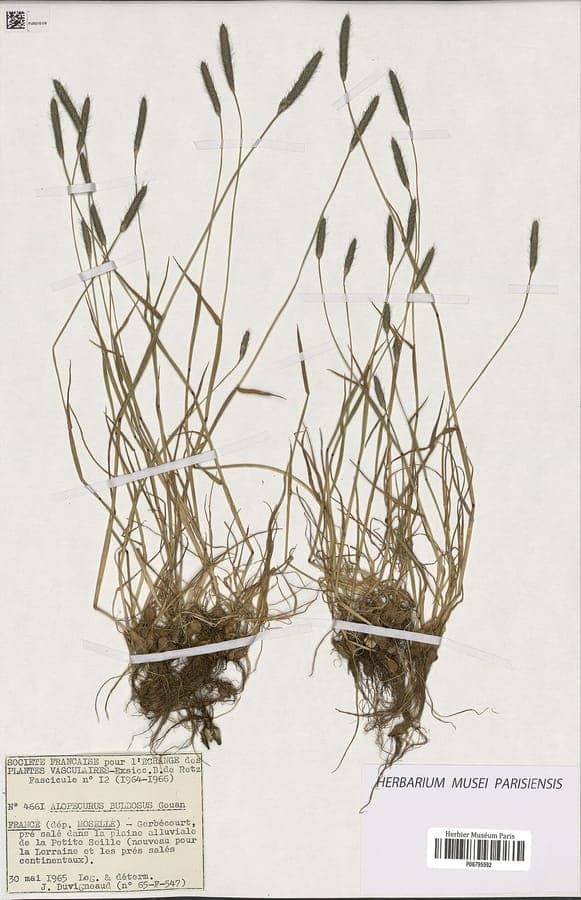
J. Duvigneaud / CC BY 4.0, via Wikimedia Commons
Alopecurus bulbosus: complete guide
Alopecurus bulbosus
¿Quieres ver Alopecurus bulbosus: complete guide en tu jardín?
1 minuto, sin tarjeta de crédito
Overview
Alopecurus bulbosus, commonly known as Bulbous foxtail, is a fascinating ornamental grass from the Poaceae family. Native to the coasts of Western Europe and the Mediterranean region, this distinctive grass features characteristic bulbous bases at its root system. These bulbs anchor the plant more securely in wet soils.
Growing to approximately 20-50 centimeters in height, Alopecurus bulbosus forms neat, ordered clusters. It is particularly suited for wet, moist garden areas and represents an excellent choice for landscape and naturalistic garden designs. Its delicate flower spikes attract considerable interest.
Appearance and bloom
Alopecurus bulbosus is easily recognized by its characteristic bulbs at the plant base. These bulbs are clearly visible and give the grass its distinctive name. The leaves are pale to mid-green, linear, approximately 3-5 millimeters wide, with a soft texture.
The blooming period extends from April through June, with attractive, soft flower spikes that appear yellow-green to silvery. These spikes have a delicate, fox-tail-like structure that creates considerable visual interest. While the flowers are not dramatically showy, they give the grass an attractive, naturalistic appearance.
Ideal location
Alopecurus bulbosus thrives in moist to wet locations where water is regularly available. The plant prefers sunny to partially shaded positions. It tolerates both direct sun and light shade without difficulty, though sunny locations produce the best flowering.
Plant it along pond margins, in rain gardens or wetland areas, or in low-lying locations where water accumulates. This grass grows equally well in coastal and inland areas and tolerates saline water, making it perfect for coastal gardens.
Soil requirements
Alopecurus bulbosus grows best in moist soil and tolerates regularly wet conditions. The grass prefers clayey, moist soil, though it also grows in sandy soil provided sufficient moisture is available. pH should be neutral to slightly acidic, ideally between 5.5 and 7.5.
This plant is tolerant of nutrient-rich soil and even grows well in moderately brackish water. In gardens where moist conditions are problematic, this grass is an excellent choice for capturing and utilizing water effectively.
Diseño gratis
¿Quieres ver Alopecurus bulbosus: complete guide en tu jardín? Crea un diseño gratis ahora.
Watering
Alopecurus bulbosus is a moisture-loving grass requiring regular water. Throughout the growing season, ensure soil remains consistently moist but not waterlogged. During dry periods, provide additional water, especially for container-grown plants.
The plant tolerates extended periods of water saturation well, making it perfect for gardens where drainage is problematic. In very dry climates, the grass may suffer, so provide regular moisture during the growing season.
Pruning
Alopecurus bulbosus requires minimal pruning. The plant can be cleaned in spring by removing dead foliage and stems, typically in March or April.
If the grass becomes too large or loses appeal, it can be cut back severely to just a few centimeters above ground. It will quickly recover and regrow with fresh, young shoots.
Maintenance calendar
The maintenance calendar for Alopecurus bulbosus is straightforward:
March-April: Clean dead material, prune if needed. May-June: Blooming period, minimal care required. July-August: Plant declines, reduce watering somewhat. September-October: Winter dormancy begins. November-February: Dormancy, limited maintenance.
Winter hardiness
Alopecurus bulbosus is extremely winter hardy, tolerating temperatures down to -20 degrees Celsius. This makes it suitable for nearly all Dutch and German climate zones. The plant does not completely disappear underground but remains partially visible during winter.
The bulbs protect the plant against frost and help it regrow each spring. Even in very severe winters, some portions may freeze, but the plant will certainly survive.
Companion plants
Alopecurus bulbosus combines beautifully with other aquatic and moisture-loving plants. Plant it with turtle-head plants (Chelone), Water mint (Mentha aquatica), and pickerel rush (Pontederia) along water margins.
Planting in threes and groups creates a natural wetland or meadow effect. Combine also with other grasses like Cyperus and other ornamental grasses for interesting textural variety.
Closing
Alopecurus bulbosus is a distinctive grass often overlooked in horticulture but with great potential for wet and moist garden areas. Its characteristic bulbs and delicate flower spikes make it an interesting plant choice. Purchase your specimens from reputable garden centres and consult gardenworld.app for design tips for water gardens. This grass demands the right microclimate but then provides beautiful, naturalistic effects in your front garden.
For more information about garden design with aquatic plants and wet zones, visit gardenworld.app.
¿Quieres ver Alopecurus bulbosus: complete guide en tu jardín? Crea un diseño gratis ahora.
Sube una foto, elige un estilo y obtén un diseño fotorrealista con lista de plantas en menos de un minuto.
Más de 10.000 jardines diseñados
Sin tarjeta de crédito


Plantas similares
Sporobolus pungens: complete guide
Sporobolus pungens
Sporobolus pungens is a stoloniferous Mediterranean coastal grass with outstanding salt and drought tolerance, perfect for seaside and dry gardens.
Mediterranean aegilops: complete guide
Aegilops biuncialis
Everything about Aegilops biuncialis, a Mediterranean annual grass with ornamental spikes and outstanding drought tolerance for dry gardens.
Silver bluestem: complete guide
Bothriochloa saccharoides
Full guide to Bothriochloa saccharoides (silver bluestem): site, soil, watering, winter hardiness, pruning, and garden companions.