
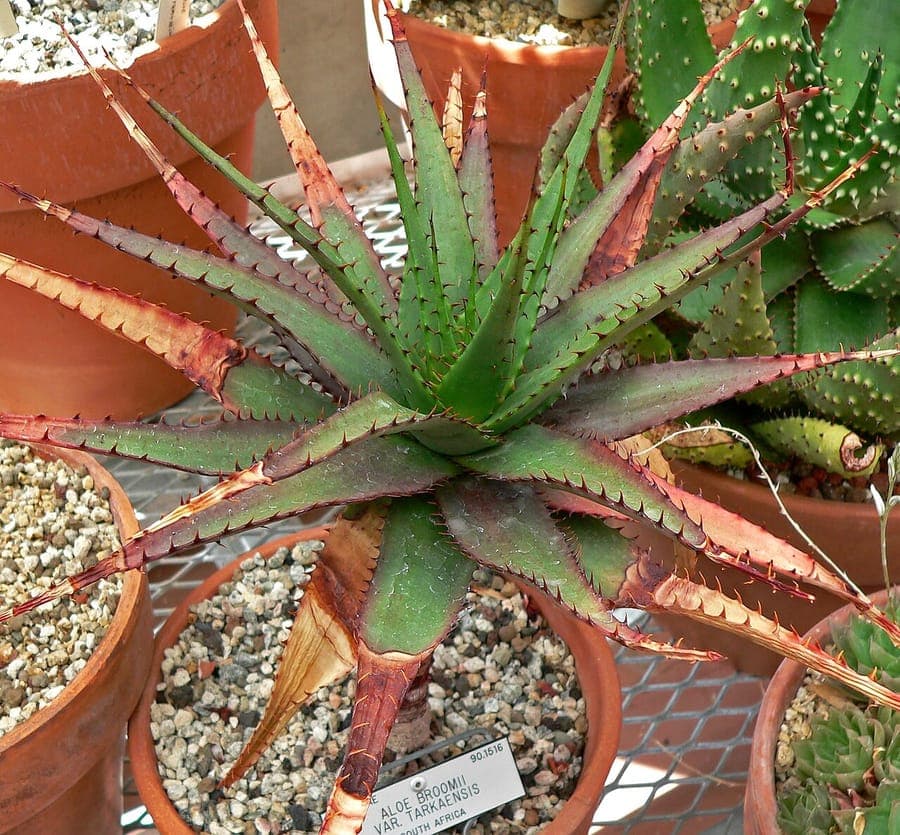
Stan Shebs / CC BY-SA 3.0, via Wikimedia Commons
Berg Alwyn: complete guide
Aloe broomii
¿Quieres ver Berg Alwyn: complete guide en tu jardín?
1 minuto, sin tarjeta de crédito
Overview
Aloe broomii, commonly known as Berg Alwyn, is a striking compact succulent native to South Africa's mountainous regions. This species naturally grows in the Cape Provinces, Free State, and Lesotho, where it has evolved to thrive in cold, arid alpine environments. The Berg Alwyn is prized among collectors for its compact growth habit and reliable flowering.
The plant is renowned for its hardiness and minimal care requirements. This makes it an excellent choice for gardeners seeking a decorative aloe that demands little maintenance while delivering seasonal visual interest.
Appearance and bloom
Berg Alwyn forms tight rosettes of thick, gray-green leaves typically reaching 30-50 cm in height. The leaves are narrow to oval, sharply tapered, and often display a faint reddish or purplish edge in strong sunlight. During spring to early summer, the plant produces striking tubular flowers in shades of yellow, arranged in tall inflorescences.
These blooms attract pollinators including bees and hummingbirds in their native habitat. After flowering, seed pods develop, creating interesting structural elements that extend seasonal interest in the garden.
Ideal location
Berg Alwyn thrives in full sun conditions. Ensure at least 6-8 hours of direct sunlight daily for optimal growth and flowering. In temperate climates, grow outdoors in sunny, well-draining garden beds or containers.
Indoors, place the plant near a south or west-facing window for maximum light exposure. Protection from the most intense afternoon sun in extremely hot regions may prevent leaf reddening, though this cosmetic change poses no health concerns.
Soil
Well-draining soil is absolutely critical for Berg Alwyn's survival. This aloe cannot tolerate wet feet and is susceptible to root rot. Use a drainage-rich mix specifically formulated for succulents and cacti.
The ideal soil composition includes 60% mineral-rich soil, 30% sand or gravel, and 10% organic matter. Add perlite or vermiculite for additional drainage if needed. Ensure pots have adequate drainage holes and never allow the plant to sit in water.
Diseño gratis
¿Quieres ver Berg Alwyn: complete guide en tu jardín? Crea un diseño gratis ahora.
Watering
Watering is one of the most critical aspects of Berg Alwyn care. During the growing season (spring and summer), water sparingly only when soil is completely dry. Water thoroughly until liquid drains from the base, but never allow standing water.
In autumn and winter, dramatically reduce watering or withhold it entirely as the plant enters dormancy. The goal is minimal water since the plant rests during this period. Overwatering remains the leading cause of problems with this species.
Pruning
Berg Alwyn requires minimal pruning due to its naturally compact growth. Simply remove dead or damaged leaves with a clean, sharp blade. If the plant becomes leggy or grows irregularly, you may carefully remove upper leaves to encourage fuller form.
Once spent flower spikes fade, remove them to redirect energy toward foliage growth. Always use sanitized tools to prevent infection.
Maintenance calendar
Spring (March-May): Resume regular watering as growth accelerates. Increase light exposure. Feeding may begin.
Summer (June-August): Peak growing season. Water cautiously but consistently. Monitor for pests. Continue feeding monthly.
Autumn (September-October): Gradually reduce watering. Flowering may continue into early fall.
Winter (November-February): Minimal water, no feeding. Plant enters dormancy; protection important in cold zones.
Winter hardiness
Berg Alwyn is quite hardy, tolerating temperatures down to approximately -5 degrees Celsius, depending on the specific cultivar and growing conditions. In very cold climates, grow containerized plants and bring indoors before the first frost.
In temperate winter regions, outdoor cultivation is possible with protection from wet feet. Wet snow or ice poses far greater danger than cold alone.
Companion plants
Berg Alwyn pairs well with other drought-tolerant specimens:
- Other aloe and succulent varieties
- Stonecrop (Sedum) species
- Echeveria and other rosette plants
- Cactus hybrids and columnar forms
- Ornamental grasses like blue fescue
Combine with fine-textured drought-tolerant plants for engaging contrast.
Closing thoughts
Aloe broomii is an exceptional plant for those valuing drought-tolerant, low-maintenance gardens. The compact form, attractive gray foliage, and seasonal flowering potential make it essential for serious succulent collectors.
With basic knowledge of watering and drainage, Berg Alwyn will thrive and bloom for years. Visit gardenworld.app for more expert inspiration for your succulent collection. Design your dream drought-tolerant garden with GardenWorld's professional guidance.
¿Quieres ver Berg Alwyn: complete guide en tu jardín? Crea un diseño gratis ahora.
Sube una foto, elige un estilo y obtén un diseño fotorrealista con lista de plantas en menos de un minuto.
Más de 10.000 jardines diseñados
Sin tarjeta de crédito


Plantas similares
Aloe castanea: complete guide
Aloe castanea
Discover Chestnut aloe, a South African succulent. Growth, nutrition, and garden integration for warm climates and container culture.
Aloe pratensis: complete guide
Aloe pratensis
Learn how to grow Meadow aloe, a South African succulent. Nutrition, propagation, and front yard integration for warm climates or containers.
Pretoria aloe: complete guide
Aloe pretoriensis
Discover Aloe pretoriensis, an elegant South African succulent with striking red blooms. Learn care tips, ideal conditions, and companion planting for this hardy, drought-tolerant plant.