
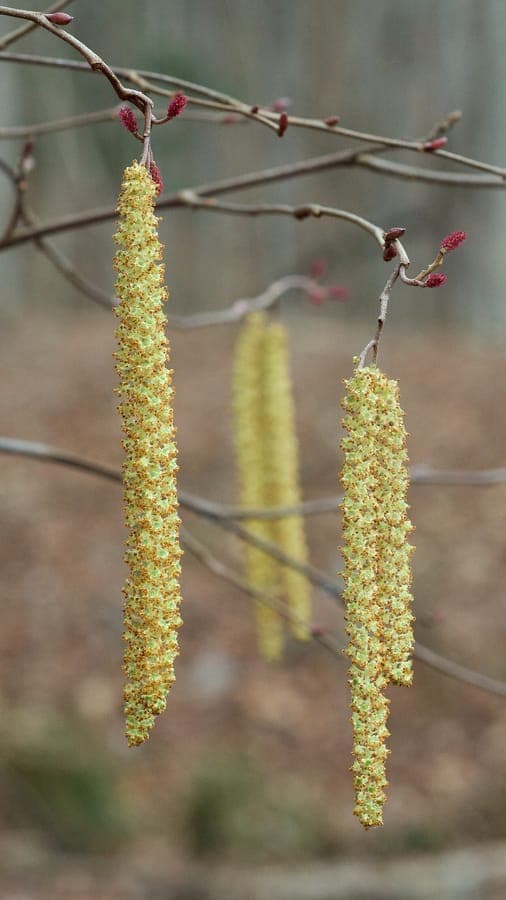
Eric Hunt / CC BY-SA 4.0, via Wikimedia Commons
Hazel Alder (Alnus serrulata): complete guide
Alnus serrulata
¿Quieres ver Hazel Alder (Alnus serrulata): complete guide en tu jardín?
1 minuto, sin tarjeta de crédito
Overview
Hazel alder (Alnus serrulata), also called smooth alder or brookside alder, is a native deciduous tree from eastern North America. This versatile shrub-like tree grows from Canada south through the eastern United States. With its fine, serrated leaves and natural growth form, this tree is a perfect choice for wet sites and water gardens.
Appearance and Bloom
Hazel alder typically reaches heights of 4 to 8 meters. The leaves are small to medium-sized with finely toothed margins. In spring, characteristic male catkins appear in yellowish-brown tones. These catkins are important food sources for wild birds and insects.
Female flowers develop into small, woody cone structures that persist into fall and winter. These seed cones provide visual interest and food for waterfowl.
Ideal Location
Hazel alder performs best in full sun to partial shade. It is exceptionally well-suited to wet, marshy, and inundated soils, making it ideal for water features and natural ponds. Plant it along ditches, streams, and other water features for natural beauty.
Soil
Hazel alder accepts a wide range of soil types, from heavy clay to sand. However, it thrives particularly in moist to wet soils. The tree grows well in almost any soil pH and has no special nutrient requirements. It forms nitrogen-fixing bacterial colonies that contribute to soil improvement.
Watering
Water regularly during the first two growing seasons, especially during dry periods. The tree prefers moist soils and can even tolerate fully waterlogged conditions. In established plantings, supplemental water is usually unnecessary.
Because the tree naturally grows in wet environments, there is minimal concern about overwatering.
Diseño gratis
¿Quieres ver Hazel Alder (Alnus serrulata): complete guide en tu jardín? Crea un diseño gratis ahora.
Pruning
Hazel alder grows naturally in a compact, full form requiring minimal pruning. Remove dead branches and damaged wood as observed. Formal pruning is not recommended as it disturbs the tree's natural form.
Maintenance Calendar
Early spring involves checking and cleaning dead wood. In autumn, observe seed production. Winter is suitable for planning and soil work.
As an ecological bonus, this tree provides shelter and food for wildlife.
Winter Hardiness
Hazel alder is very winter hardy and naturally occurs in areas with severe winters. The tree tolerates temperatures down to approximately -30 degrees Celsius. This makes it an excellent choice for northern climates.
Young trees may require minimal protection during their first winter, but once established, the tree overwinters without difficulty.
Companion Plants
In wet environments, other water plants grow well beneath and around hazel alder. Combine with other waterside species for a natural, ecological planting that attracts birds and other fauna.
Closing
Hazel alder is a highly versatile tree with enormous ecological value. For wet and marshy soils, it is practically ideal, and it also performs well in normal garden situations. With its interesting foliage, attractive catkins, and seed cones, it offers year-round interest.
When seeking hazel alder, consult local nurseries specializing in native plants. At gardenworld.app, you will find complete garden designs featuring waterside plantings.
¿Quieres ver Hazel Alder (Alnus serrulata): complete guide en tu jardín? Crea un diseño gratis ahora.
Sube una foto, elige un estilo y obtén un diseño fotorrealista con lista de plantas en menos de un minuto.
Más de 10.000 jardines diseñados
Sin tarjeta de crédito

