
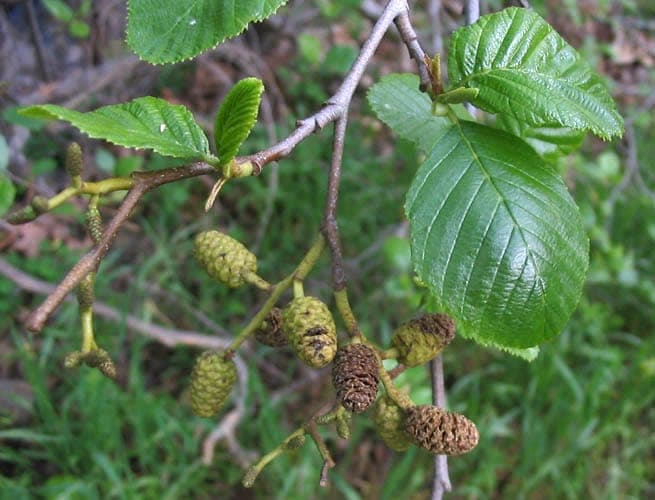
US NPS Santa Monica Mountains National Recreation Area [2] / Public domain, via Wikimedia Commons
White Alder (Alnus rhombifolia): complete guide
Alnus rhombifolia
¿Quieres ver White Alder (Alnus rhombifolia): complete guide en tu jardín?
1 minuto, sin tarjeta de crédito
Overview
The white alder (Alnus rhombifolia) is an elegant deciduous tree native to western North America. This beautiful specimen grows naturally from California through Oregon and Idaho to Montana. The tree is prized for its graceful form, distinctive foliage, and ecological benefits. Its diamond-shaped leaves make it an excellent choice for larger gardens and landscape installations.
Appearance and Bloom
White alder typically grows 15 to 20 meters tall, depending on growing conditions and soil quality. The characteristic diamond-shaped leaves give the tree its botanical name. During the growing season, dark green foliage provides striking contrast against lighter bark tones. Flowering occurs in spring when male catkins appear.
Female flowers develop into small cone-like seed structures that mature in autumn. These remain on branches well into winter, creating interesting seasonal interest.
Ideal Location
White alder thrives in full sun to partial shade. Ensure the tree receives at least six hours of direct sunlight daily for optimal growth and strong branch structure. The tree is exceptionally suited to wet and marshy sites where many other trees struggle.
When planting, consider the mature size. Do not position too close to buildings or other trees. The tree works well as an accent element in larger landscape designs.
Soil
White alder is not particular about soil composition but prefers moist to wet soils. Sandy, clay, and loamy soils are all acceptable. The tree tolerates some salinity, making it suitable for areas closer to coastal regions.
Before planting, ensure adequate drainage to prevent prolonged waterlogging. Add organic matter to the planting area, particularly in drier regions. White alder forms nitrogen-fixing relationships with certain bacteria.
Watering
Water regularly during the first growing season, especially in dry weather. The tree prefers consistent moisture, particularly during the growth period. However, allow soil to dry somewhat between waterings to prevent root rot.
Once established (after two to three years), the tree becomes quite tolerant of dry periods. In areas with regular rainfall, supplemental watering is usually unnecessary.
Diseño gratis
¿Quieres ver White Alder (Alnus rhombifolia): complete guide en tu jardín? Crea un diseño gratis ahora.
Pruning
White alder develops an attractive natural form and requires minimal pruning. Remove damaged, diseased, or crossing branches to maintain structure. This can be done during the growing season. Heavy pruning is not recommended as it can compromise the tree's natural beauty.
Remove any water sprouts or low-hanging branches that are inconvenient. This improves air circulation and crown development. Make cuts flush with the branch collar for faster healing.
Maintenance Calendar
In early spring, assess overall tree health and remove dead wood. The growing season (May-July) is ideal for light maintenance pruning. In autumn, observe seed development. Winter is suitable for ground work and soil preparation around the tree.
Winter Hardiness
White alder is very winter hardy, except in extremely cold, dry continental conditions. It tolerates temperatures down to approximately -15 degrees Celsius, depending on seed source.
Ensure new plantings are well-established before the first winter. This gives them the best chance of survival.
Companion Plants
White alder works well alongside other moisture-loving plants such as willows and birches. In wet areas, marsh and aquatic plants can thrive beneath it. This creates interesting layered plantings.
Closing
The white alder is a valuable addition to larger gardens and landscapes, particularly in areas with moist soils. With its elegant appearance, ecological benefits, and low maintenance requirements, this tree deserves greater attention. With the right location and minimal care, it grows into an impressive specimen.
When seeking white alder, consult local nurseries. Reputable retailers often carry seasonal stock. You can also consult online plant suppliers. At gardenworld.app, you will find inspiration and design ideas featuring this beautiful tree.
¿Quieres ver White Alder (Alnus rhombifolia): complete guide en tu jardín? Crea un diseño gratis ahora.
Sube una foto, elige un estilo y obtén un diseño fotorrealista con lista de plantas en menos de un minuto.
Más de 10.000 jardines diseñados
Sin tarjeta de crédito

