
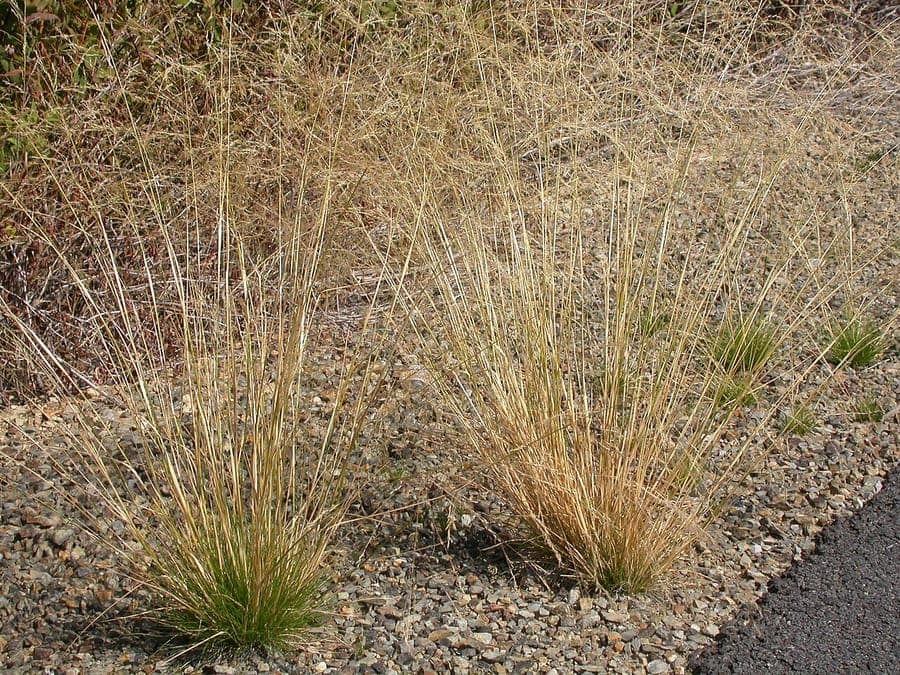
Matt Lavin / CC BY-SA 2.0, via Wikimedia Commons
Agrostis scabra: complete guide
Agrostis scabra
¿Quieres ver Agrostis scabra: complete guide en tu jardín?
1 minuto, sin tarjeta de crédito
Overview
Agrostis scabra, better known as Tickle Grass or Rough Hair Grass, is a fine wild grass from the Poaceae family. This grass has its roots in North America and East Asia and creates, instead of a conventional lawn, a delicate, airy texture that is particularly attractive for natural and ecological gardens. It is widely used in American prairie gardens and Japanese landscaping.
Appearance & bloom
Tickle grass grows in loose, non-dense tufts up to about 50-70 cm tall. The leaves are very fine and have a grayish-green appearance that glistens silvery in the wind. In late summer, finely-textured, airy flower clusters (panicles) emerge that sway elegantly throughout the fall. These flowers are particularly valuable for natural garden design and provide food for birds in fall and winter.
Ideal location
Tickle grass thrives best in full sunlight, though it also copes reasonably well with partial shade. At least 4-5 hours of direct sun is ideal. In garden designs, its airy character contributes much to movement and dynamics. It works particularly well as a specimen plant or in groups along paths. This grass is highly suitable for small gardens because of its non-invasive growth.
Soil
Tickle grass is a nutrient-poor grass and grows on practically any soil. Sand, loam, clay - it accepts almost everything. Even moderately acidic to neutral pH is not problematic. Its preference for nutrient-poor soils makes it unnecessary to apply artificial fertilizer. This is ideal for ecological lawn replacement in nutrient-poor areas. Good drainage is beneficial, but not strictly necessary.
Diseño gratis
¿Quieres ver Agrostis scabra: complete guide en tu jardín? Crea un diseño gratis ahora.
Watering
Once established, tickle grass is very drought-tolerant. Water young plants regularly during the first growing season until a deep root system is established. Mature plants survive long dry periods without additional water. In extremely hot summers, occasional watering can help, but it is not essential. Excessive water promotes unwanted growth.
Pruning
Tickle grass actually requires no pruning. For winter tidiness, you can cut back wilted panicles in early spring. This stimulates fresh green growth. In small gardens, light trimming can keep the plant more compact. Do not cut sharply - the grass thrives better with some wild texture retained.
Maintenance calendar
Spring (March-April): Cut back wilted panicles until new green growth appears. Summer (May-September): No maintenance needed if rainfall is sufficient. Fall (October-November): Admire the panicles and leave them on the plant for bird food. Winter (December-February): Dead plant material provides artistic accent until spring.
Winter hardiness
Tickle grass is very winter-hardy and tolerates temperatures down to -20°C without damage. The dead panicles lend winter beauty to gardens and provide shelter for insects. Winter moisture is more damaging than cold and can lead to rot. Ensure good drainage during winter periods.
Companion plants
Tickle grass combines beautifully with other grasses and low-growing plants such as mugwort, geranium and sedge. Yellow, red or orange flowers create nice contrasts. In prairie gardens, it adds texture to wildflowers. Avoid heavy flowering plants that overwhelm the delicate effect. In Japanese gardens, it forms a harmonious whole together with bamboo and stones.
Closing
Tickle grass is perfect for those seeking an alternative to traditional lawn and valuing natural beauty. Gamma and other garden centers offer seed and plants. Find more garden inspiration at gardenworld.app/en.
¿Quieres ver Agrostis scabra: complete guide en tu jardín? Crea un diseño gratis ahora.
Sube una foto, elige un estilo y obtén un diseño fotorrealista con lista de plantas en menos de un minuto.
Más de 10.000 jardines diseñados
Sin tarjeta de crédito


Plantas similares
Sporobolus pungens: complete guide
Sporobolus pungens
Sporobolus pungens is a stoloniferous Mediterranean coastal grass with outstanding salt and drought tolerance, perfect for seaside and dry gardens.
Mediterranean aegilops: complete guide
Aegilops biuncialis
Everything about Aegilops biuncialis, a Mediterranean annual grass with ornamental spikes and outstanding drought tolerance for dry gardens.
Silver bluestem: complete guide
Bothriochloa saccharoides
Full guide to Bothriochloa saccharoides (silver bluestem): site, soil, watering, winter hardiness, pruning, and garden companions.