
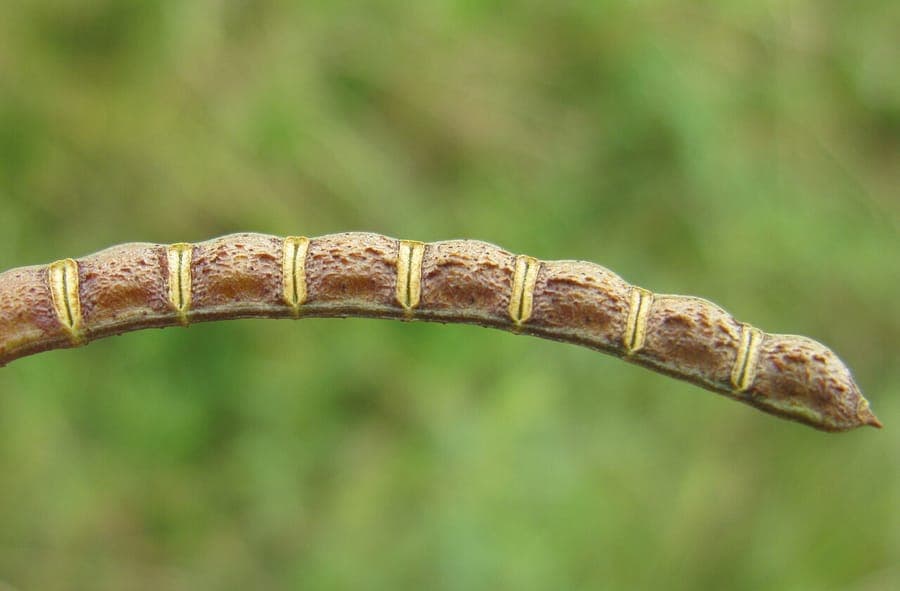
Macleay Grass Man / CC BY 2.0, via Wikimedia Commons
Aeschynomene indica: complete guide
Aeschynomene indica
¿Quieres ver Aeschynomene indica: complete guide en tu jardín?
1 minuto, sin tarjeta de crédito
Overview
Aeschynomene indica, commonly known as Indian Joint-Vetch, Sensitive Joint-Vetch, or Budda-pea, is a fascinating tropical legume native to tropical and subtropical Asia. This compact plant, reaching 30-100 centimeters in height, is prized for its small, bright yellow flowers and its remarkable segmented seed pods that spontaneously separate into individual seed compartments. This makes it an intriguing addition to warm gardens and educational plant collections.
Appearance & Bloom
Aeschynomene indica grows as a compact, upright plant with fine, feathery leaflets that feel light and elegant. The leaves are green and demonstrate interesting nyctinastic movement, closing at night - a phenomenon fascinating to observe. Flowers appear in summer and fall, small yellow blooms arranged in loose clusters. The true highlight, however, lies in the seed pods: elongated, articulate pods that spontaneously separate into individual single-seed compartments resembling a string of beads. These pods are initially green and gradually brown as they mature, eventually shattering to release individual seeds.
Ideal Location
Aeschynomene indica thrives in full sun to partial shade, requiring at least 4-6 hours of direct sunlight daily. Plant it in a warm, sunny location in tropical climates or in a greenhouse/conservatory in temperate regions. It also performs exceptionally well in containers, making it ideal for patios and balconies. Protect it from strong winds and frost.
Soil
This plant prefers nutrient-rich, well-draining soil. As a legume, it can fix nitrogen itself, so avoid adding extra nitrogen fertilizer. Neutral to slightly acidic soils (pH 6-7) are suitable. Plant it in richer soil compared to other legumes, as this species requires more nutrition.
Diseño gratis
¿Quieres ver Aeschynomene indica: complete guide en tu jardín? Crea un diseño gratis ahora.
Watering
Aeschynomene indica requires regular water, particularly during the growing season. Keep soil consistently moist but not waterlogged. In very warm climates, water 2-3 times weekly. In temperate climates, water 1-2 times weekly depending on rainfall. Avoid waterlogging, which promotes root rot. During winter, when growth is slow, restrict water significantly.
Pruning
This plant requires minimal pruning. Aeschynomene indica naturally maintains compact growth. You can prevent long shoots by pinching off the growing tips when the plant is young. After flowering, removing spent flowers encourages additional blooming. No other pruning is typically needed.
Maintenance Calendar
Spring: Plant in warm climates or in greenhouse in temperate zone; begin regular watering. Summer: Enjoy flowering; support plant with stakes if needed. Fall: Flowering continues; allow seed pods to mature. Winter: Remove dead growth; minimal water in warm climates or bring indoors in temperate zones.
Winter Hardiness
Aeschynomene indica is not cold-hardy. It cannot tolerate temperatures below 10 degrees Celsius and will die during frost periods. In warm regions (Southern Europe, Central America, etc.), it can grow as a perennial. In temperate climates, treat it as an annual or greenhouse perennial.
Companion Plants
Aeschynomene indica works well in a tropical or warm-temperate garden composition with other heat-loving plants. Plant alongside Curcuma, Zingiber (ginger), or other tropical specimens. The yellow flowers complement purple Petunias or pink Impatiens beautifully. In containers, combine it with trailing plants like Tradescantia or String of Pearls.
Closing
Aeschynomene indica is a fascinating and educational plant for warm gardens and greenhouse collections. With its interesting flowers and unique seed pods, this plant is certainly worth experimenting with in warm regions. You can find seed through online seed catalogs specializing in tropical plants. For gardenworld.app designs in warm climates or greenhouse gardens, this legume adds both botanical interest and educational value.
¿Quieres ver Aeschynomene indica: complete guide en tu jardín? Crea un diseño gratis ahora.
Sube una foto, elige un estilo y obtén un diseño fotorrealista con lista de plantas en menos de un minuto.
Más de 10.000 jardines diseñados
Sin tarjeta de crédito


Plantas similares
Tall Silky Lupine: complete guide
Lupinus elatus
Tall silky lupine is a fast-growing Californian perennial with silvery foliage and blue-purple flower spikes, ideal for a prairie-style garden.
Garfield Lupine: complete guide
Lupinus garfieldensis
The Garfield lupine is a rare, fast-growing American perennial for alkaline, dry grassland gardens, with striking blue flower spikes.
Lupinus elegans: complete guide
Lupinus elegans
Lupinus elegans, the elegant lupine, is a spectacular blooming plant from Mexico with blue flower spikes. Care, cultivation and garden use.