
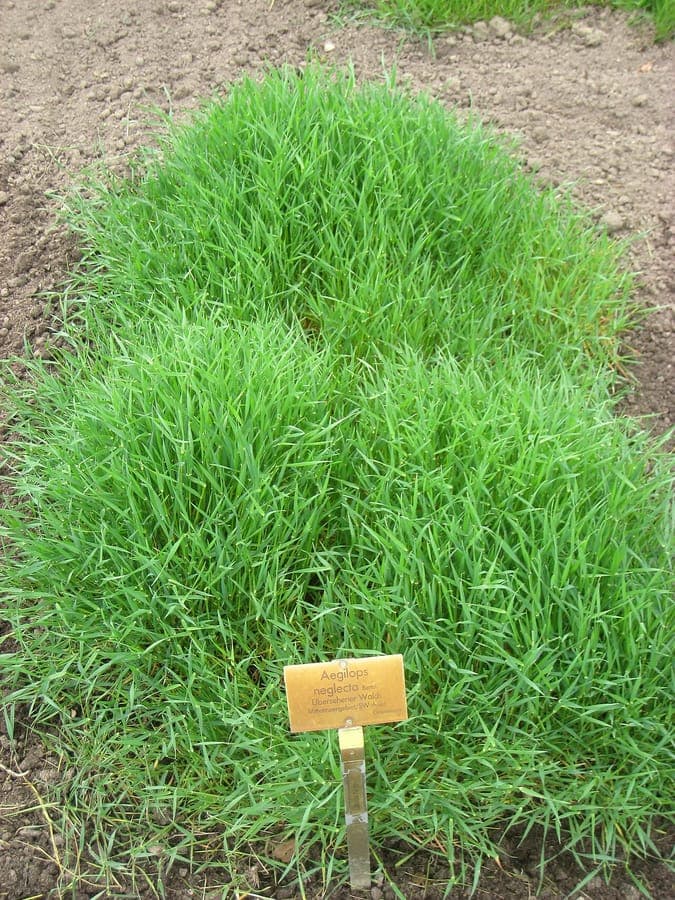
Daderot / Public domain, via Wikimedia Commons
Aegilops neglecta: complete guide
Aegilops neglecta
¿Quieres ver Aegilops neglecta: complete guide en tu jardín?
1 minuto, sin tarjeta de crédito
Overview
Aegilops neglecta, commonly known as Neglected Fescue or Three-awn Goat Grass, is an intriguing annual grass from the Mediterranean regions of Europe and North Africa. While the grass foliage is modest with narrow, greenish leaves, the true attraction lies in its highly distinctive seed heads featuring three characteristic 'beaks' or awns that extend rigidly and distinctively outward. This grass is gaining popularity in contemporary garden designs, particularly from an ecological perspective.
Appearance & Bloom
Aegilops neglecta is a compact annual grass reaching approximately 15-35 centimeters in height. The foliage is narrow and greenish, relatively unremarkable. However, the seed heads are absolutely spectacular: uniquely triangular in form with three long, curved 'beaks' or awns (bristle-like extensions) extending horizontally. These seed heads are initially green, transitioning to brownish-gold as they mature. They appear in May-June and remain visually interesting throughout summer and fall.
Ideal Location
Aegilops neglecta thrives in full sun to light shade. Plant it in sunny borders, wild corners, or dry, stony locations. This grass is particularly at home in Mediterranean, drought-prone gardens or wildflower meadows. It's highly suitable for ecological gardens as it serves as food plant for certain insect species. Position it where you can fully appreciate its dramatic seed head architecture.
Soil
Aegilops neglecta is remarkably flexible with soil conditions. It grows on poor, dry, stony or sandy soils and tolerates neutral to alkaline soils. Actually, this grass thrives best on lean, poor soils where richer soils can promote excessive leaf growth. Good drainage is essential; waterlogging must be avoided. It's an excellent colonizer of marginal ground.
Diseño gratis
¿Quieres ver Aegilops neglecta: complete guide en tu jardín? Crea un diseño gratis ahora.
Watering
Aegilops neglecta is an annual that requires regular water after sowing until established. Once growing, it's extremely drought-tolerant. Excessive water can promote disease or undesirable leaf growth. As an annual, you need not worry about long-term survival; simply resow each year.
Pruning
As an annual grass, Aegilops neglecta requires no pruning. Allow the grass to fully mature and produce seed. After seed dispersal in fall/early winter, you can remove dead stems. Leave some seed heads to self-seed the following spring if desired.
Maintenance Calendar
Spring: Direct sow into ground April-May. Summer: Enjoy growth and seed formation. Fall: Seed heads mature further; consider whether to allow self-seeding. Winter: Remove dead growth; plan reseeding for next season.
Winter Hardiness
Aegilops neglecta is not winter-hardy; it's an annual. It doesn't survive frost periods in northern climates unless sown as fall seed for early spring germination. In Mediterranean and warm zones it can grow as an annual. Resow each year in northern gardens or use it as summer annual.
Companion Plants
The dramatic seed heads of Aegilops neglecta work beautifully alongside other Mediterranean wildflowers. Plant with Papaver (poppies), Centaurea (cornflower), or Salvia (sage) for color contrast. The seed head architecture provides spectacular textural contrast against flowering plants. It's also excellent for wild meadows and ecological wildflower mixes.
Closing
Aegilops neglecta is a rewarding addition to modern gardens, especially for those interested in ecology and textural plantings. With its unique seed head architecture and drought tolerance, this annual grass is certainly worth experimenting with. You can find seed through online seed catalogs or specialty seed merchants. For gardenworld.app designs with ecological focus and distinctive details, this grass is an excellent choice.
¿Quieres ver Aegilops neglecta: complete guide en tu jardín? Crea un diseño gratis ahora.
Sube una foto, elige un estilo y obtén un diseño fotorrealista con lista de plantas en menos de un minuto.
Más de 10.000 jardines diseñados
Sin tarjeta de crédito


Plantas similares
Sporobolus pungens: complete guide
Sporobolus pungens
Sporobolus pungens is a stoloniferous Mediterranean coastal grass with outstanding salt and drought tolerance, perfect for seaside and dry gardens.
Mediterranean aegilops: complete guide
Aegilops biuncialis
Everything about Aegilops biuncialis, a Mediterranean annual grass with ornamental spikes and outstanding drought tolerance for dry gardens.
Silver bluestem: complete guide
Bothriochloa saccharoides
Full guide to Bothriochloa saccharoides (silver bluestem): site, soil, watering, winter hardiness, pruning, and garden companions.